
1655 — a year of war, exploration and scientific discovery
Events of 1655 included the Swedish invasion of the Polish–Lithuanian Commonwealth, England's capture of Jamaica, Christiaan Huygens's observation of Titan, and a papal succession.
Overview
The year 1655 saw military campaigns, colonial expansion and notable advances in astronomy and statecraft. It falls in the middle of the 17th century, a period marked by dynastic and religious conflict in Europe, overseas contests between maritime powers, and accelerating scientific observation. Several events of 1655 had consequences that shaped politics and science for decades.
Image gallery
7 Images


Major political and military events
1655 opened with renewed large-scale warfare in northern and eastern Europe. King Charles X Gustav of Sweden launched a powerful invasion of the Polish–Lithuanian Commonwealth, beginning the phase of conflict often called the Deluge — a period of Swedish occupation and devastation in parts of Poland and Lithuania.
- In the English Atlantic world, Oliver Cromwell sponsored the so-called Western Design against Spanish possessions in the Caribbean. English forces failed to secure Hispaniola but succeeded in capturing Jamaica from Spain in May 1655, establishing an important English foothold in the Caribbean.
- At home, a brief Royalist uprising in southern England was suppressed during the year; its failure contributed to a reorganization of security and governance under protectoral rule.
Science, culture and religion
1655 is remembered in the history of astronomy: Christiaan Huygens made the first recorded observation of Saturn's largest moon, Titan, and improved understanding of Saturn's rings through telescopic study. Such observations were part of a rapid expansion of celestial knowledge following the invention of the telescope earlier in the century.
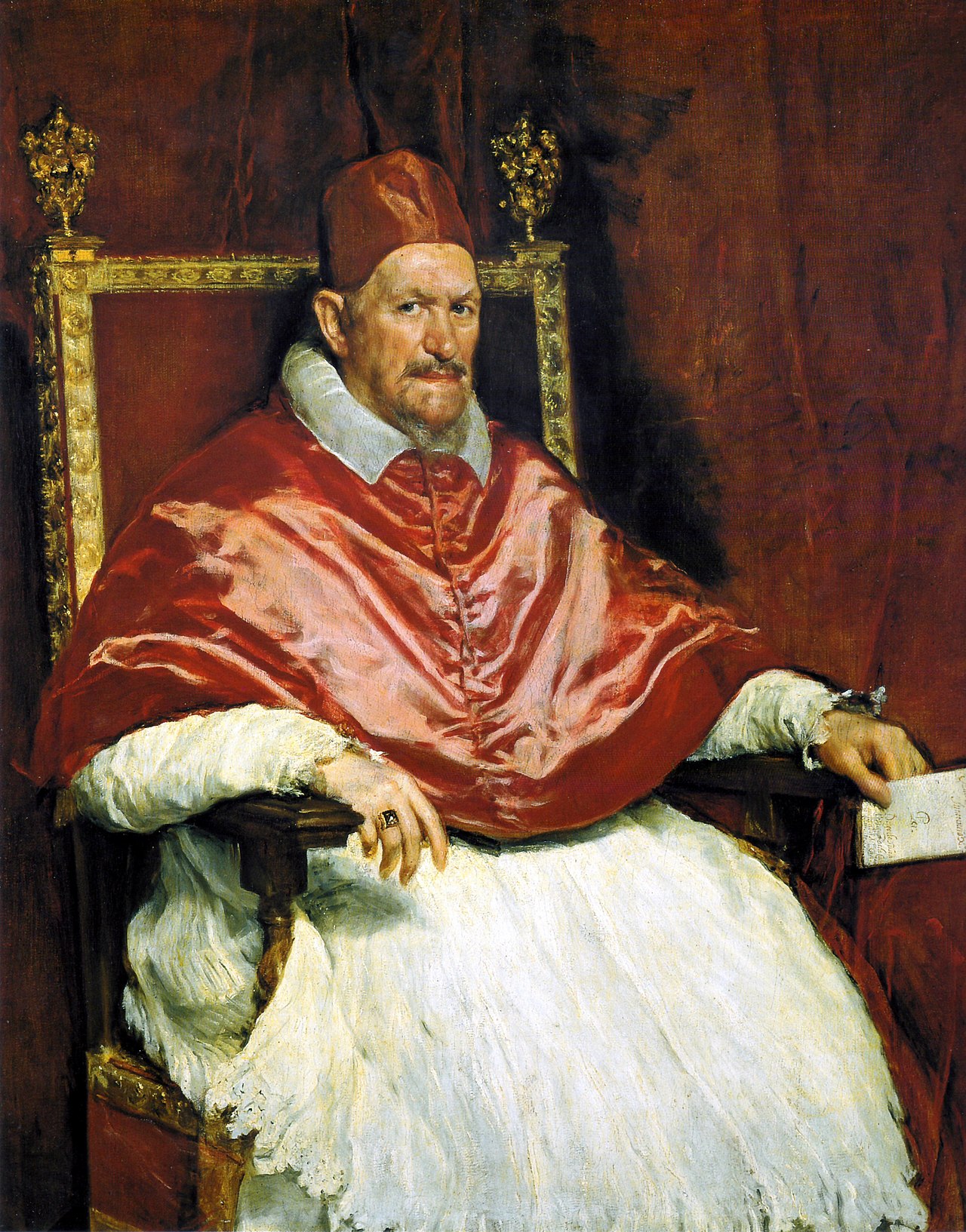
In Rome, the papacy changed hands: Pope Innocent X died in 1655 and was succeeded by Cardinal Fabio Chigi, who took the name Alexander VII. Papal politics continued to play a central role in European diplomacy and cultural patronage.
Significance and legacy
The military and colonial actions of 1655 accelerated shifts in European power: Swedish gains altered the map of northern Europe, while England's occupation of Jamaica laid groundwork for later colonial development and conflict in the Caribbean. Huygens's astronomical work contributed to the empirical tradition that would underpin later scientific revolutions. Collectively, events of 1655 reflect the era's combination of warfare, imperial competition and scientific curiosity.
Selected notable figures
- Pope Innocent X (died 1655) — his death precipitated the election of Alexander VII.
- Christiaan Huygens — Dutch scientist who observed Titan and refined telescopic study of Saturn.
- Charles X Gustav — Swedish king whose 1655 campaign began the multifront conflict in the Polish–Lithuanian Commonwealth.
Related articles
Author
AlegsaOnline.com 1655 — a year of war, exploration and scientific discovery Leandro Alegsa
URL: https://en.alegsaonline.com/art/111591