
New Apostolic Church: beliefs, structure, history and practices
Overview of the New Apostolic Church: its origins, central beliefs (including the Second Coming and apostolic ministry), sacraments, organization, worship, social work and ecumenical position.
Overview
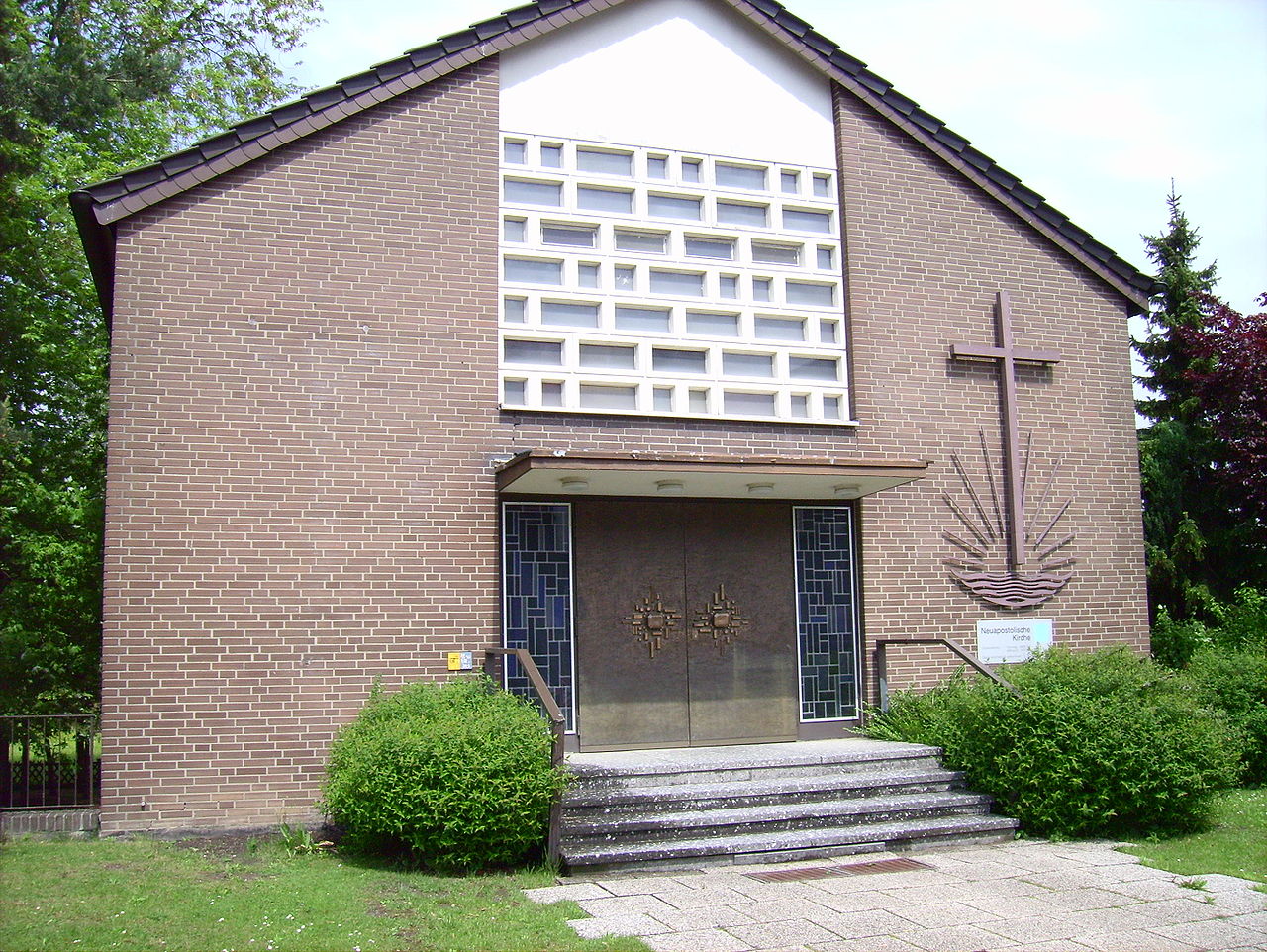
The New Apostolic Church is a Christian denomination that developed in the 19th century and today has a global presence. It traces its roots to a break with the Catholic Apostolic movement in Europe and is guided by a continuing emphasis on apostolic ministry and the expectation of Christ's return. The church describes itself as part of the wider Christian family while retaining distinctive offices and practices. Congregations are found worldwide and membership is commonly estimated at about ten million people. The international headquarters is based in Zurich, Switzerland.
Image gallery
10 Images




Core beliefs and distinctive teachings
Central theological themes include the authority and ministry of apostles, the preparatory role of the church for the Second Coming of Christ, and the importance of sacramental life. Many of its teachings overlap with mainstream Christian doctrine — such as belief in the Trinity, the life and resurrection of Jesus, and the call to charity — but the New Apostolic Church places special emphasis on the active role of apostles in providing spiritual guidance and blessing to members.
Worship, sacraments and liturgy
Worship services combine elements familiar to Protestants and to other liturgical churches: congregational singing, Bible readings, prayer and preaching. The church observes several acts regarded as sacraments or sacred rites. These commonly include:
- Baptism – initiation into the Christian community.
- Holy Communion – regular shared meals of bread and wine as a remembrance of Christ.
- Holy Sealing (Blessing) – a laying-on-of-hands performed by ordained ministers, often associated with the imparting of the Holy Spirit and spiritual strengthening.
The liturgical style is often described as similar to Protestant traditions, with structured orders of service and hymnody; for materials and liturgical outlines see liturgy resources and references to Protestantism where parallels exist.
Organization and leadership
Structurally the New Apostolic Church is hierarchical. Local congregations are organized into districts and regions under the supervision of ordained ministers. Above local levels sit bishops and apostles; the international church is led by a chief apostle based at the church's headquarters. This centralized leadership model has been compared in form to historic episcopal structures while remaining distinct in theology and practice. For information on global congregations see global presence.
History and development
The movement grew out of 19th-century restorationist currents and a specific division from the Catholic Apostolic Church during the Schism of Hamburg (1863). From its European origins it expanded through missionary activity and migration to form communities in Africa, the Americas, Asia and elsewhere. Over time the church has adapted liturgical language, pastoral training and social programs to local contexts while maintaining an emphasis on apostolic leadership.
Social work, ecumenism and public role
Charitable service and community care are important aspects of the church's public witness. Local congregations often engage in diaconal work, disaster relief and social support programs. The church participates in ecumenical dialogues with other Christian denominations, describing many of its core teachings as compatible with mainstream Christianity while also explaining the theological reasons for its distinctive apostolic ministry. Information on charitable initiatives is available through the church's service offices and publications; see charity references for examples.
Distinctions and notable facts
What commonly distinguishes the New Apostolic Church is its belief that apostles are necessary for the present era to prepare believers for the Second Coming. This conviction shapes liturgy, pastoral practice and the church's internal organization. It refers to the early Christian era in its self-understanding and uses titles such as apostle for senior spiritual leaders. For official descriptions and doctrinal statements consult denominational resources such as official descriptions and regional communication channels.
The New Apostolic Church continues to be an active, global denomination that combines traditional Christian teaching with a particular emphasis on apostolic ministry and preparedness for the return of Christ.
Questions and answers
Q: What is the New Apostolic Church (NAC)?
A: The New Apostolic Church (NAC) is a Christian denomination that split from the Catholic Apostolic Church due to the 1863 Schism of Hamburg.
Q: Where are the congregations of the New Apostolic Church located?
A: The New Apostolic Church has congregations all around the world.
Q: How many members does the New Apostolic Church have worldwide?
A: The New Apostolic Church has about 10 million members worldwide.
Q: Where is the international head quarter of the New Apostolic Church located?
A: The international head quarter of the New Apostolic Church is located in Zurich (Switzerland).
Q: What are the main ideas of the New Apostolic Church?
A: The main ideas of the New Apostolic Church are charity and the Second Coming of Christ.
Q: How are the ideas of the New Apostolic Church related to mainstream Christianity?
A: Most of the ideas of the New Apostolic Church are related to mainstream Christianity.
Q: How is the New Apostolic Church organized and what do its spiritual leaders call themselves?
A: The New Apostolic Church is organized like the Roman Catholic Church and its spiritual leaders call themselves Apostles. The church also has a liturgy similar to Protestantism. The church calls itself the Early Church.
Related articles
Author
AlegsaOnline.com New Apostolic Church: beliefs, structure, history and practices Leandro Alegsa
URL: https://en.alegsaonline.com/art/69459