
Ninety-Five Theses: Martin Luther's Challenge to Indulgences and Church Practice
A clear, concise overview of Martin Luther's Ninety-Five Theses, its content and claims, how it spread in 1517, and its role in igniting the Protestant Reformation and later debates.
Overview
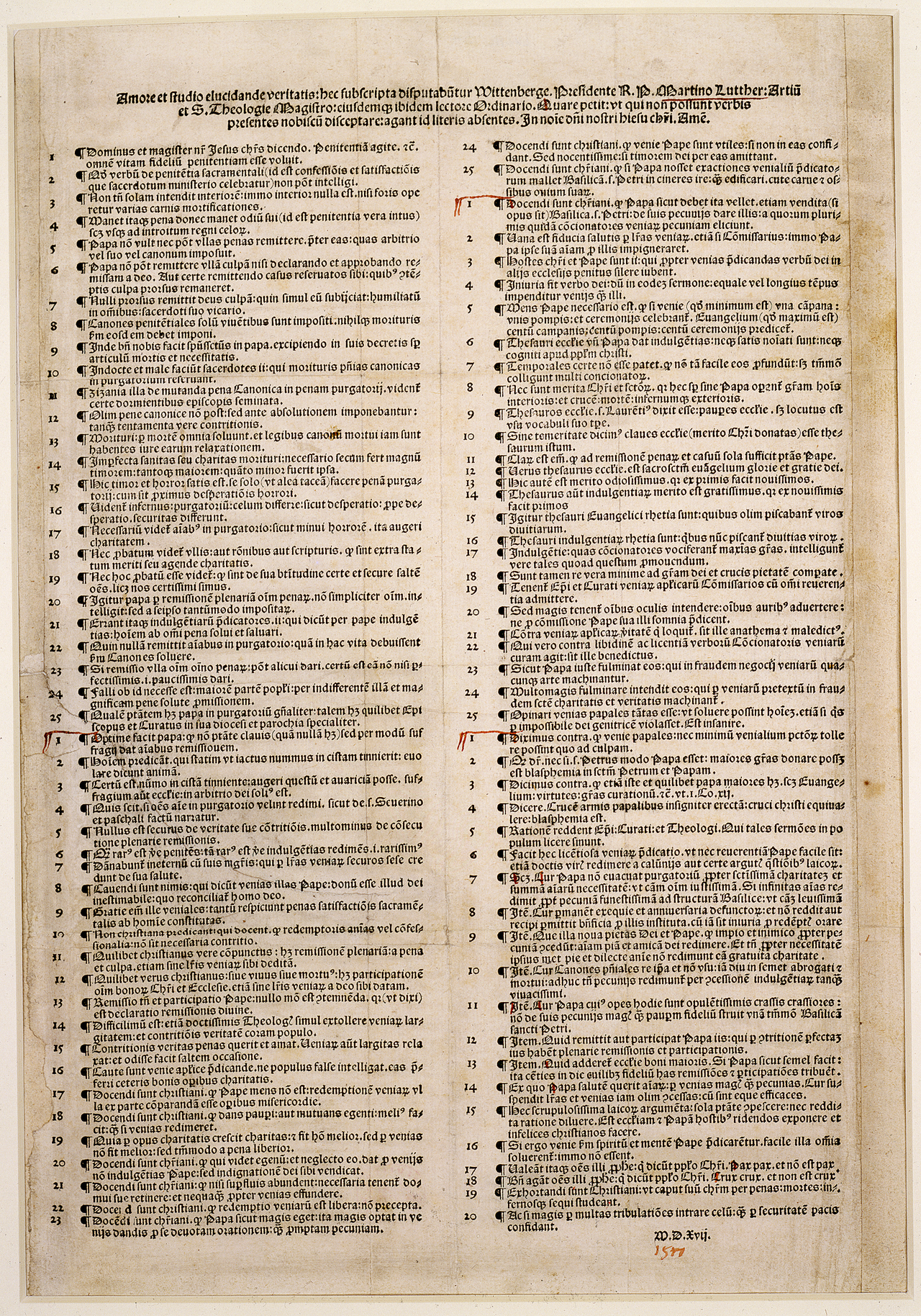
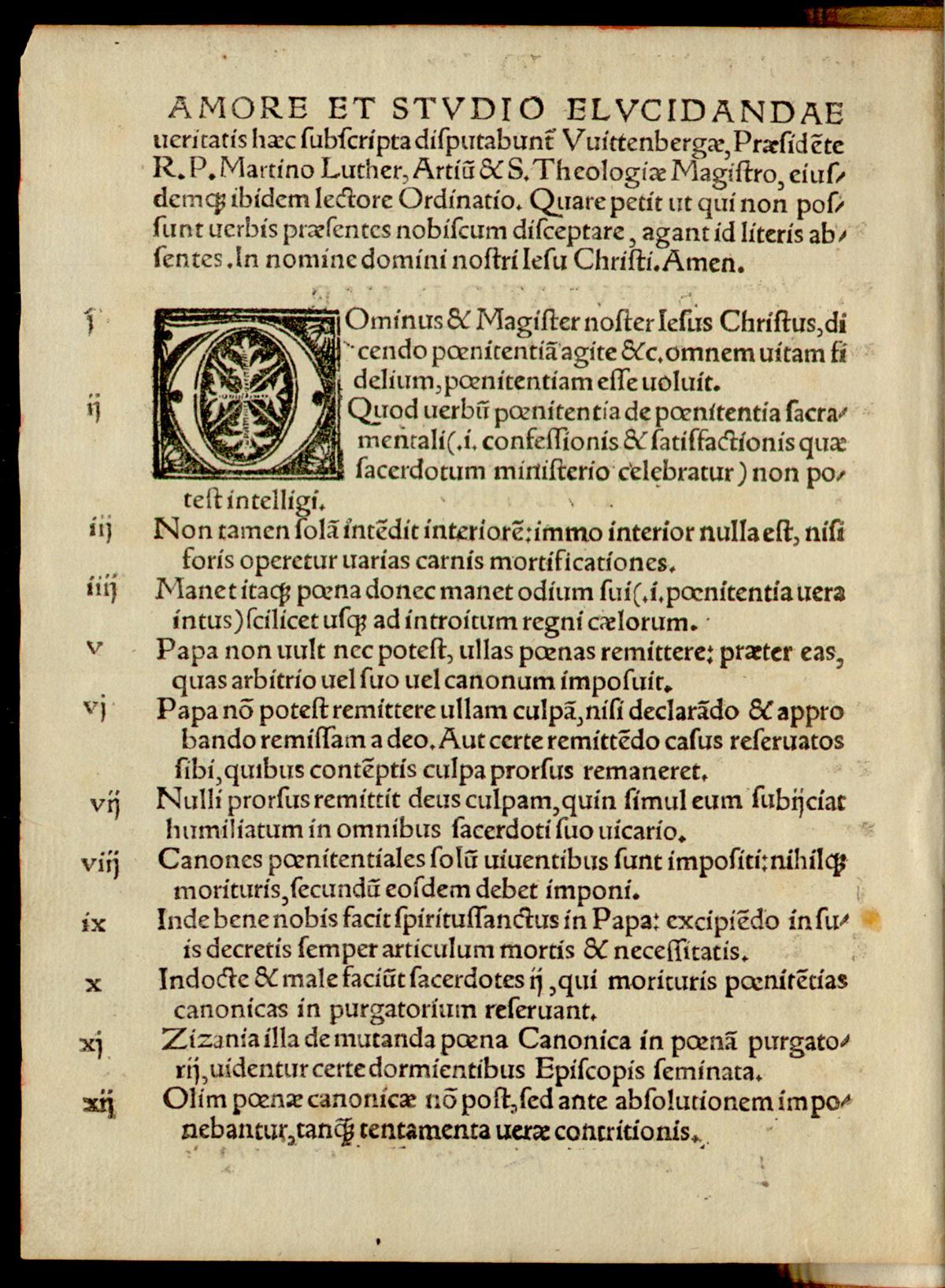
The Ninety-Five Theses is a short, polemical document composed in 1517 by Martin Luther. Its formal Latin title translates loosely as a disputation on the power and efficacy of indulgences. Written as a series of numbered propositions, the Theses questioned the theological and pastoral foundations for the sale of indulgences and called for a scholarly debate within the Church. The work is widely credited with galvanizing public concern about ecclesiastical practice and precipitating wider calls for reform.
Image gallery
9 Images




Structure and central claims
The document consists of ninety-five concise statements rather than a single continuous argument. Many of these statements emphasize pastoral care, sincere repentance, and the limits of monetary transactions in matters of conscience. Key themes include: the primacy of repentance over purchased remission, the need for correct preaching of forgiveness and penance, and skepticism about the claim that indulgences could remit guilt or guarantee salvation. Luther did not at first intend to break the Church, but he did insist that indulgences had been abused and that theological authority rested ultimately on Scripture and conscience.
Main themes
- Repentance and contrition: True repentance cannot be bought.
- Authority and accountability: Clerical and papal authority is subject to scriptural standards.
- Pastoral concern: The practice of selling indulgences exploited laypeople.
- Public disputation: Requests for open academic debate rather than unilateral enforcement.
Historical context and dissemination
The Theses were prepared amid growing unease about Church finances, papal fundraising, and popular piety. Luther is traditionally said to have affixed a copy to the door of the Castle Church in Wittenberg on October 31, 1517, marking All Saints' Eve, a date that became symbolic for the beginning of the reform movement. When initial ecclesiastical authorities failed to address the claims publicly, Luther circulated the text as a letter and pamphlet. The new printing press and networks of printers in cities such as Nuremberg, Leipzig, and Basel helped the Theses spread rapidly in German-speaking lands and beyond.
Impact and legacy
The Ninety-Five Theses catalyzed debates about doctrine, ecclesiastical authority, and pastoral practice that developed into the Protestant Reformation. Critics and supporters debated not only the sale of indulgences but broader questions about justification, the role of Scripture, and the power of the papacy. While Luther's initial critique focused on a particular practice, it soon led to more radical theological positions and institutional rupture. The Theses remain a foundational text for understanding early Protestant thought and the dynamics of religious reform in early modern Europe.
Notable facts and later scholarship
There has been continued historical discussion about certain details: whether Luther physically nailed the Theses to the church door, the exact wording of his earliest copies, and the sequence of events in the fall of 1517. A handwritten note by Luther's secretary Georg Rörer discovered in a Jena university library was reported in 2007 as potentially corroborating the traditional account, but scholars have assessed such findings cautiously and continued research has refined the chronology and context. For further biographical and contextual information see studies of indulgences, the life of Luther, and histories of the Protestant Reformation. A recent archival reference to Rörer's note can be found in discussions linked to Jena.
The Ninety-Five Theses are therefore important both for their immediate critique of a specific practice and for their role in prompting sustained theological reflection and institutional change. They illustrate how a compact set of propositions, amplified by print culture and public debate, can transform religious and social landscapes.
Questions and answers
Q: Who wrote The Ninety-Five Theses?
A: Martin Luther wrote The Ninety-Five Theses.
Q: What was Luther's main argument in The Ninety-Five Theses?
A: Luther argued that the Church should not sell indulgences.
Q: What effect did Luther's movement have on the Church?
A: Luther's movement, which eventually became known as the Protestant Reformation, led to significant changes in the Church.
Q: When did Luther present his theses to the church authorities?
A: Luther presented his theses to the church authorities on October 31, 1517.
Q: What happened when the bishops did not respond to Luther's call for reform?
A: When the bishops did not respond, Luther circulated his theses privately.
Q: Where were The Ninety-Five Theses printed?
A: The Ninety-Five Theses were printed in Nuremberg, Leipzig, and Basel.
Q: What new piece of information about Luther's action has been discovered in recent years?
A: In February 2007, a handwritten note by Luther's secretary Georg Rörer was found in the university library at Jena. This note appeared to confirm the traditional account of Luther nailing the theses to the door, but scholars have yet to assess this claim.
Related articles
Author
AlegsaOnline.com Ninety-Five Theses: Martin Luther's Challenge to Indulgences and Church Practice Leandro Alegsa
URL: https://en.alegsaonline.com/art/70265
Sources
- spiegel.de : "Neuer Beleg für Luthers Thesenanschlag"