
New Park Street Chapel
Historic Reformed Baptist congregation and chapel in Southwark, London, known for its 19th‑century ministry and later relocation to the Metropolitan Tabernacle at Elephant and Castle.
Overview
New Park Street Chapel was a Reformed Baptist congregation located in Southwark, London. It became notable in the 19th century for its active evangelical ministry and for serving as the pulpit of influential pastors. The chapel building commonly associated with the name was constructed in 1833 according to surviving records and documents, and the congregation later expanded into a larger meeting place known as the Metropolitan Tabernacle.
Image gallery
2 Images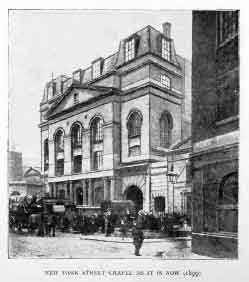

Origins and development
The chapel belonged to the Particular or Reformed branch of the Baptist tradition (Reformed / Baptist) and was situated in the borough of Southwark, London. Growth in the congregation during the 1800s — partly driven by a series of popular preachers — led to the need for a larger meeting house. Recorded construction dates point to activity around 1833, when the chapel building most closely identified with the name was established.
Notable ministry and move to a larger tabernacle
The congregation attracted national attention in the mid‑19th century. Its most famous pastor, Charles Haddon Spurgeon, began his ministry at New Park Street and drew such large crowds that leaders sought a larger venue. This development culminated in the foundation of the Metropolitan Tabernacle at the Elephant and Castle area (Elephant and Castle), where the congregation continued to meet. The modern successor congregation still uses that location for worship (worship services).
Characteristics and legacy
The chapel was typical of urban Nonconformist meeting houses of its era: relatively plain architecture focused on the pulpit and congregational seating, with an emphasis on preaching and Sunday services. Its historical importance rests on the congregation's influence in 19th‑century evangelicalism, its association with prominent Baptist leaders, and its role in the foundation of a larger metropolitan church that continued the tradition into the present day.
Further notes
- The congregation is linked broadly to the Reformed Baptist movement (see Reformed).
- The chapel's Southwark location places it in a long history of London Nonconformity (Southwark, London).
- Key dates and building phases are recorded around 1833 and the later move to the Metropolitan Tabernacle at Elephant and Castle.
Related articles
Author
AlegsaOnline.com New Park Street Chapel Leandro Alegsa
URL: https://en.alegsaonline.com/art/69585