
Christian denomination
A Christian denomination is a distinct religious body within Christianity defined by shared name, organization, doctrine, and worship practices; this article explains features, history, examples and relationships.
A Christian denomination is a distinct, organized group within Christianity that shares a common name, patterns of belief, governance and worship. The label helps distinguish one organized tradition from another while acknowledging a shared origin in the early Christian movement. The word "denomination" is commonly understood to refer to a named religious body or sect — literally, the act of being given a name — and it is used widely by scholars, clergy and laypeople to describe persistent institutional differences among Christians. For a broad sense of denominational variety see Christian communities.
Image gallery
4 Images


Typical features
- Doctrine: formal statements about Scripture, salvation, sacraments and key doctrines.
- Worship style: liturgical, charismatic, evangelical or other patterned services.
- Polity: governance systems such as episcopal, presbyterian, or congregational structures.
- Institutions: seminaries, parishes, publishing arms and denominational bodies.
Denominations often trace their identity back to historical movements or leaders and may emphasize particular theological interpretations. Major currents in global Christianity include the Roman Catholic tradition, the Eastern Orthodox churches, Oriental Orthodox communities, Anglicanism, and the many Protestant families (e.g., Lutheran, Reformed, Methodist, Baptist and others). These broader categories contain numerous individual denominations and local bodies; for background on origins, consult material about early Christianity.
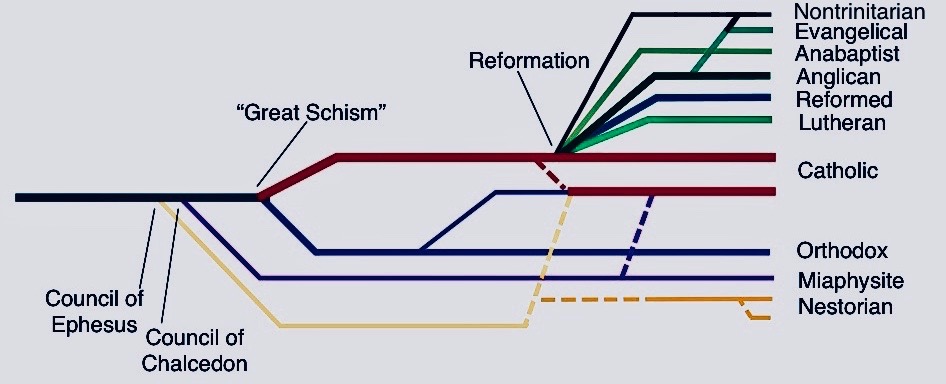
The development of denominations reflects a long historical process. Some divisions are ancient, such as the separation between Eastern and Western Christianity in the medieval period, while others arose in the early modern era—most notably during the Protestant Reformation of the 16th century. New movements and independent churches have continued to appear since then, responding to theological disputes, liturgical preferences, social change, or missionary expansion. Historical narratives often highlight the role of the apostles and early followers in shaping the initial movement, a subject treated in sources about the followers of the Christian founder.
Why do denominations form? Common reasons include disagreements over doctrine (for example, views of the sacraments or church authority), different worship practices, organizational governance, language and culture, or responses to political circumstances. Denominational identity can help communities preserve particular theological emphases and social practices while also providing organizational structures for education, charitable work and mission. The central figure of the Christian faith, around whom these groups cohere in varying ways, is Jesus.
Although denominational boundaries can seem sharp, many churches participate in ecumenical dialogues and cooperative ministries today. Efforts to find common ground focus on shared beliefs, joint social action and mutual recognition of baptism or ministry in some settings. Understanding denominations requires paying attention both to what distinguishes them and to the continuing connections among Christian traditions.
Questions and answers
Q: What is a Christian denomination?
A: A Christian denomination is a large group of Christian people who use the same name, the same sort of organization, and have the same or very similar beliefs.
Q: How many main groups is Christianity divided into?
A: Christianity is divided into ten main groups.
Q: Why did the splits happen in Christianity?
A: The splits happened in Christianity because the different groups could not agree on certain beliefs or practices.
Q: What are smaller groups called in Christianity?
A: Smaller groups that have their own separate name are called denominations.
Q: What does the word "denomination" mean?
A: The word "denomination" means "Being given a name."
Q: Who founded early Christianity?
A: Early Christianity was founded by the followers of Jesus.
Q: What do denominations in Christianity have in common?
A: Denominations in Christianity have the same name, the same sort of organization, and have the same or very similar beliefs.
Related articles
Author
AlegsaOnline.com Christian denomination Leandro Alegsa
URL: https://en.alegsaonline.com/art/20083