
National Front (United Kingdom)
Overview of the National Front (UK), a far-right political party founded in 1967: its ideology, history, electoral record, controversies, splits and legacy in British politics.
The National Front is a far-right political party in the United Kingdom that rose to public attention in the late 1960s and 1970s. Established as an amalgam of several small nationalist groups, it became known for a platform built on British nationalism, strict immigration controls and opposition to multiculturalism. The party is widely described by scholars and commentators as having fascist or extreme-right characteristics and has been the subject of sustained criticism and opposition from mainstream parties, civil society and anti-racist organisations.
Image gallery
10 Images


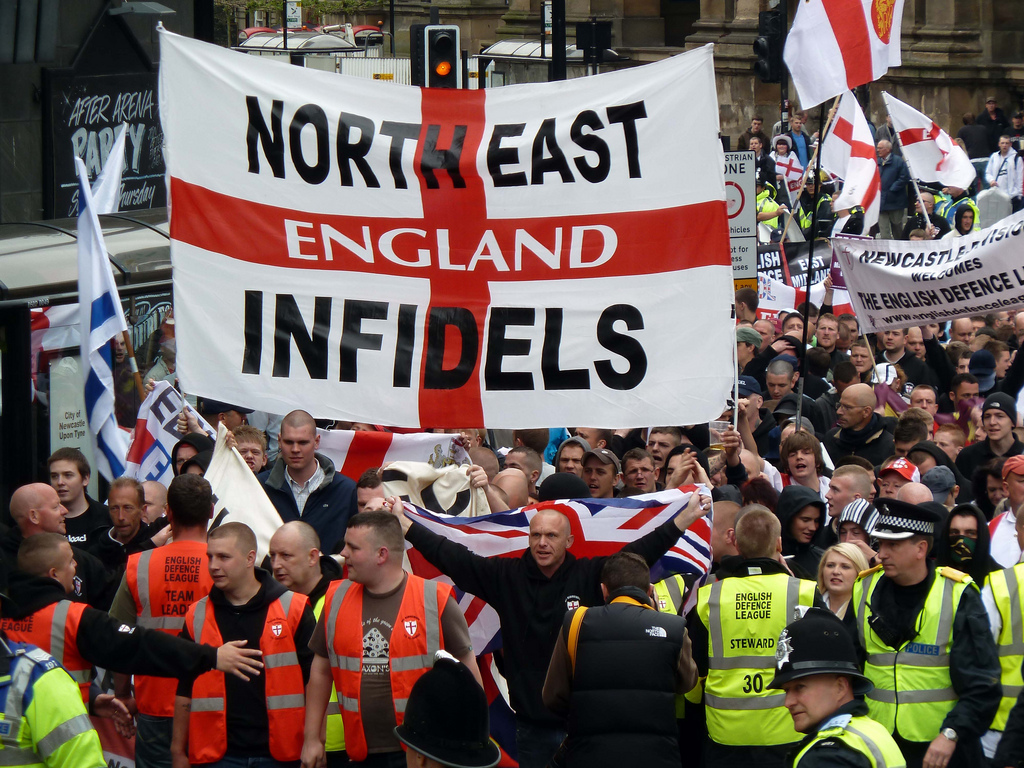




History and development
Formed in 1967, the National Front drew members from earlier postwar nationalist movements and from activists dissatisfied with Conservative and other mainstream parties. It gained visibility through street demonstrations, leafleting and provocative campaigns aimed at anxieties over immigration and social change. The party achieved its highest public profile in the 1970s, winning modest shares of the vote in some local and parliamentary contests, although it never obtained representation in the House of Commons or the European Parliament.
Ideology and organisation
The party's core themes have included ethno-nationalist rhetoric, preference for repatriation or restrictive immigration policy, and a nostalgic vision of a homogeneous national community. Organisationally it combined electoral activity with activist networks and public rallies. Over time internal disputes, leadership struggles and factionalism weakened its cohesion. Prominent figures and factions later left to form or join other far-right groups.
Electoral performance, controversies and splits
Although it achieved pockets of local support and sometimes influenced political debate, the National Front's campaigns provoked frequent controversy. Demonstrations and clashes with opponents, accusations of racism, and hostile media coverage limited its appeal. During the 1980s and thereafter the party fragmented; splinter groups emerged and some members migrated to new organisations. It remained a minor party with little or no mainstream political influence.
Legacy and assessments
Historians and political analysts view the National Front as an important case in postwar British extremism: it radicalised street politics, contributed to debates about race and immigration, and helped shape subsequent far-right movements. Its rise and decline illustrate how fringe organisations can exploit social anxieties but struggle to translate that support into lasting electoral success.
Further reading and archives: overview source 1, archive notes, scholarly summary, contemporary reports, election data, legal and civil society responses.
- Key features: nationalist programme, anti-immigration stance, street activism.
- Notable outcomes: localised electoral support; organisational splits; influence on later far-right groups.
Related articles
Author
AlegsaOnline.com National Front (United Kingdom) Leandro Alegsa
URL: https://en.alegsaonline.com/art/68600