
Asteridae: traditional Linnaean subclass and the modern asterid clade
Asteridae is a traditional Linnaean subclass that by definition included Asteraceae; modern molecular systems treat related plants as the asterid clade (and euasterids), with revised orders and families.
Overview
Asteridae is a historical botanical name originally applied as a Linnaean subclass of flowering plants. In classical, pre-molecular classifications it denoted a set of orders and families thought to be closely related on the basis of shared morphological and chemical characters. By definition the name included the family Asteraceae (Compositae). Since the late 20th century, DNA-sequence evidence has led to the replacement of many ranked groups by clades; today the term "asterids" (and the more restricted "euasterids") is used in phylogenetic systems to denote monophyletic assemblages that broadly overlap the older Asteridae.
Image gallery
1 Image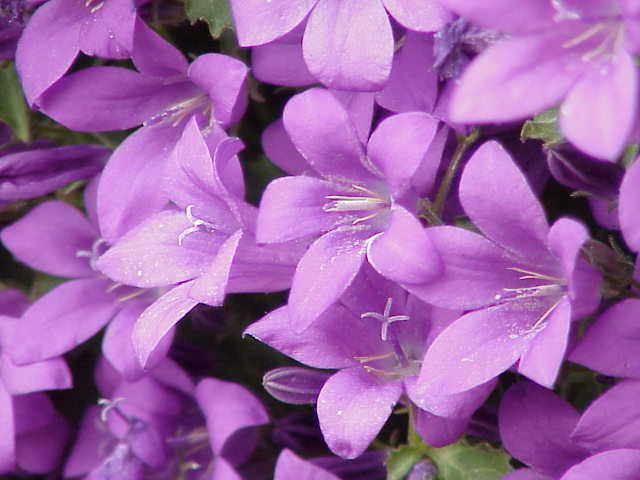
Typical characteristics
Members of the traditional Asteridae and of the asterid clade are morphologically diverse, from small herbs to large shrubs and trees. Several features occur frequently across the group: many taxa have sympetalous flowers (petals at least partly fused), often with reduced floral parts compared with more basal angiosperms; specialized secondary metabolites such as iridoid compounds and a range of alkaloids are common in several lineages; and floral and fruit structures show convergent specializations related to pollination and dispersal. Because these traits are unevenly distributed, modern classifications emphasize shared ancestry rather than single morphological characters.
Historical classification and the Cronquist system
During the 20th century, influential classification schemes such as that of Arthur Cronquist treated Asteridae as a formal subclass. Cronquist's arrangement grouped a suite of orders and families that were thought to form a coherent unit under that rank. The Cronquist concept provided a practical framework for floras and identification keys before widespread use of molecular phylogenetics clarified deeper relationships.
Orders commonly associated with Asteridae in older systems
- Cronquist's conception of Asteridae included orders such as:
- Gentianales
- Solanales
- Lamiales
- Callitrichales
- Plantaginales
- Scrophulariales
- Campanulales
- Rubiales
- Dipsacales
- Calycerales
- Asterales
Transition to phylogenetic (APG) systems
Beginning with molecular phylogenetic work in the late 20th century, and implemented in successive Angiosperm Phylogeny Group (APG) treatments, many of the orders and families once placed in Asteridae were reorganized. APG systems (including APG III and later updates) use clade names such as "asterids" and subdivide the group into major clades often called lamiids (euasterids I) and campanulids (euasterids II). These clades are defined by common ancestry inferred from DNA data rather than by a predetermined Linnaean rank; see representative molecular phylogenetics studies for summaries.
Major families and economic importance
The assemblage contains many familiar and economically important plant families. Besides the vast Asteraceae, which includes daisies and sunflowers, important families associated with the asterids include Solanaceae (nightshades and many crops), Lamiaceae (mints and culinary herbs), Rubiaceae (coffee and ornamentals) and Gentianaceae (ornamentals and bitter compounds). These families provide food, medicines, fibers, spices and ecological services; their study is important for agriculture, pharmacology and conservation.
Taxonomic notes and nomenclature
As a formal Linnaean subclass, Asteridae is retained in some historical and floristic contexts, but most contemporary systematic treatments prefer unranked clade names to reflect evolutionary relationships. The change illustrates a broader shift in botanical nomenclature and classification from morphology-based ranks toward phylogenetically defined groups. Where necessary, older names are translated into modern frameworks by mapping traditional orders and families onto current clades.
Practical implications and further reading
For botanists, ecologists and educators the distinction between Asteridae as a rank and asterids as a clade matters mainly when comparing older literature with modern phylogenetic syntheses. For identification and applied work, many traditional groupings remain useful at the regional level, while research into trait evolution and diversification relies on molecularly supported clades. For introductions and reviews, consult overviews in floras and the primary molecular-synthesis literature cited below; example sources include treatments of Cronquist's Asteridae and contemporary overviews of the molecular evidence.
Related articles
Author
AlegsaOnline.com Asteridae: traditional Linnaean subclass and the modern asterid clade Leandro Alegsa
URL: https://en.alegsaonline.com/art/6791
Sources
- onlinelibrary.wiley.com : onlinelibrary.wiley.com/doi/10.1111/j.1095-8339.2009.00996.x/abstract;jsessionid=B3B25522…