
Atlas cedar (Cedrus atlantica) — description, distribution, uses, and conservation
A comprehensive overview of the Atlas cedar (Cedrus atlantica): its appearance, native range in the Atlas Mountains, horticultural use, ecological role, and conservation concerns.
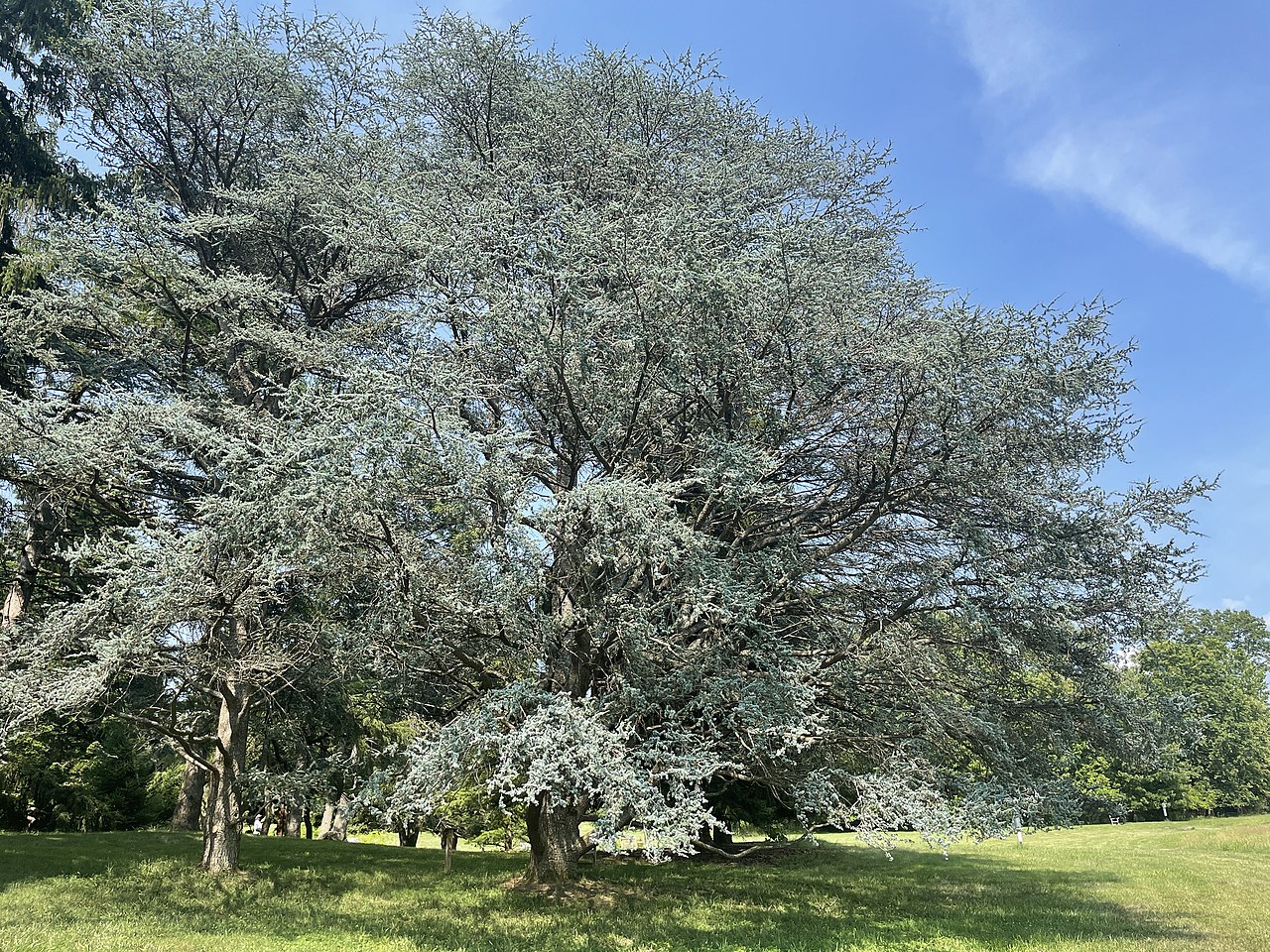
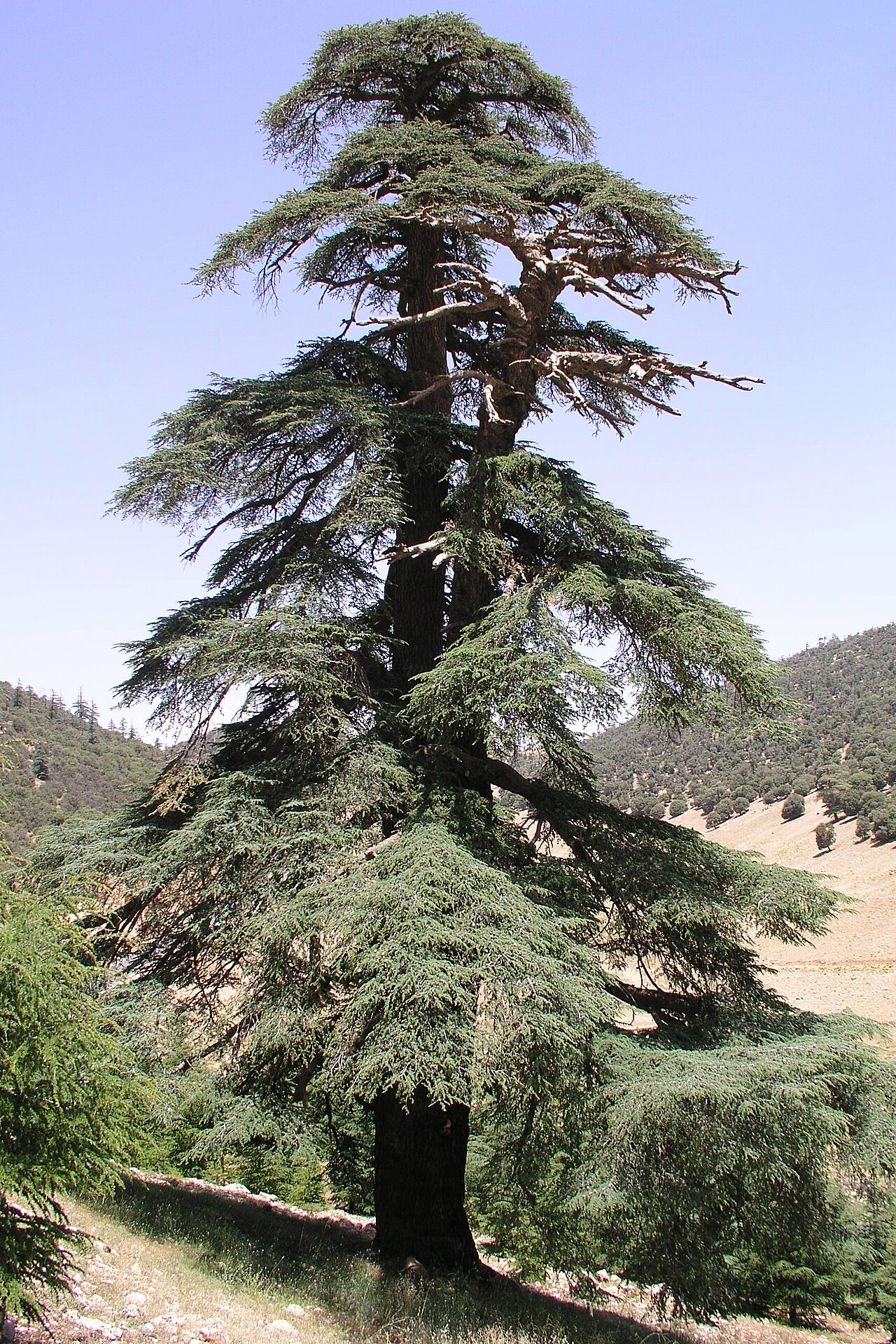
The Atlas cedar (Cedrus atlantica) is a large evergreen conifer valued for its stature, fragrant wood and ornamental form. It belongs to the cedrus genus and is native to the high mountains of North Africa. Young trees tend to be conical, while mature specimens develop a broader, more open crown and horizontal branching.
Image gallery
6 Images



Key characteristics
Atlas cedar is recognizable by a set of botanical traits: needles clustered on short shoots, typically about 2–3 cm long and four-sided, with colors ranging from deep green to a glaucous blue-green. Bark is silvery-grey and becomes deeply fissured with age. The species produces barrel-shaped female cones that are green at first and turn brown as they mature; male pollen cones are smaller and occur on new growth. These trees can reach large sizes at maturity and are long-lived, often surviving for many decades or centuries in favorable sites.
Distribution and origin
This species is native to the Atlas Mountains of Morocco and Algeria in North Africa, where it grows on montane slopes and plateaus. The genus is described in broader context at Cedrus, while specific information about its mountain habitat can be found via resources linked to the Atlas Mountains. Populations occur at elevations where winters are cool and summers dry; they tolerate a range of soils but are adapted to well-drained, often rocky sites.
Uses and cultivation
Atlas cedar is widely planted beyond its native range as a specimen and landscape tree because of its striking form and foliage. Horticultural selections include blue-leaved and weeping cultivars that are especially popular in parks and large gardens. The wood is aromatic and resistant to decay and insect attack, making it useful historically and locally for joinery and small constructions. The species also provides habitat and erosion control in montane environments.
Ecology, threats, and conservation
In its natural range the Atlas cedar forms part of mountain forest ecosystems and supports local biodiversity. However, many native stands face pressures from overgrazing, fire, logging and land conversion. Conservation efforts focus on protecting remnant forests, promoting natural regeneration and managing grazing. Some populations are regarded as vulnerable at regional levels, prompting reforestation and management programs.
Distinctions and notable facts
- Needles are borne in dense clusters on short shoots and may appear more blue in cultivated 'glauca' forms; see notes on the blue tint at glaucous foliage.
- Atlas cedar is often compared with related cedars (for example, the Lebanese cedar and the Deodar cedar) by habit, needle length and cone shape.
- Because of its longevity and large form, mature trees are commonly featured as landmark specimens in parks and historic estates.
When planting Atlas cedar outside its native zone, it is important to give it ample space and well-drained soil. With correct siting it can be a durable and visually striking component of large-scale landscapes while also serving as a reminder of the unique high-mountain forests of the Atlas range.
Questions and answers
Q: What is the Atlas cedar?
A: The Atlas cedar is a large coniferous tree of the cedrus genus and is native to the Atlas Mountains of North Africa.
Q: What is the shape of the Atlas cedar when younger?
A: The Atlas cedar is conical in shape when younger.
Q: How tall can the Atlas cedar grow?
A: The Atlas cedar can grow up to 40m in height.
Q: What is the color of the bark of the Atlas cedar?
A: The bark of the Atlas cedar is silvery grey with deep cracks.
Q: How long are the leaves of the Atlas cedar?
A: The leaves of the Atlas cedar are 2.5 cm long and pointed.
Q: What is the color of the leaves of the Atlas cedar?
A: The leaves of the Atlas cedar are dark green to glaucous blue in colour.
Q: What is the size of the female cones of the Atlas cedar?
A: The female cones of the Atlas cedar are 6-10 cm long and barrel-shaped, green when young, becoming brown as they mature.
Related articles
Author
AlegsaOnline.com Atlas cedar (Cedrus atlantica) — description, distribution, uses, and conservation Leandro Alegsa
URL: https://en.alegsaonline.com/art/7010