
Springfield Model 1855 (rifled musket)
Mid-19th century American rifled musket produced at Springfield Armory. Notable for use of the Minié-style conical bullet and the optional Maynard tape primer; an important step in infantry small arms.
Overview
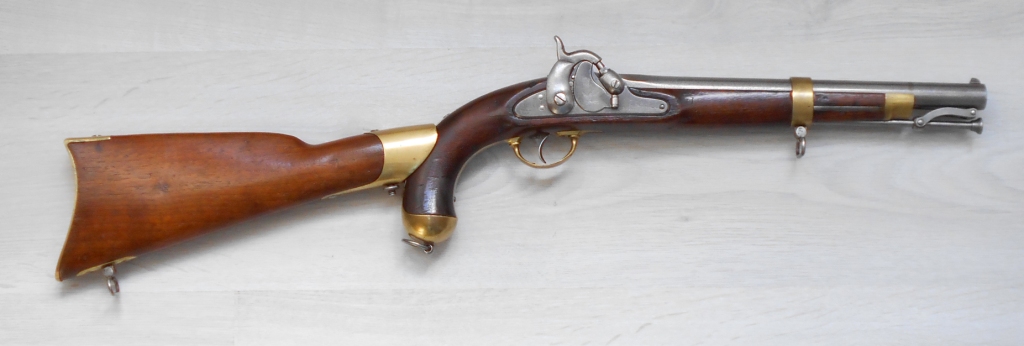
The Springfield Model 1855 was a mid‑19th century rifled musket developed and produced at the federal armory in Springfield, Massachusetts. It represented a transitional infantry firearm that combined the muzzleloading, percussion‑lock tradition with rifling and new priming and projectile ideas of the era. The Model 1855 saw service in the years leading up to and during the American Civil War and influenced later Springfield designs.
Image gallery
6 Images



Design and major components
The Model 1855 kept the basic silhouette of earlier muskets but incorporated modifications intended to improve range and rate of fire. Key features included:
- Rifled barrel — rifling increased accuracy at longer ranges compared with smoothbore muskets.
- Hollow‑based conical bullet — a Minié‑style projectile that expanded on firing to engage the rifling while still loading easily from the muzzle.
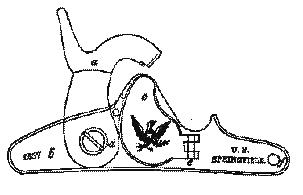
- Priming system — some examples were fitted with the Maynard tape primer, an automatic priming device intended to speed ignition; many weapons were also used with standard percussion caps.
- Muzzleloader action — soldiers loaded powder and bullet from the muzzle and used a percussion lock to fire.
Development and service history
Produced at the Springfield Armory and patterned on contemporary European innovations, the Model 1855 aimed to modernize U.S. infantry small arms. While the new elements offered theoretical advantages, some components—particularly the tape primer—proved less reliable in field conditions and were often abandoned or replaced in later modifications. The general concept of a rifled, muzzleloading musket equipped to fire the expanding conical bullet persisted and carried into later Springfield models.
Tactical use and performance
Compared with older smoothbore muskets, the Model 1855 gave infantrymen greater effective range and accuracy, changing skirmishing and battlefield formations. It remained a muzzleloader, however, so rate of fire was still limited by the need to ram a charge and projectile down the barrel. In the hands of trained soldiers the weapon could engage targets at significantly greater distances than earlier smoothbores, affecting tactics during the conflicts of the 1850s and 1860s.
Variants, successors and legacy
Shortcomings discovered in early wartime use led to field modifications and subsequent models that simplified the ignition system while retaining the rifled barrel and conical bullet concept. Later Springfield patterns kept the rifled, muzzleloading layout until breechloading and metallic cartridges made such designs obsolete. The Model 1855 is thus remembered as an important step in the evolution from smoothbore muskets to more modern small arms.
Notable facts and context
The Model 1855 was part of a broader international shift in the 1840s–1860s toward rifled small arms and expanding bullets. It was produced at the federal armory in Springfield—the Springfield Armory—and used by units in the United States during a turbulent period of expansion and conflict. Contemporary accounts note variations in performance depending on maintenance and whether the optional systems, such as the Maynard tape primer, were fitted or used; many examples eventually relied on the simpler percussion cap system. The weapon and its successors played a notable role in mid‑19th century military history in the United States.
Related articles
Author
AlegsaOnline.com Springfield Model 1855 (rifled musket) Leandro Alegsa
URL: https://en.alegsaonline.com/art/92874