
Mujaddid: the Islamic concept of religious renewal and reform
Mujaddid denotes a reformer who revives and renews religious life in the Muslim community, a concept rooted in a prophetic tradition that speaks of renewal every century and has shaped debates about reform and continuity.
The term mujaddid is an Arabic designation for a reformer or renewer who restores what adherents understand as the essential truths of religion and practice. In broad usage within Islam, a mujaddid is thought to confront accumulated errors, revive neglected teachings, and reorient communal life toward perceived original principles. The Arabic origin of the word is sometimes noted explicitly in descriptions of the concept: see the Arabic root and usage. Although popular accounts often speak of a single outstanding individual, many scholars allow that renewal can be collective or take institutional form.
Image gallery
8 Images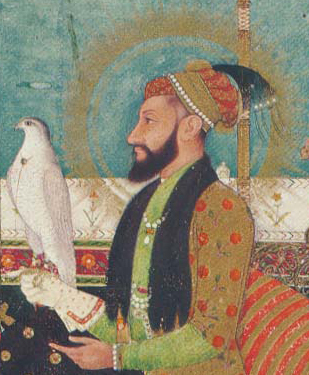


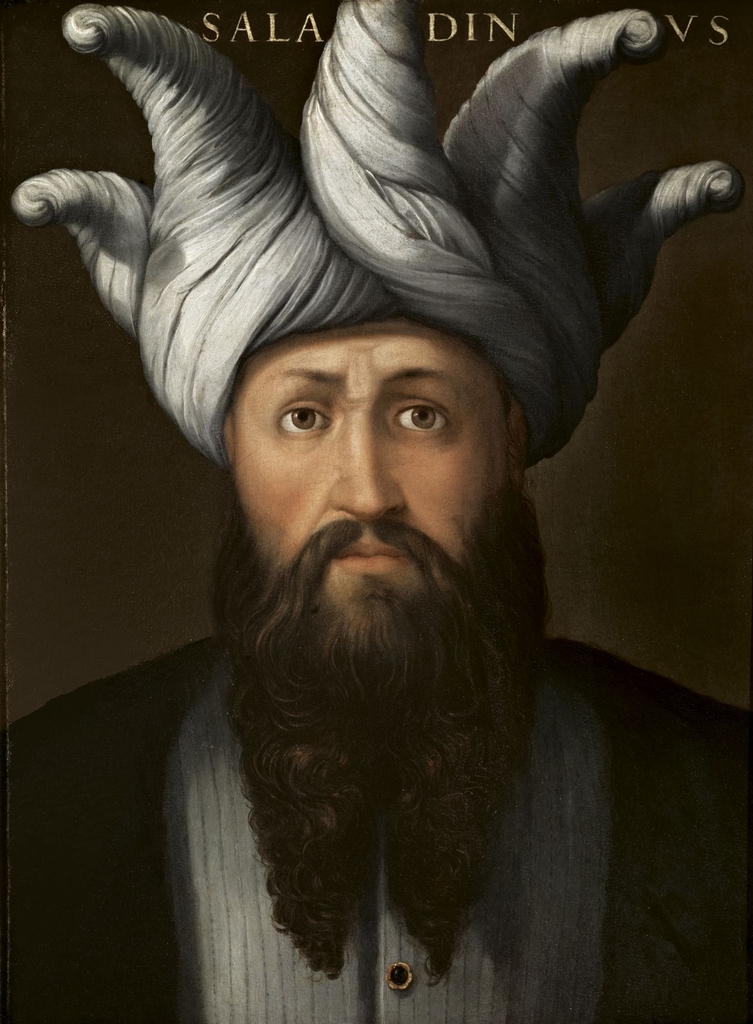


Role and characteristics
A mujaddid is not a formal office-holder with fixed powers; rather, the label is retrospective and honorific. Qualities commonly associated with figures described as mujaddids include deep grounding in textual sources, moral authority, capacity to correct widespread practices judged to be corruptions, and skill in reinterpreting tradition for new circumstances. Writers sometimes contrast a mujaddid's activity with mere innovation: renewal is framed as purification and recovery rather than arbitrary novelty. The idea may be invoked when communities seek authoritative responses to social change, intellectual challenges, or religious decline.
Scriptural basis and historical development
The primary textual foundation for the belief that God raises renewers is a saying transmitted in the hadith literature. That tradition—often cited in Sunni circles—says that God will send to the Muslim community someone or people who will renew the religion at the turn of every hundred years. This notion of periodic revival is tied to the concept of tajdid (renewal) and appears in collections of the Prophet's sayings; the particular narration is preserved in sources such as the Sunan compilations compiled by Abu Dawood and others, which are listed among authoritative Sunni collections. Scholars discuss not only the content of the report but also its implications: some read the report as promising a single mujaddid each century, while others allow for a plurality or more diffuse process. The hadith corpus itself is the subject of technical evaluation and interpretation by classical and modern hadith specialists.
Variations, debates, and examples
Opinion varies on who qualifies as a mujaddid and how one should be recognized. Some historians and biographers have applied the term to individuals they judged to have exercised extraordinary religious influence in a given century; others speak of movements, schools, or councils that accomplished reformist ends. Prominent medieval and early modern scholars discussed the possibility that reformers might appear in different regions simultaneously, and authorities such as al-Dhahabi and Ibn Hajar are cited in debates about whether the hadith implies a single person or a group. The expectation of renewal has been used at different times to justify corrective measures, scholarly revival, and renewed emphasis on scriptural learning.
- Textual basis: a prophetic statement in the hadith corpus (hadith) attributed to Prophet Muhammad about renewal every century (a hundred years).
- Scope: often framed in terms of the Islamic calendar and periodic renewal, but sometimes applied more loosely to eras of change.
- Recognition: retrospective, contested, and culturally situated rather than institutionalized.
In modern discussions, the mujaddid concept is invoked both conservatively and reform-mindedly. Some use it to legitimize measured reinterpretations that address contemporary problems—examples cited include responses to changing social norms or economic realities—while others caution against labeling controversial innovations as renewal. Proponents of renewal argue that not every inherited practice remains appropriate; critics warn that claims of revival can mask partisan interests. A commonly offered example of historical change often discussed in the context of renewal debates is the long-standing institution of slavery, which many commentators have argued requires moral and legal re-evaluation as societies and understandings develop.
Ultimately, the idea of the mujaddid expresses a balancing concern in Muslim thought: to maintain continuity with foundational texts and early practices while providing mechanisms for corrective change and adaptation. As a religious and intellectual category, it continues to shape how communities assess leaders, movements, and reforms across diverse historical contexts.
For further reading on related terms and debates see general entries on Arabic terminology, scholarly surveys of tajdid, and studies of periodization and authority in Islam (sources and collections). Additional resources examine how the idea of a centennial renewer has been interpreted in different schools and eras (century, calendar), and how reformist claims have been debated among jurists and historians (reform, hadith analyses).
Questions and answers
Q: What is a Mujaddid?
A: A Mujaddid is an Islamic reformer who has the task of removing errors that have occurred among Muslims and showing people the great religious truths which the Muslim community will be asked to face.
Q: What does the term Mujaddid mean?
A: The Arabic word mujaddid means "reformer", "renovator", "reviver", "renewer" or "regenerator". It is someone who revives and renovates the religion.
Q: How did the concept of Tajdid (renewal or revival) come about?
A: The concept of tajdid (renewal or revival) and the term mujaddid come from a hadith, a statement of Prophet Muhammad written down by Abu Dawood in his Sunan, one of six authoritative Sunni collections of the Prophet's statements.
Q: Who are looked upon as greatest Muslims in contemporary times?
A: In contemporary times, a mujaddid is looked upon as the greatest Muslim of a century.
Q: Is there disagreement among various hadith specialists regarding this topic?
A: Yes, there is disagreement among various hadith specialists regarding this topic. Scholars and historians like Al-Dhahabi and Ibn Hajar al-Asqalani have interpreted that the term mujaddid can also be understood as plural, thus referring to a group of people.
Q: Does Islam call for reform?
A: Yes, Islam calls for reform as it is part of its essential nature and Muslims are called all the time to work hard to make new ideas cope with tradition.
Related articles
Author
AlegsaOnline.com Mujaddid: the Islamic concept of religious renewal and reform Leandro Alegsa
URL: https://en.alegsaonline.com/art/67402
Sources
- islamicencyclopedia.org : Mujaddid - Islamic Encyclopedia
- books.google.com : The Religion of Islam by Muhammad Ali
- oxfordislamicstudies.com : "Mujaddid - Oxford Islamic Studies Online"
- sunnah.com : "Hadith - Book of Battles (Kitab Al-Malahim) - Sunan Abi Dawud - Sunnah.com - Sayings and Teachings of Prophet Muhammad (صلى الله عليه و سلم)"
- books.google.com : Medieval Islamic Civilization: An Encyclopedia
- dar-alifta.org : "Reform (Islah) and Renewal (Tajdid) in Islamic Thought"
- dar-alifta.org : "Renewal (Tajdid) in Islamic sciences"
- books.google.com : Aurangzeb and Tipu Sultan: Evaluation of Their Religious Policies
- books.google.com : Ottoman History - Misperceptions and Truths
- books.google.com : Mawdudi and the Making of Islamic Revivalism
- books.google.com : Religion in Southeast Asia: An Encyclopedia of Faiths and Cultures: An Encyclopedia of Faiths and Cultures
- livingislam.org : "Mujaddid Ulema"
- books.google.com : Paradise Lost: Reflections on the Struggle for Authenticity in the Middle East
- thepenmagazine.net : "Imam Ghazali: The Sun of the Fifth Century Hujjat al-Islam"
- muslimphilosophy.com : "al-Razi, Fakhr al-Din (1149-1209)"