
Monoculture: practice, effects, history and alternatives
Monoculture is the agricultural practice of growing a single crop over a large area. This article explains its features, benefits, risks, history, common examples and management alternatives.
Overview
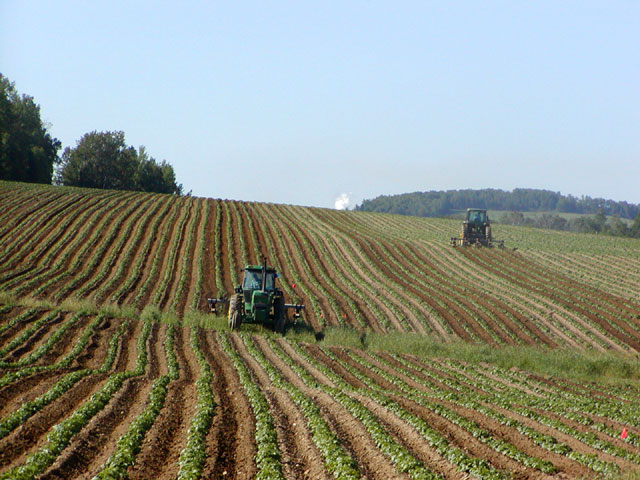
Monoculture refers to cultivating a single plant species across a large field, farm or region. This concentrated approach simplifies planting, management and harvesting because equipment, timing and techniques can be standardized for one crop. Large-scale monocultures are common in modern commercial agriculture and are often chosen to maximize short-term productivity and economic efficiency. For a concise explanation of the idea of growing only one kind of plant, see a general note on single-crop cultivation.
Image gallery
4 Images


Characteristics and practical consequences
Key characteristics of monoculture include uniform crop genetics, synchronized growth stages and simplified labor. These features allow farms to use specialized machinery and fewer seasonal workers to harvest at scale. However, the advantages come with well-documented trade-offs:
- Pest and disease vulnerability: When a large area contains only one host species, pests and pathogens that specialize on that species can spread rapidly. Agricultural literature often highlights outbreaks where an organism that attacks a single plant type causes widespread damage; general discussions of such biological threats can be found via resources about pests and diseases.
- Soil nutrient depletion: Different crops extract and return different nutrients. Continuous planting of one crop tends to remove the same sets of nutrients repeatedly, creating imbalances unless corrected.
- Input dependence: To maintain yields in monocultures farmers often rely on external inputs such as nutrients and fertilizers, plus irrigation and agrochemicals. This can raise costs and create environmental concerns if misapplied.
Management expertise strongly affects outcomes: experienced farmers can mitigate some problems by rotation planning, resistant varieties and integrated pest management, while poor practices may degrade a farm over time.
History, scale and notable examples
The expansion of monoculture accelerated with industrialization of agriculture, mechanization, and the development of high-yielding crop varieties. Large monocultures are typical for grains, oilseeds and plantation crops. A widely cited case is the global reliance on the Cavendish banana cultivar: because the commercial supply is genetically narrow, the Cavendish is susceptible to fungal diseases that threaten plantations and trade. Other historical examples include the widespread planting of single varieties of staple grains, which in some regions contributed to catastrophic crop failures during disease or pest outbreaks.
Uses, benefits and why farmers choose monoculture
Farmers and agribusinesses choose monoculture for several practical reasons: higher short-term yields per hectare of a chosen crop, simplified logistics for planting and marketing, economies of scale, and compatibility with modern mechanized equipment. For commodity markets where uniform product quality is important, monoculture can reduce sorting and processing costs. In many landscapes, monoculture also supports specialized supply chains that link producers, processors and exporters.
Alternatives and sustainable practices
To address the weaknesses of monoculture, farmers and researchers promote a range of alternatives and complementary practices: crop rotation, intercropping, polyculture, mixed farming, preserving genetic diversity and using integrated pest management. These strategies aim to reduce pest pressure, improve soil health, and lower reliance on chemical inputs while maintaining productive agriculture. The choice among these options depends on local climate, markets, resources and policy incentives.
Distinctions and notable facts
Monoculture differs from monocropping (repeated planting of the same crop in successive seasons) and from polyculture (growing multiple species together). The terms overlap but emphasize either spatial uniformity or temporal repetition. While monoculture can raise efficiency and output, its long-term sustainability is influenced by crop diversity, soil management and regional ecological conditions. For more introductory materials on each related topic, consult basic guides on single-crop systems, agricultural nutrient management and measures to control pests and pathogens. Technical or extension resources aimed at practitioners often discuss how farmers plan rotations, when to apply fertilizers, and how to minimize practices that might harm long-term farm health.
Overall, monoculture is a widespread agricultural strategy with clear economic advantages and recognized ecological risks. Understanding its mechanisms and applying informed management or alternative cropping systems can help balance productivity with resilience.
Related articles
Author
AlegsaOnline.com Monoculture: practice, effects, history and alternatives Leandro Alegsa
URL: https://en.alegsaonline.com/art/66099