
Missile Command
Missile Command is an early 1980s arcade defense game by Atari in which the player protects cities from incoming warheads using limited anti‑missile batteries and timed explosions.
Missile Command is an arcade video game released by Atari in the early 1980s. In the game the player must protect a group of population centers from waves of incoming warheads and projectiles by firing defensive interceptors. The core appeal lies in a combination of fast, simple controls and tense resource management: the player has a limited number of defensive missiles and a limited number of launch sites, and must judge timing and placement to create explosions that destroy enemy ordnance before it strikes buildings.
Image gallery
5 Images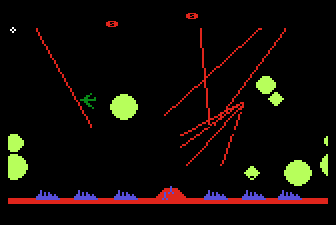



Gameplay and mechanics
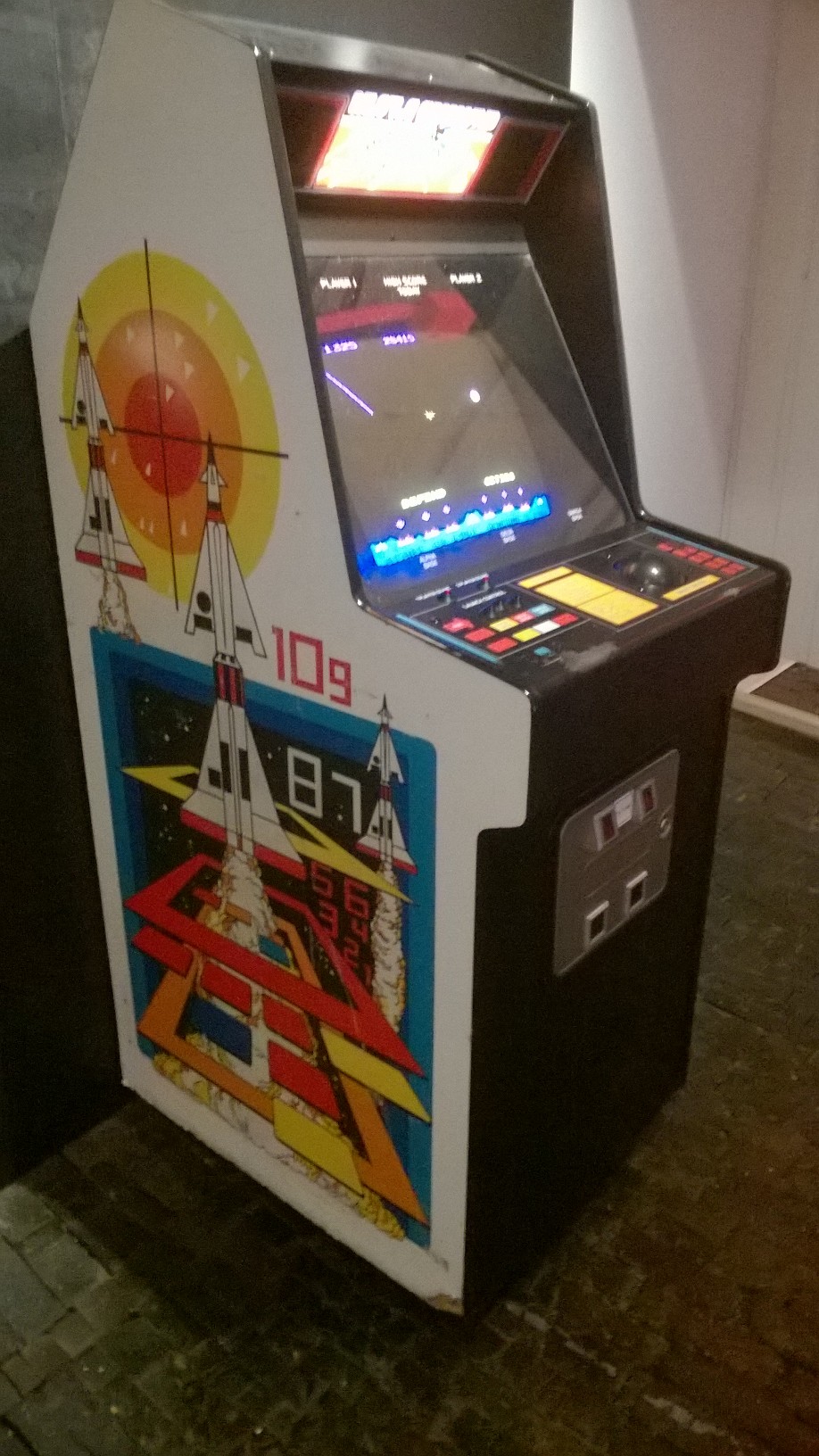
Play proceeds as a series of increasingly difficult waves. The player uses a movable targeting reticle to choose where to fire: placing the cursor and launching an interceptor causes an explosion at that point which remains for a short time and destroys any enemy projectile that passes through it. The arcade cabinet and many home versions represent the reticle as a crosshair or similar aiming marker. Defensible targets typically include up to six cities positioned along the bottom of the playfield; if all cities are destroyed, the run ends.
Defenses are organized into three ground batteries, each with its own finite stock of interceptors. When a battery expends its missiles or itself is destroyed by enemy fire, that battery becomes unusable for the remainder of the level. Players receive points for destroying incoming warheads, and at the end of each wave they are awarded bonus points for any surviving cities and any unused missiles that remain in their batteries. Because resources are limited, conserving ammunition and prioritizing targets are central strategic concerns.
Controls, strategy and features
- Simple input lets players aim and fire quickly; on the original cabinets this was handled with a trackball or analog controller and a single fire button.
- Explosions act as temporary area-denial zones; timing a detonation to overlap multiple flight paths yields greater efficiency.
- Players may choose to concentrate defenses around clustered cities or sacrifice outlying locations to preserve core assets.
- Some waves introduce varied enemy projectiles and increased speed, requiring rapid retargeting and anticipation of trajectories.
Successful play blends quick reflexes with long-term planning: knowing when to expend extra interceptors to save a city and when to conserve ammo for more dangerous upcoming waves. The brief, escalating rounds produce a distinct tension that became a hallmark of the design.
Origin, design and cultural context
Developed in an era when public concern about large-scale conflict was prominent, the game’s minimalist visual language—dots of incoming fire, simple city icons and stark sound cues—invoked the idea of defending civilian population centers from bombardment. Critics and historians have often noted how the game’s premise and presentation echo wider cultural anxieties of the period, while its mechanical clarity made it accessible to casual players and to the growing arcade audience.
Ports, releases and legacy
Following its arcade presence, the title was adapted to a range of home consoles and computer platforms. Official and licensed ports brought the experience into living rooms on systems such as the Atari 2600, and handheld adaptations appeared on devices including the Game Boy. In later decades the game has been included in compilations and retro re-releases on modern systems and digital stores, appearing in various collections and as a downloadable classic on platforms like the Xbox 360. Many other designers created clones, homages and spiritual successors that expanded on the defensive, area-control ideas the game popularized.
Because of its straightforward rules and memorable tension, the game is frequently cited in discussions of early arcade design and as an influence on later genres that emphasize defending space or points of interest. Its combination of limited resources, escalating threat and simple yet expressive audiovisual feedback helped it remain visible to players and preservationists interested in the development of game mechanics and cultural themes in electronic entertainment. For historical context, preservation efforts, and modern releases, consult primary archives and curated collections that document arcade and console history via dedicated resources and compilations. For related information, see the original arcade lineage and later adaptations discussed above: game overview, enemy projectiles, and background sources that examine design and reception across platforms.
Related articles
Author
AlegsaOnline.com Missile Command Leandro Alegsa
URL: https://en.alegsaonline.com/art/65462