
Mitro Bahini (Allied Forces of the 1971 Bangladesh Liberation War)
Mitro Bahini was the wartime alliance of the Indian Army and the Mukti Bahini that fought Pakistani forces in East Pakistan in 1971, culminating in the Pakistani surrender on 16 December 1971.
Overview
Mitro Bahini (Bengali: মিত্রবাহিনী) refers to the wartime partnership between the Indian military and the Bengali guerrilla fighters known as the Mukti Bahini during the 1971 conflict in East Pakistan. The name literally means "allied forces" in Bangla and describes the coordinated campaign that combined regular Indian formations with local liberation fighters to confront the occupying Pakistan Army. This cooperation was decisive in bringing the conflict to a rapid conclusion in December 1971.
Image gallery
3 Images
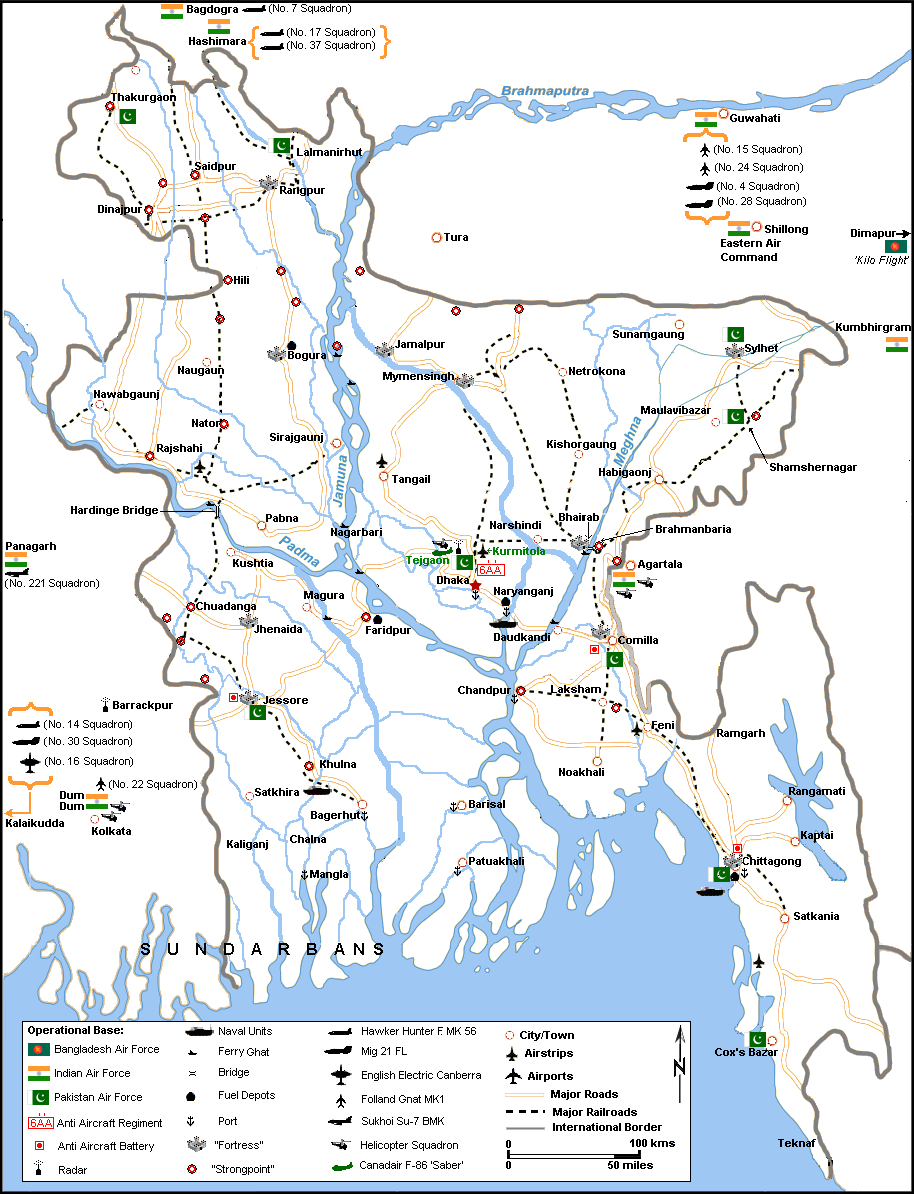

Composition and organization
The Mitro Bahini brought together units of the Indian Army and elements of the Mukti Bahini, supplemented by Indian air and naval support. The Mukti Bahini had been conducting an irregular insurgency and refugee relief operations since early 1971; when India intervened militarily, these forces operated as auxiliaries, guides, and local commanders alongside conventional Indian formations. The alliance combined conventional tactics with local knowledge, enabling rapid advances across challenging terrain.
Campaign and operations
Military operations under the Mitro Bahini umbrella unfolded across multiple fronts in East Pakistan. Indian forces launched coordinated offensives from the west, south and the Indian state borders, while Mukti Bahini units disrupted communications, gathered intelligence, and seized key towns and river crossings. The integration of regular and irregular operations accelerated the collapse of organized resistance and facilitated quicker territorial gains than either side could have achieved alone.
Surrender and aftermath
The campaign culminated in the formal surrender of Pakistani forces in East Pakistan on 16 December 1971. The capitulation marked the end of large-scale hostilities in the region and led directly to the creation of an independent Bangladesh. The rapid outcome owed much to the operational synergy between Indian formations and Mukti Bahini units under the Mitro Bahini arrangement.
Legacy and significance
Mitro Bahini is remembered as a notable example of collaboration between a regular army and indigenous liberation forces. It reshaped the political map of South Asia, influenced post-war refugee return and reconstruction, and remains a central element in narratives of Bangladesh’s independence. For further reading on the language, forces and organizations involved, see linguistic and military resources such as Bengali language references and institutional histories of the Indian Army and the Mukti Bahini.
- Key date: 16 December 1971 — capitulation of Pakistani forces.
- Main components: regular Indian military units + Mukti Bahini guerrillas.
- Result: emergence of the independent state of Bangladesh and large-scale surrender of Pakistan Army forces in the east.
Related articles
Author
AlegsaOnline.com Mitro Bahini (Allied Forces of the 1971 Bangladesh Liberation War) Leandro Alegsa
URL: https://en.alegsaonline.com/art/65561