
Microtubule
Microtubules are hollow, filamentous polymers of tubulin that form part of the cytoskeleton; they give cells shape, enable intracellular transport, and drive motility and chromosome segregation.
Microtubules are long, hollow protein filaments found throughout biological cells. They are a principal component of the cell cytoskeleton, contributing to mechanical support, internal organization, and dynamic processes such as movement and division. Microtubules are polar structures: their ends differ in biochemical properties and rates of growth, which underlies many cellular behaviors.
Image gallery
10 Images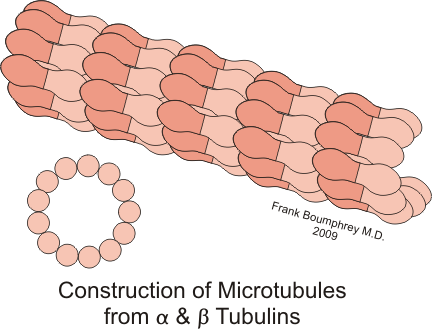


Structure and dynamics
Each microtubule is a cylindrical tube formed by the lateral association of protofilaments made from alpha- and beta-tubulin dimers. A common form has 13 protofilaments around the circumference and an outer diameter of roughly 25 nanometers. Tubulin binds and hydrolyzes GTP, and cycles of nucleotide exchange drive phases of growth and shrinkage known as "dynamic instability." Microtubules typically nucleate from microtubule organizing centers (MTOCs) such as the centrosome, and they exhibit directional growth from a faster "plus" end and slower "minus" end.
Functions and cellular roles
Microtubules perform several essential tasks in eukaryotic cells. Key roles include:
- Maintaining cell shape and resisting compression.
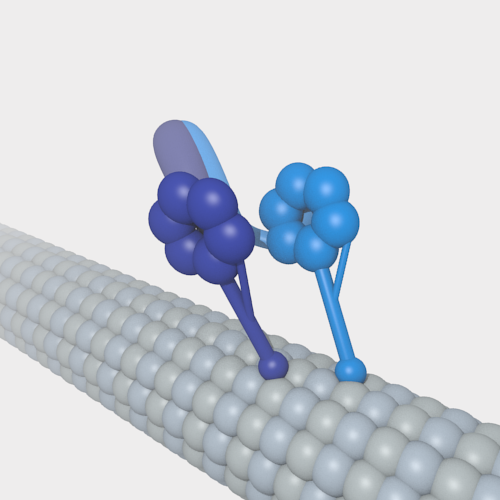
- Directing intracellular transport by serving as tracks for motor proteins (kinesins and dyneins), which move vesicles and organelles.
- Powering cell motility through specialized arrays in cilia and flagella (the classic 9+2 axoneme arrangement).
- Facilitating accurate segregation of chromosomes during cell division by forming the mitotic spindle.
These activities depend on associated proteins: microtubule-associated proteins (MAPs) stabilize or destabilize filaments, and severing enzymes remodel networks.
Historical and biomedical notes
Microtubules were revealed with electron microscopy in the mid‑20th century and have since become central to cell biology and medicine. Several clinically important drugs target microtubules: for example, taxanes stabilize microtubules and are used in cancer chemotherapy, while colchicine disrupts polymerization and is used in gout and for experimental manipulation. Abnormal regulation of microtubule-associated proteins, such as tau, is implicated in neurodegenerative conditions.
Research and techniques
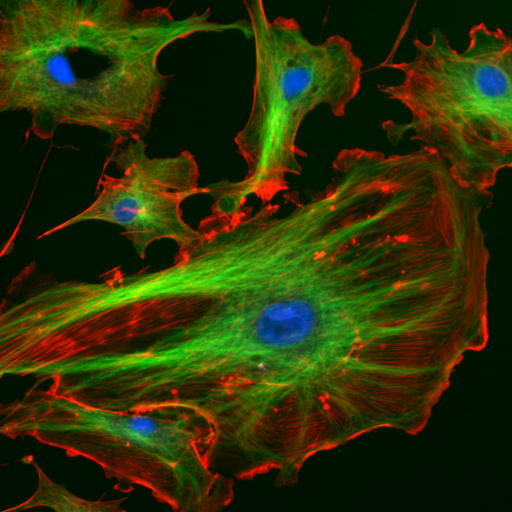
Modern studies employ fluorescence microscopy, live-cell imaging, in vitro reconstitution, and high-resolution cryo-electron microscopy to observe microtubule behavior and interactions. Understanding their dynamics and regulation remains an active area of research because of microtubules' central role in intracellular organization and their relevance to disease and therapy.
For accessible overviews and primary literature, consult specialized resources and reviews by cell biology groups and textbooks.
Related articles
Author
AlegsaOnline.com Microtubule Leandro Alegsa
URL: https://en.alegsaonline.com/art/64640
Sources
- doi.org : 10.1016/S0092-8674(03)00111-9
- pubmed.ncbi.nlm.nih.gov : 12600311
- doi.org : 10.1016/j.ceb.2006.12.009