
Michigan Avenue (Chicago)
Major north–south thoroughfare in Chicago known for the Magnificent Mile, shopping, landmark architecture, and cultural institutions along Lake Michigan’s lakefront.
Michigan Avenue is one of Chicago’s most prominent north–south streets, located at 100 east in the city's rectangular street grid. It extends from the lakeshore through several commercial and residential neighborhoods, with its northern terminus at Lake Shore Drive near the shore of Lake Michigan. The avenue takes its name from the U.S. state of Michigan and has become a focal point for tourism, retail, and urban architecture in Chicago.
Image gallery
10 Images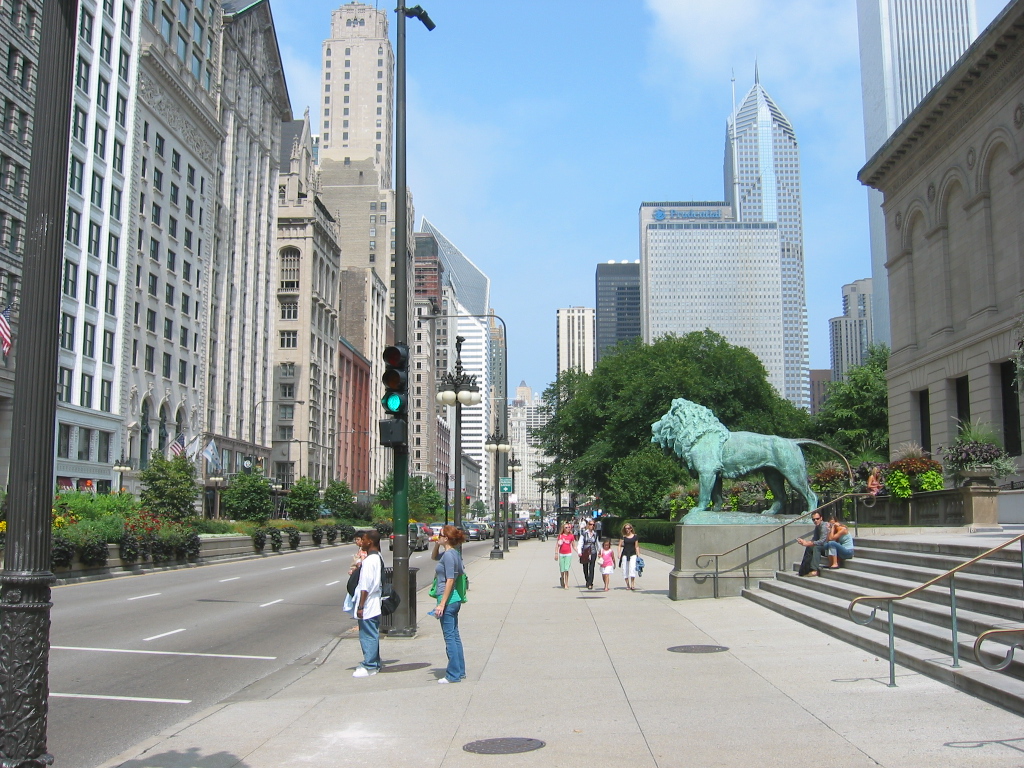




Layout and distinctive sections
The street is commonly discussed in terms of North Michigan Avenue and South Michigan Avenue, divided by the Chicago River and the central business district known as the Loop. A well-known segment of North Michigan Avenue, running roughly from the Chicago River to Oak Street, is the commercial corridor called the "Magnificent Mile." That stretch contains an unusually dense concentration of department stores, boutiques, hotels, restaurants and office towers, and it terminates near the Gold Coast neighborhood.
History and development
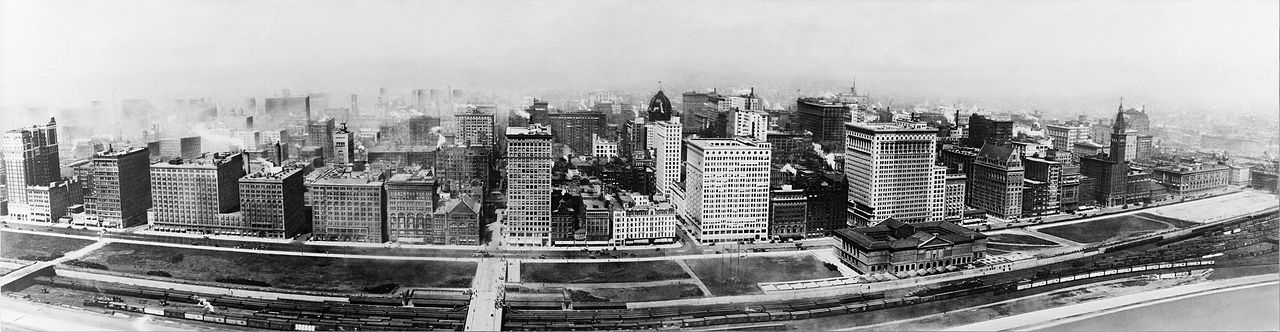
Originally laid out in the 19th century as Chicago expanded, Michigan Avenue grew in importance as bridges, retail development and high-rise construction transformed the lakefront into a major urban axis. The Michigan Avenue Bridge (now formally recognized as the DuSable Bridge) across the Chicago River helped link the north and south sides of the city and encouraged commercial growth along the avenue. Over the late 19th and 20th centuries the street evolved from a municipal route into a symbolic address for Chicago architecture and business.
Notable landmarks and architecture
- Historic towers and façades including the Wrigley Building and Tribune Tower near the river.
- Prominent high-rises such as 875 North Michigan (the former John Hancock Center) and other skyline-defining structures.
- Cultural institutions and museums accessible from the avenue and neighboring blocks.
- The DuSable (Michigan Avenue) Bridge, a frequently photographed crossing and engineering landmark.
Uses, events and significance
Michigan Avenue functions as a commercial spine and tourist destination: it hosts flagship retail stores, fine dining, luxury hotels and architecture tours. The street plays a seasonal role in public life as well; one well-known annual event is the November Magnificent Mile Lights Festival, currently presented with corporate sponsorship and festivities that include a parade and lighting ceremony (Magnificent Mile Lights Festival). The avenue’s mix of shopping, civic presence and architectural interest makes it central to many visitors’ impressions of the city.
As both a practical urban artery and a symbol of Chicago’s commercial and cultural identity, Michigan Avenue continues to be shaped by preservation efforts, new development, and events that draw local residents and international visitors alike. For maps, transit links and visitor information, see resources about Chicago and the lakefront roadways such as Lake Shore Drive.
Related articles
Author
AlegsaOnline.com Michigan Avenue (Chicago) Leandro Alegsa
URL: https://en.alegsaonline.com/art/64552