
Menorah (Temple): the seven‑branched sacred lamp
The Temple menorah was the seven‑branched golden lampstand of ancient Israel, described in the Hebrew Bible, central to Temple ritual, later taken to Rome and now an enduring Jewish symbol.
The Temple menorah was a seven‑branched lampstand used by the ancient Israelites and placed in the central sanctuary known as the Temple. Described in the Hebrew scriptures, it was fashioned from gold and kept lit with olive oil. Biblical accounts present the menorah as an object created after instructions given by God to Moses during the desert tabernacle period and later used in the permanent Temple, with ritual details also discussed in texts such as the Book of Numbers.
Image gallery
10 Images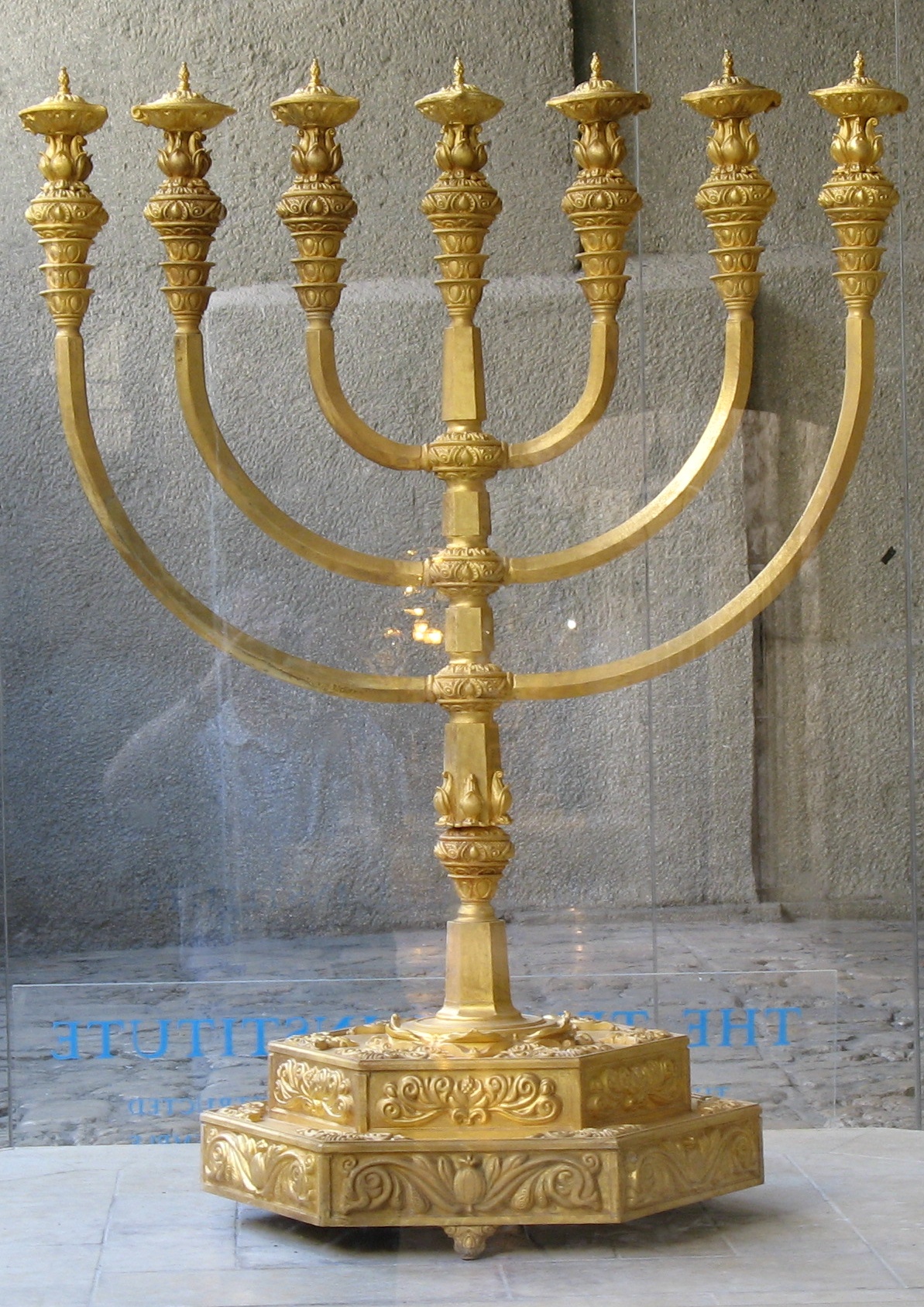


Design and components
The Temple menorah is commonly pictured with a central shaft and three curved branches on each side, making seven lamps in total. Ancient descriptions emphasize ornate workmanship rather than mechanical parts: each arm held a lamp or cup and the whole structure was to be made of refined metal. Traditional accounts describe decorative motifs such as stylized flowers or almond blossom-like forms and require pure oil and careful trimming of wicks so the light burned steadily throughout the night.
History and notable events
The menorah stood as a permanent feature of the Temple ritual until the destruction of the Second Temple. In 70 CE, Roman forces conquered Jerusalem and removed Temple treasures; Roman sources and later artistic reliefs record that the menorah was among the objects taken by the Romans and carried off to Rome to be displayed in victory processions. This loss transformed the menorah into a poignant symbol of exile and the destruction of cultic life at the historic sanctuary.
Religious meaning and cultural legacy
The menorah carries layered meanings: as a practical source of light in a sacred space, as a ritual object commanded by scripture, and as a symbol of divine presence and illumination in Jewish thought. Its image has been reused in art, on ancient coins, and in modern emblems. Today a stylized menorah appears on Israel's coat of arms, and replicas are found in synagogues and museums. The menorah also figures in later narratives and observances, notably in the story that inspired the Hanukkah lamp tradition.
Distinctions and modern practice
- Temple menorah: the seven‑branched stand used in ancient ritual and described in biblical texts.
- Hanukkah menorah (hanukkiah): a related but distinct nine‑branched lamp used to commemorate the Hanukkah miracle; it includes eight lights plus a helper lamp (shamash).
- Symbolic uses: as national, religious, and cultural emblem rather than a functioning cult object since the Temple's destruction.
Archaeological and artistic evidence for the Temple menorah is limited to textual descriptions and a small number of sculptural representations, the best known being Roman reliefs that preserved its form in the context of conquest imagery. Because the original stand has not survived, most modern knowledge combines literary sources, later Jewish tradition, and comparative studies of ancient metalwork to form a consensus about its appearance and function. The menorah remains one of the most recognizable symbols connected to ancient Israelite worship and continuing Jewish identity.
Related articles
Author
AlegsaOnline.com Menorah (Temple): the seven‑branched sacred lamp Leandro Alegsa
URL: https://en.alegsaonline.com/art/63823