
Masherbrum (K1): A Karakoram Peak in Pakistan
Masherbrum, formerly K1, is a 7,821 m peak in Pakistan's Karakoram. Known for steep faces and technical climbing, it was first climbed in 1960 by George Irving Bell and Willi Unsoeld.
Overview
Masherbrum is a high, rugged mountain in the Karakoram range of northern Pakistan. Its summit rises to 7,821 metres (25,659 ft), making it one of the world's higher peaks and commonly listed among the top‑ranked seven‑ and eight‑thousanders. Long visible from surrounding valleys, the mountain is noted for steep ridges, glaciated flanks and a striking pyramidal profile.
Image gallery
6 Images

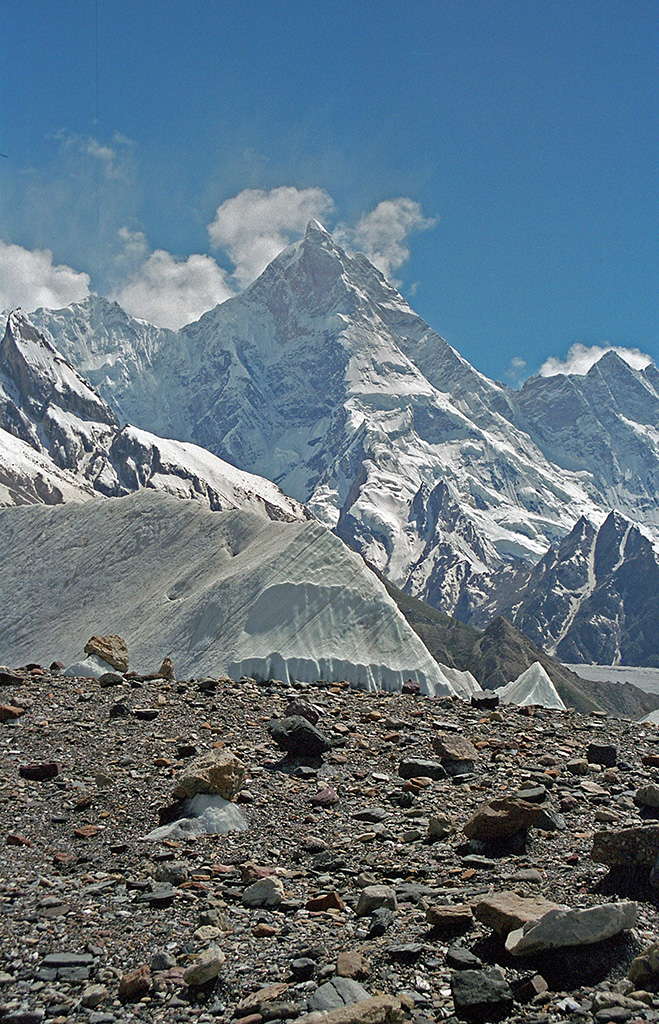


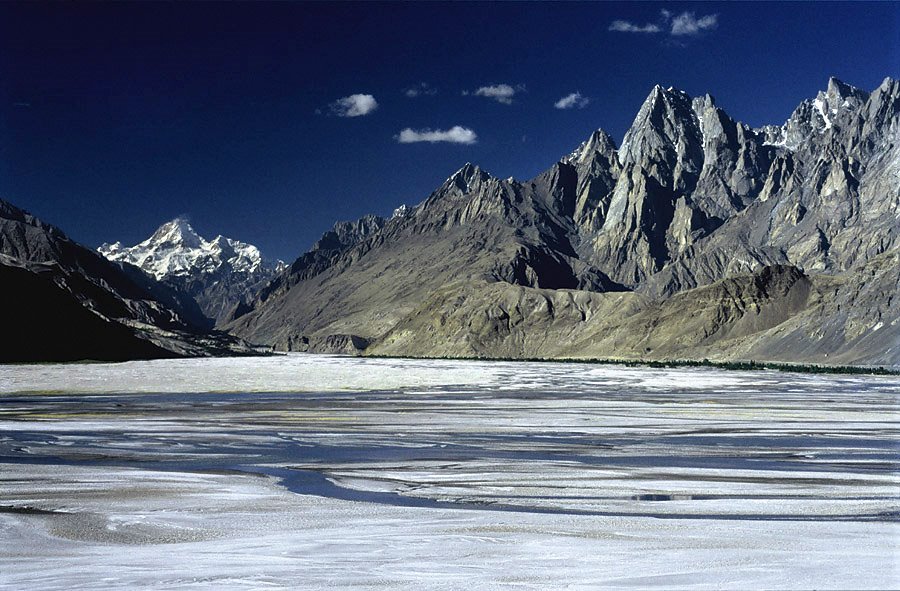
Geography and physical characteristics
Masherbrum stands within the broader Karakoram, a complex of peaks and glaciers that separates river systems in the high Himalaya region. The mountain is approached through remote valleys and moraine fields; its slopes feed nearby glaciers and are characterized by mixed ice and rock climbing. Compared with some other giants in the Karakoram, Masherbrum is distinguished by sharply defined faces and a reputation for objective hazards such as serac fall and avalanche.
Naming and early exploration
During early surveys of the Karakoram, foreign surveyors applied simple labels to prominent summits. Masherbrum was originally recorded as K1, a survey-era designation that survives in historical references. Over time the peak became better known by its local name, which reflects regional linguistic and geographic traditions. The mountain drew interest from European and American mountaineers in the mid‑20th century as exploration of the Karakoram intensified.
Climbing history and routes
The first documented ascent of the main summit was made in 1960 by climbers George Irving Bell and Willi Unsoeld, a milestone that opened the mountain to further technical attempts. Routes on Masherbrum demand careful route‑finding and sustained high‑altitude technical climbing; teams contend with variable ice, steep rock, and remote logistics. For contemporary accounts and climbing summaries see collected climbing records and expedition reports, which discuss standard lines and common objective dangers.
Significance and notable facts
Masherbrum occupies a prominent place in regional geography and mountaineering. It is frequently cited in lists of the world's highest peaks and remains an objective target for experienced alpinists seeking technical 7,000‑metre challenges rather than the higher 8,000‑metre objectives. The mountain also has cultural and economic importance for local communities that live in the surrounding valleys and serve as high‑mountain guides and support for expeditions.
- Elevation: 7,821 m (25,659 ft).
- Alternative name: K1 (historical survey designation).
- First ascent: 1960, George Irving Bell and Willi Unsoeld.
- Region: Karakoram, northern Pakistan; remote approaches and glaciated terrain.
Related articles
Author
AlegsaOnline.com Masherbrum (K1): A Karakoram Peak in Pakistan Leandro Alegsa
URL: https://en.alegsaonline.com/art/62628
Sources
- peaklist.org : "High Asia I: The Karakoram, Pakistan Himalaya and India Himalaya (north of Nepal)"
- americanalpineclub.org : "In Memorium"
- commons.wikimedia.org : Masherbrum
- wikidata.org : wikidata.org/wiki/Q854295
- d-nb.info : 4128104-4
- viaf.org : 243035806
- worldcat.org : 243035806