
Mayon Volcano (Mount Mayon)
Mayon Volcano is an active stratovolcano in Albay province, Philippines, famed for its near-perfect conical profile, significant volcanic activity, and status as a protected natural park and tourist landmark.
Overview
Mayon Volcano, commonly called Mount Mayon, rises in the province of Albay on the island of Luzon in the Philippines. It is a prominent feature of the western edge of the Pacific Ring of Fire (link) and is widely known for its symmetrical, near-perfect cone. The mountain reaches about 2,642 metres in elevation and combines scenic appeal with ongoing geologic activity.
Image gallery
10 Images




Physical characteristics
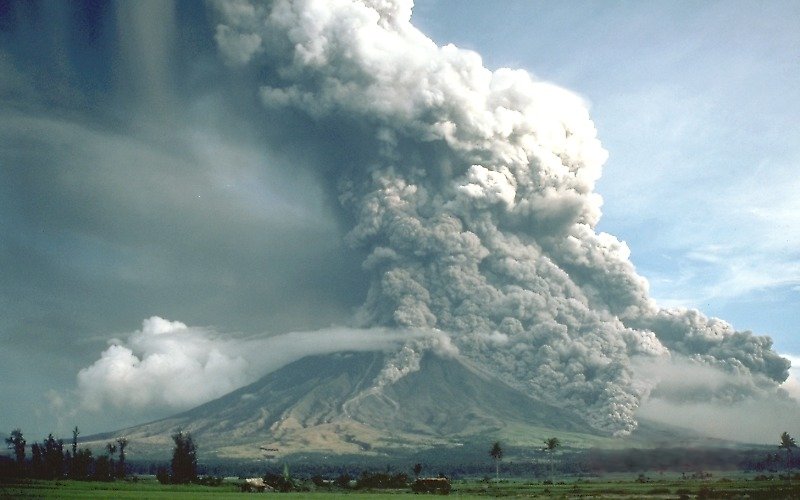
Mayon is an andesitic stratovolcano, built from repeated layers of lava flows, ash and volcanic debris. Its steep slopes and conical silhouette make it a textbook example of this volcano type. Eruptive behavior typically includes lava effusion, explosive ash-producing events, and pyroclastic flows; these processes shape the mountain and create hazards for nearby communities.
History and protection
Historically, Mayon has erupted repeatedly over centuries; it is regarded as one of the Philippines' most active volcanoes and has influenced settlement, agriculture and local culture. The name "Mayon" is derived from the Bicol word magayon, meaning "beauty." In 1938 the area was declared a national park and in 2000 it was redesignated as the Mayon Volcano Natural Park, a protected area intended to conserve both the volcanic landscape and surrounding ecosystems while supporting regulated tourism and scientific study.
Uses, risks and management
Mayon is a major attraction for visitors, artists and researchers. Sightseeing, photography and supervised viewing are popular when activity levels allow, but access to the summit and slopes is periodically restricted for safety. Authorities monitor seismicity, gas emissions and ground deformation to forecast eruptions and coordinate evacuations. Primary hazards include ashfall, lava flows, pyroclastic density currents and lahars (volcanic mudflows) that can affect valleys and river channels below the volcano.
Notable facts and advice
- Iconic shape: Its nearly perfect cone has made Mayon a symbol of natural beauty and a subject of scientific interest.
- Cultural importance: Mayon appears in local folklore, art and regional identity.
- When visiting: Check official advisories, follow park rules, and respect exclusion zones established by monitoring agencies.
- Further information: For regional context see resources about the Pacific Ring of Fire and local governance pages for Albay and the Philippines.
Related articles
Author
AlegsaOnline.com Mayon Volcano (Mount Mayon) Leandro Alegsa
URL: https://en.alegsaonline.com/art/63129
Sources
- pawb.gov.ph : "Protected Areas in Region 5"