
Marten (genus Martes) — small mustelids of the Northern Hemisphere
Martens are arboreal, scent-marking mustelids in the genus Martes. Found across the Northern Hemisphere, they are solitary omnivores with valuable fur and varied conservation statuses.
The marten is a group of small carnivoran mammals widely recognized for their agile, tree-climbing habits. They belong to the family Mustelidae and the genus Martes. As small mammals, martens share characteristics with other mustelids: elongated bodies, sharp teeth, and thick fur. Taxonomists currently treat the group as comprising several distinct species — commonly cited as eight species in the genus Martes — each adapted to particular forested landscapes.
Image gallery
10 Images




Characteristics and appearance
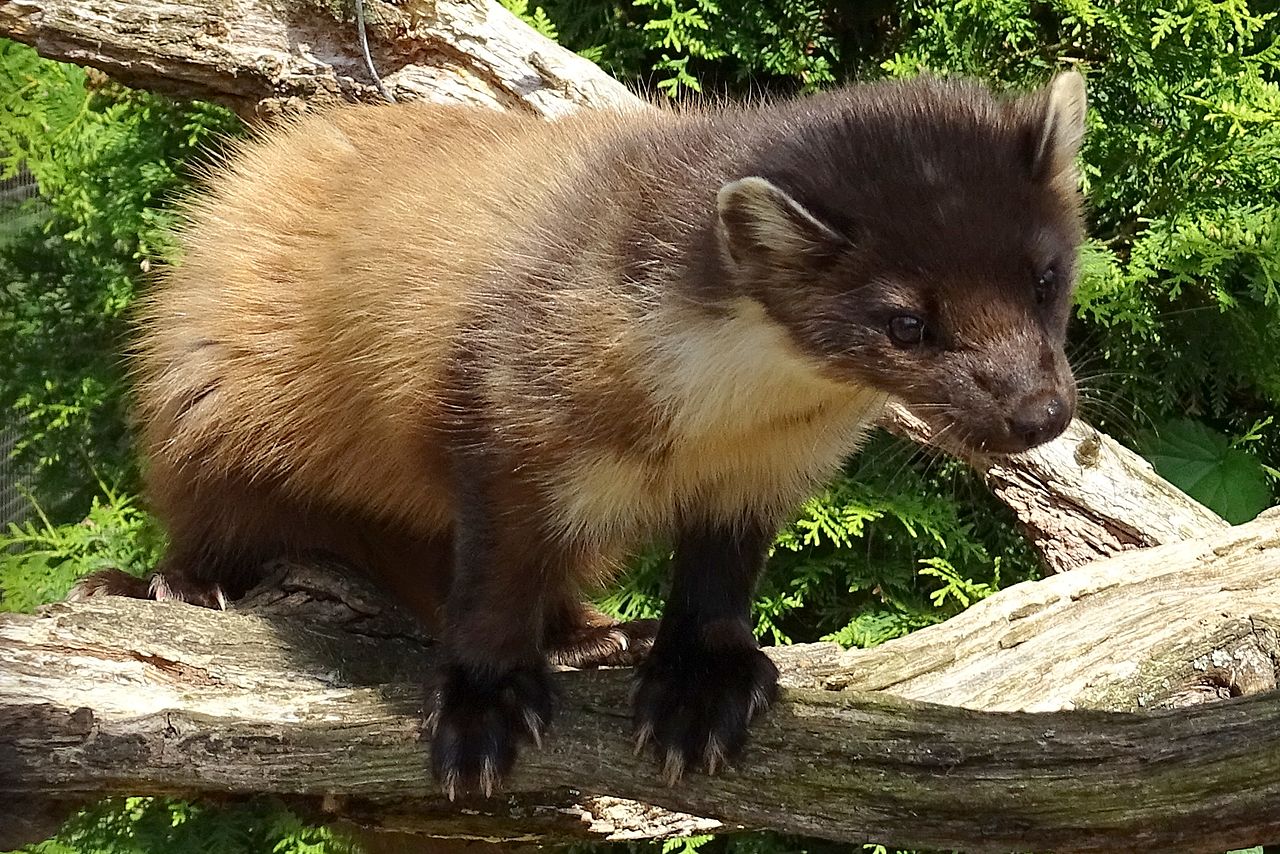
Martens are medium-sized, with slender bodies, bushy tails, and semi-retractile claws that help them climb. Their fur ranges from brown to dark brown and can have pale or orange throat patches in some species. They are generally solitary and territorial, using scent glands and feces to mark home ranges. Many species are primarily nocturnal or crepuscular, moving nimbly through trees to hunt and escape predators.
Distribution and habitat
Martens inhabit the Northern Hemisphere, favoring forested and mountainous areas. They are found across the Northern Hemisphere, with populations in North America and especially parts of Canada, throughout Europe, and across large swathes of Asia. Different species occupy boreal, temperate, and mixed woodlands, often preferring dense canopy and abundant den sites.
Diet, behaviour and reproduction
Martens are opportunistic omnivores: their diet can include small mammals, birds, eggs, fruits, insects and carrion. Foraging strategies vary with season and local food availability. Breeding systems are generally solitary; females raise young alone. Some species show delayed implantation, a reproductive feature present in several mustelids, which times birth to favorable seasons.
Species examples and human interactions
- American marten (Martes americana)
- European or pine marten (Martes martes)
- Sable (Martes zibellina)
- Yellow-throated marten (Martes flavigula)
- Japanese marten (Martes melampus)
Martens have a long association with people, both as predators of poultry and as valued furbearers. Historically trapped for their pelts, some populations declined, prompting management and legal protection in parts of their range. Conservation status varies by species and region; habitat loss, fragmentation and over-trapping remain common pressures.
Notable facts and distinctions
Within Mustelidae, martens are distinguished by their arboreal adaptations and often more omnivorous diets compared with ground-dwelling relatives. Their ecology makes them indicators of forest health: robust marten populations generally reflect intact, mature woodlands. For more on related groups and detailed species accounts, consult specialist resources and regional wildlife agencies.
Further reading on small mammals • Mustelid family overview • Genus Martes • List of Martes species • Northern Hemisphere distribution • North American records • Canadian marten populations • European status • Asian range
Related articles
Author
AlegsaOnline.com Marten (genus Martes) — small mustelids of the Northern Hemisphere Leandro Alegsa
URL: https://en.alegsaonline.com/art/62306