
Massospondylus — early sauropodomorph dinosaur from southern Africa
Massospondylus, named in 1854, is a well-known early sauropodomorph from southern Africa. This bipedal herbivore is important for studies of dinosaur growth, reproduction and sauropod origins.
Overview
Massospondylus is an extinct genus of early sauropodomorph dinosaur first described in the mid-19th century. Most specimens come from deposits in southern Africa and are typically dated to the boundary interval between the Late Triassic and Early Jurassic. As a basal member of the lineage that led to the large, long-necked sauropods, Massospondylus occupies an important place in reconstructions of early dinosaur evolution.
Image gallery
10 Images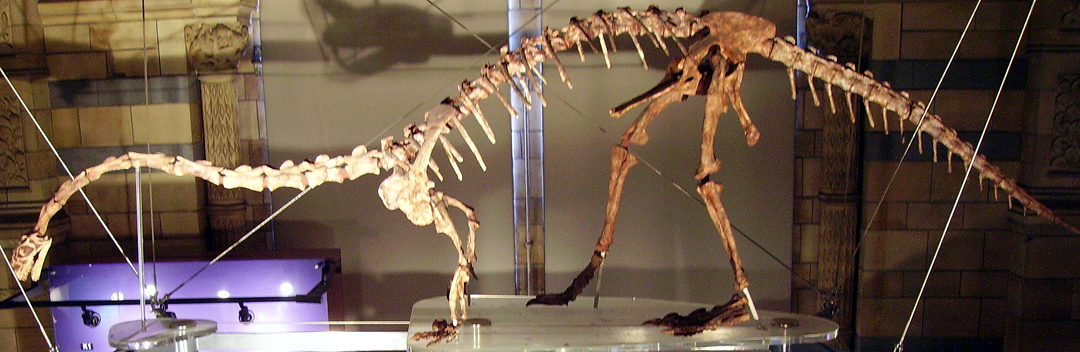


Key characteristics
Massospondylus had a relatively small head, an elongated neck and a lightly built body. It is commonly reconstructed as primarily bipedal, with strong hind limbs and shorter forelimbs that could possibly support some weight. Teeth were generally leaf-shaped, suitable for cropping plant material. Other notable features include a somewhat flexible neck and large manus claws typical of basal sauropodomorphs.
- Body plan: long neck, relatively small skull, robust tail
- Locomotion: primarily bipedal but capable of varied postures
- Teeth and diet: leaf-shaped teeth indicating herbivory or omnivory
- Distinctive anatomy: large thumb claw and grasping hands
Discovery and naming
The genus was named by the British paleontologist Richard Owen in 1854; the type species is Massospondylus carinatus. Many specimens have been found in the Karoo Basin and related formations, with material coming from multiple localities in South Africa and nearby regions. Over the years, additional finds and reappraisals have refined the understanding of its anatomy and relationships within early sauropodomorphs. For a concise taxonomic summary see taxonomic references.
Paleobiology and behavior
Evidence from bone microstructure and growth series suggests Massospondylus grew relatively rapidly as juveniles and reached adult proportions over several years. Its teeth and jaw mechanics point toward a diet dominated by plants, although some researchers allow for occasional omnivory in young individuals. Trackways attributed to similar early sauropodomorphs indicate the capability for sustained bipedal locomotion. For broader discussions of its ecology consult general sources such as regional stratigraphy and paleoenvironmental literature available through overview portals (research summaries).
Reproduction, fossils and scientific importance
Massospondylus is notable for fossils interpreted as eggs and embryos, which have informed debates about dinosaur nesting, development and parental care. These specimens provide rare insight into early ontogeny and behaviour in non-avian dinosaurs. Because of its abundance in some fossil beds and its phylogenetic position, Massospondylus is frequently cited in studies of sauropodomorph anatomy, growth patterns and the evolutionary transition toward the giant sauropods that dominated later Mesozoic ecosystems.
Distinctions and legacy
While not as large or famous as later sauropods, Massospondylus remains a cornerstone taxon for understanding the early diversification of plant-eating dinosaurs. Its combination of primitive and derived traits helps paleontologists trace morphological shifts in neck length, limb proportions and feeding adaptations that preceded the rise of true sauropods. Museum collections and educational resources often feature Massospondylus as a representative of early Jurassic terrestrial communities.
Related articles
Author
AlegsaOnline.com Massospondylus — early sauropodomorph dinosaur from southern Africa Leandro Alegsa
URL: https://en.alegsaonline.com/art/62718