
Maiasaura — the 'good mother' duck-billed dinosaur
Maiasaura, a Late Cretaceous hadrosaurid, is famous for nesting colonies and evidence of parental care. Discovered in Montana, it influenced ideas about dinosaur behavior, growth, and social life.
Overview
Maiasaura is a genus of large herbivorous hadrosaurid often described as a duck-billed dinosaur. It lived in western North America during the Late Cretaceous and is best known for fossil finds that preserved adults together with nests and young, offering rare insight into dinosaur life history. The name Maiasaura means "good mother lizard," reflecting this evidence of parental care.
Image gallery
10 Images




Discovery and naming
Fossils attributed to Maiasaura were recovered from the Two Medicine Formation near Choteau, Montana, in an area commonly called Egg Mountain. The genus and type species, Maiasaura peeblesorum, were formally described in 1979 by paleontologists including Jack Horner. The discovery included multiple nesting sites and bonebeds that made it one of the most informative dinosaur finds of the 20th century.
Characteristics and anatomy
Maiasaura was a large, primarily quadrupedal herbivore that could also move on two legs. Typical features include a broad, flattened snout with a beak for cropping vegetation, rows of tightly packed teeth arranged into a grinding battery, and a robust body suitable for long-distance movement. Size estimates vary with age, but adults reached several metres in length and weighed multiple tonnes.
- Broad, duck-like beak and complex cheek-tooth battery
- Adapted for both bipedal and quadrupedal locomotion
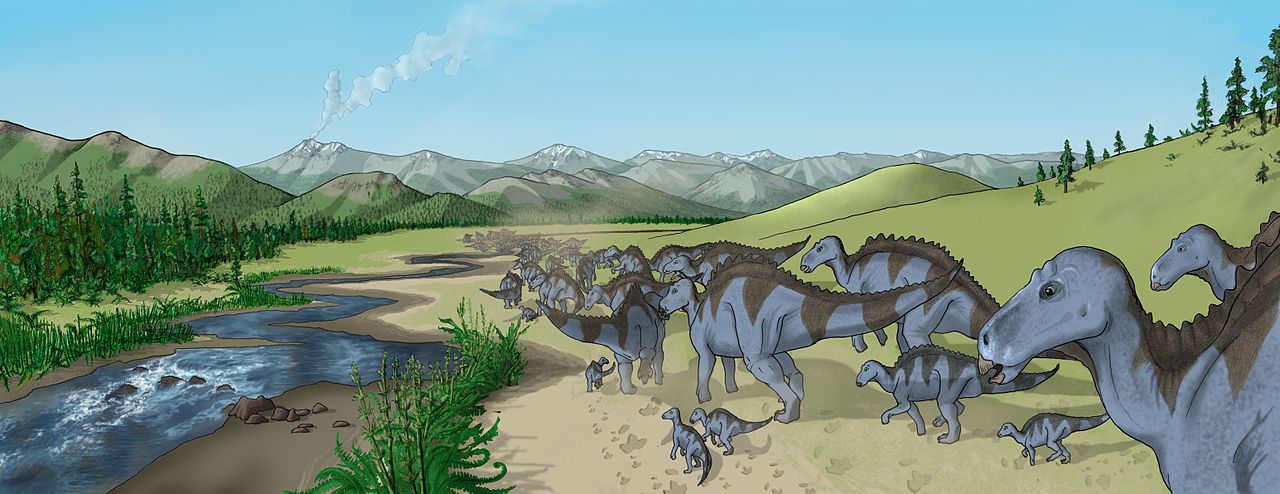
- Likely lived and moved in large groups
Reproduction, nests and growth
Maiasaura is famous for the discovery of nests with eggs and hatchlings that indicate prolonged parental care. The nests were arranged in colonies, often with multiple clutches in close proximity. Juvenile bones show rapid growth rates, while hatchlings appear to have been dependent on adults for food and protection for at least part of their early development. These nesting sites remain a key line of evidence for reconstructing dinosaur reproductive behavior.
Importance and behavior
The Maiasaura discoveries shifted scientific views about dinosaur behavior, suggesting complex social structures, communal nesting, and parental investment more similar to some modern birds and mammals than previously thought. Evidence from bonebeds and trackways also supports the idea that these animals lived in herds and may have migrated seasonally in search of food.
Classification and legacy
Maiasaura is classified within the hadrosaurids, a diverse group of herbivorous dinosaurs. Its well-preserved nesting sites continue to be a focus of research into growth, paleoecology, and social behavior. Museums and popular accounts frequently cite Maiasaura as a milestone discovery in demonstrating that some dinosaurs cared for their young, and its fossils remain important for education and ongoing scientific study. For further background on hadrosaur biology and discovery sites see general resources on dinosaur paleontology and reports about excavation localities such as nests.
Related articles
Author
AlegsaOnline.com Maiasaura — the 'good mother' duck-billed dinosaur Leandro Alegsa
URL: https://en.alegsaonline.com/art/60745