
Malayan tiger (Panthera tigris jacksoni) — overview and conservation
The Malayan tiger is a distinct tiger population of Peninsular Malaysia recognized after 2004 genetic studies. This article covers its identity, appearance, habitat, threats, and conservation measures.
The Malayan tiger (Panthera tigris jacksoni) is the population of tigers native to Peninsular Malaysia. Once treated as part of the broader Indochinese tiger group, it was recognized as a separate taxonomic unit following genetic research published in 2004. The name is used to describe tigers that inhabit the southern part of the Malay Peninsula and the animals are an integral part of Malaysia's forest ecosystems and cultural heritage. For general taxonomic context see related information.
Image gallery
7 Images


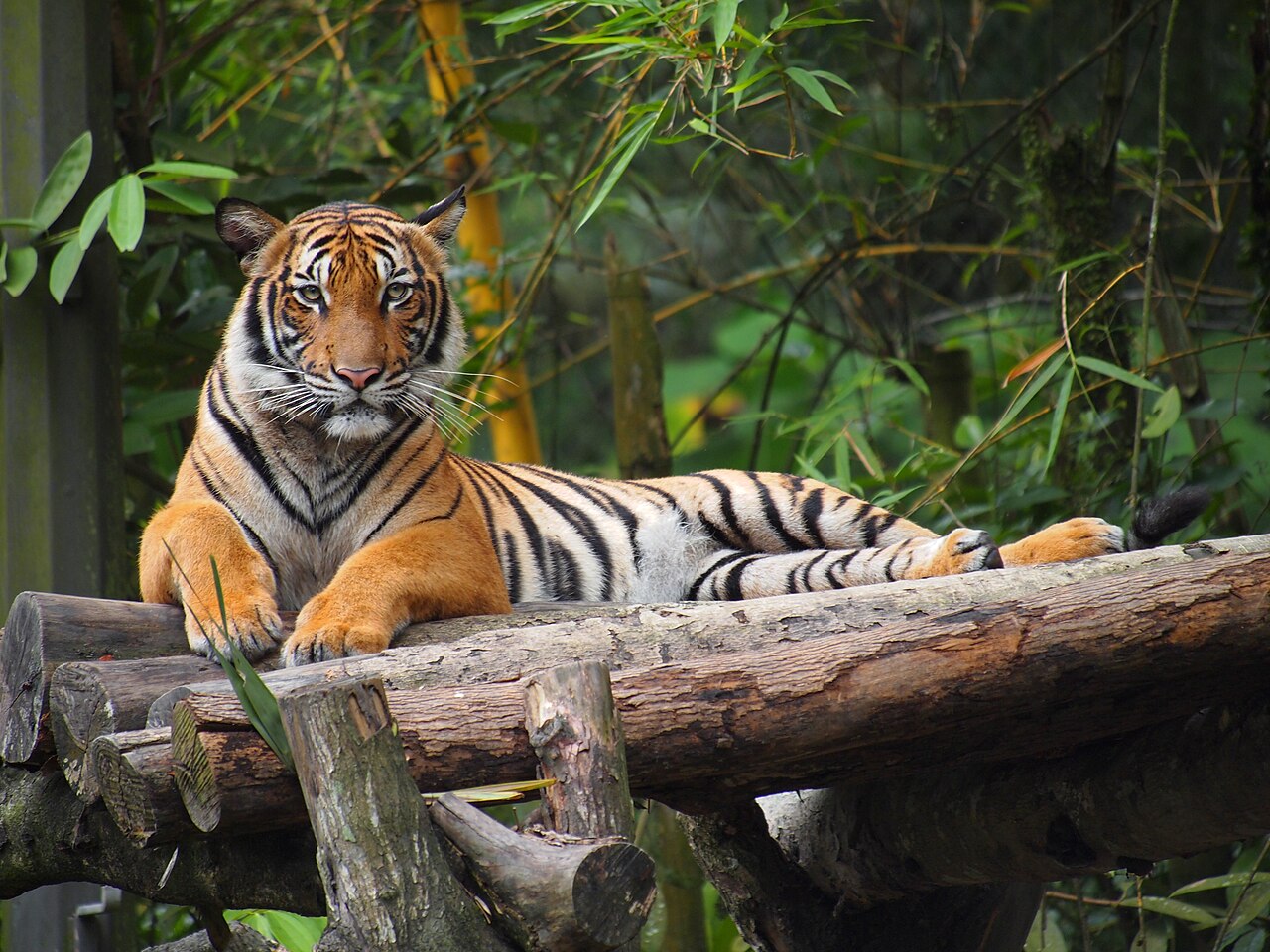


Physical characteristics and behaviour
Malayan tigers are medium-sized compared with other tiger populations. They show the familiar orange coat with vertical black stripes, but stripe density, width and spacing vary among individuals, making stripe patterns useful for identification. Males are generally larger than females and both sexes are solitary, occupying territories marked by scent and scrape marks. Their diet consists mainly of medium to large ungulates such as deer and wild boar, and they will opportunistically take smaller animals or livestock when wild prey is scarce.
Range, habitat and ecology
These tigers inhabit tropical and subtropical moist broadleaf forests of southern Peninsular Malaysia, often using a mix of primary forest, secondary regrowth and forested corridors to move between protected areas. They require sufficient prey densities and connected habitat to maintain viable breeding populations; fragmentation of forest tracts reduces their effective range and can increase conflict with people. For information on the region and distribution see regional resources.
History, taxonomy and recognition
Genetic and morphological studies in the early 21st century led researchers to separate the Malayan population from closely related mainland groups. That taxonomic clarification followed wider efforts to understand tiger diversity and inform conservation planning. The recognition of the Malayan tiger as a distinct group in 2004 helped focus national conservation efforts and research priorities about the 2004 study.
Threats and conservation
Malayan tigers face multiple threats that together create a high risk of local extinction. Major pressures include habitat loss and fragmentation due to agriculture and infrastructure, illegal hunting of tigers and their prey, depletion of prey species, and human–wildlife conflict. These pressures have led to conservation concern and protective measures; they are widely described as an endangered population and are subject to protection and recovery programs classification and status.
- Main conservation actions: protected areas and corridors, anti-poaching patrols, camera-trap monitoring and population surveys.
- Complementary measures: community engagement, livestock management to reduce conflict, captive breeding when needed, and regional cooperation across borders.
- Research needs: long-term monitoring, genetic studies to track diversity, and assessments of prey base and habitat connectivity.
Maintaining viable Malayan tiger populations requires coordinated action across government agencies, conservation organizations, local communities and researchers. Success depends on protecting habitat, reducing illegal killing, and ensuring enough wild prey. Public awareness and sustained funding are also critical to preserve this emblematic predator and the ecological roles it fulfils in Malaysia's forests.
Related articles
Author
AlegsaOnline.com Malayan tiger (Panthera tigris jacksoni) — overview and conservation Leandro Alegsa
URL: https://en.alegsaonline.com/art/60967