
Majungasaurus — the Mahajanga lizard, a Late Cretaceous abelisaurid
Majungasaurus is a medium-sized abelisaurid theropod from Late Cretaceous Madagascar, notable for its short deep skull, reduced forelimbs, evidence of bone-biting behavior, and Gondwanan significance.
Overview
Majungasaurus was a medium-sized carnivorous dinosaur from the island now known as Madagascar, living during the Late Cretaceous. It belongs to the abelisaurid group of theropods — a lineage of southern-hemisphere predators characterized by stout skulls and tiny forelimbs. The name means "Mahajanga lizard," referring to the region where its fossils were recovered.
Image gallery
10 Images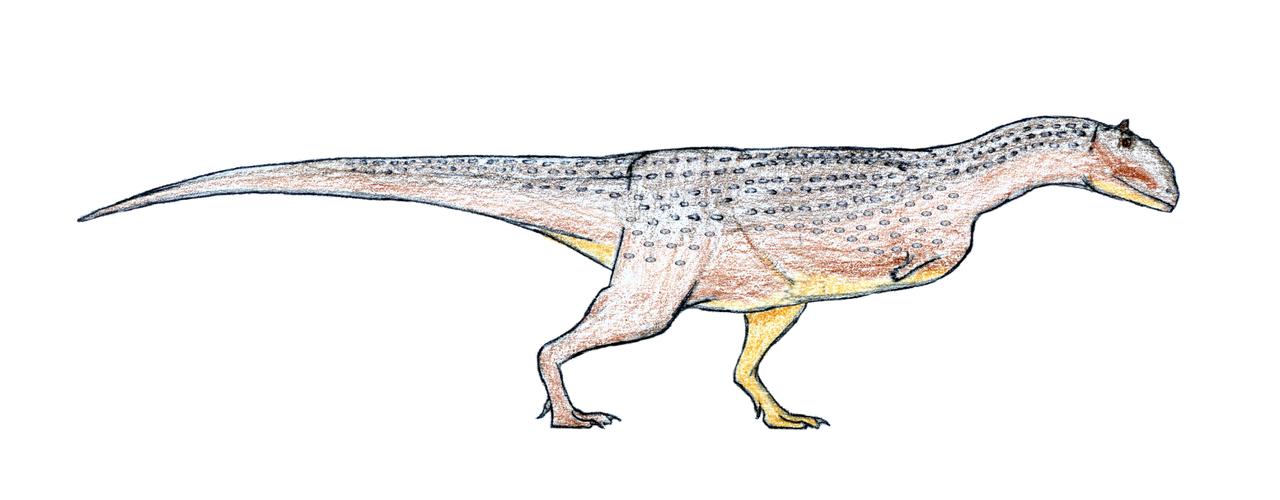




Anatomy and distinguishing features
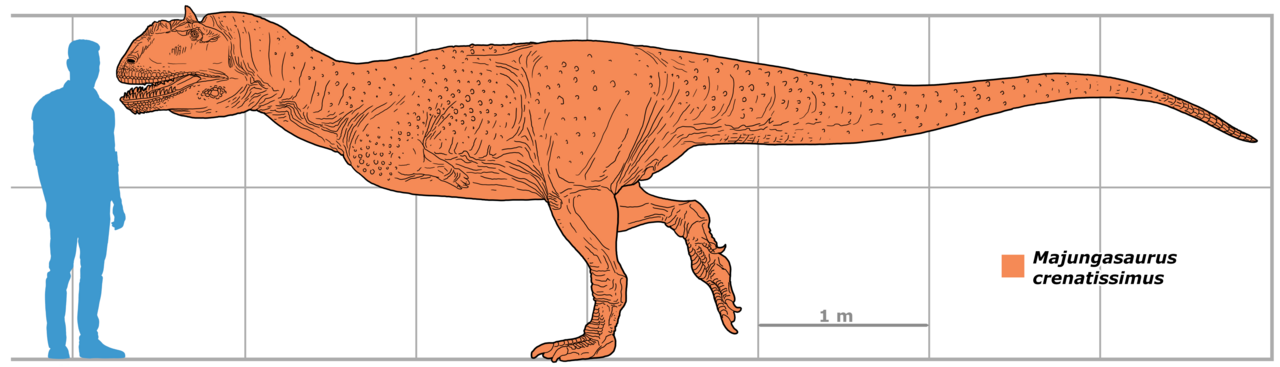
Majungasaurus had a short, tall skull with rough, ornamented bone on the snout and a reinforced braincase. Its teeth were stout and blunt compared with many other theropods, adapted for delivering powerful bites. Like other abelisaurids, it walked on two strong hind legs, had a deep neck and torso, and extremely reduced forelimbs with limited reach.
Key traits
- Short, robust skull with cranial ornamentation
- Blunt, wear-resistant teeth suited to biting bone
- Very small, reduced forelimbs
- Estimated length roughly 6–7 metres, a regional apex predator
Discovery and scientific history
Fossils of Majungasaurus were described from fragmentary to more complete remains recovered in Madagascar. Early material was reinterpreted as additional bones were found and compared with related abelisaurids such as Carnotaurus. Improved specimens clarified its anatomy and its position within the abelisaurid family tree, emphasizing evolutionary ties among Gondwanan predators.
Behavior, ecology and significance
Majungasaurus is interpreted as an apex predator of its ecosystem, preying on contemporary herbivores including sauropods. Fossil bones show bite marks consistent with the species’ own teeth, providing evidence for aggressive interactions and possible cannibalism or scavenging. Its presence illustrates the distinct evolutionary trajectories of dinosaurs in southern continents isolated by plate tectonics.
Notable facts
As a well-studied example of an abelisaurid from Madagascar, Majungasaurus has been important for understanding predator-prey dynamics in Late Cretaceous Gondwana and for recognizing convergent adaptations among large theropods. For further general background on theropods see theropod classification and regional Late Cretaceous faunas via Late Cretaceous summaries.
Related articles
Author
AlegsaOnline.com Majungasaurus — the Mahajanga lizard, a Late Cretaceous abelisaurid Leandro Alegsa
URL: https://en.alegsaonline.com/art/60874