
Magnificent tree frog (Litoria splendida)
Encyclopedic overview of the magnificent (splendid) tree frog, covering identification, behaviour, range in northern Australia, discovery, relationship to White's tree frog, and conservation notes.
Overview
The magnificent tree frog, also known as the splendid tree frog (Litoria splendida), is a large arboreal frog native to northern Australia. This species belongs to a group commonly called tree frogs and is notable for its robust body, glossy skin and vivid green tones. It was first described from records dating to the late 1970s and has attracted interest because of its size and resemblance to the well-known White's tree frog.
Image gallery
7 Images


Appearance and biology
Adults are among the larger members of their genus, with a stout build, broad head and expanded toe pads that aid climbing. Dorsal colours range from bright green to yellow-green, often with paler flanks or a pale stripe; the belly is generally lighter. Skin texture is smooth and slightly waxy in appearance. Their diet is primarily insectivorous, including various arthropods taken at night, and they are adapted to an arboreal lifestyle.
Behaviour and vocalisation
These frogs are mostly nocturnal. Males call to attract females during the wet season or after heavy rains, producing a distinctive, repeated call from vegetation near water. Breeding typically occurs in still or slow-moving water such as floodplain pools, temporary ponds and rocky waterholes where tadpoles develop.
Range and habitat
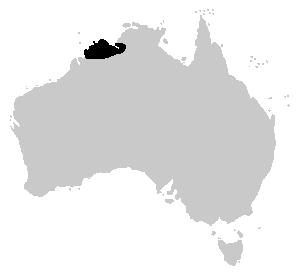
The species occurs in tropical northern Australia, especially the Northern Territory and parts of Western Australia. It occupies woodland margins, monsoonal savanna and areas with reliable seasonal water where trees or shrubs provide perches close to breeding sites.
Relationships, threats and conservation
Litoria splendida is closely related to White's tree frog (Litoria caerulea) and shares many ecological traits. Like many amphibians, it faces potential threats from habitat change, altered water regimes, invasive predators and emerging diseases. Conservation emphasis is on habitat protection, monitoring populations and research to understand local trends. The species is also encountered in captive collections where its calm temperament is noted by hobbyists and educators.
Research and human interest
Ongoing field surveys and taxonomic work help clarify its range and variation. Naturalists value the species for its striking appearance and as part of the northern Australian amphibian fauna; public awareness and wetland conservation benefit its long-term prospects.
Related articles
Author
AlegsaOnline.com Magnificent tree frog (Litoria splendida) Leandro Alegsa
URL: https://en.alegsaonline.com/art/60652
Sources
- iucnredlist.org : Litoria splendida
- frogsaustralia.net.au : "Frogs Australia Network - Australian Frog Database - Litoria splendida - Magnificent Tree Frog"
- frogs.org.au : "Frogs Australia Network > Litoria splendida / Magnificent Tree Frog"
- articleroad.com : Article Road: List of All Frog Breeds: Things you can do to ensure your frog has a long, happy and healthy life: Magnificent tree frog
- environment.nsw.gov.au : Department of Environment, Climate Change and Water, New South Wales: Amphibian Keeper's Licence: species Lists