
Magpie (Pica and related corvids)
Magpies are medium-sized corvids recognizable by long tails and contrasting plumage. This entry covers their identification, behavior, distribution, intelligence, reproduction, and cultural and conservation issues.
Overview
Magpies are medium-sized birds in the broader group of corvids and are commonly associated with the crow family. They are omnivorous, opportunistic feeders and are often bold and adaptable in human-altered landscapes. The English common name usually refers to the European magpie, but several related species across Eurasia, North America and parts of Asia and Australasia are also called magpies.
Image gallery
6 Images



Identification and appearance
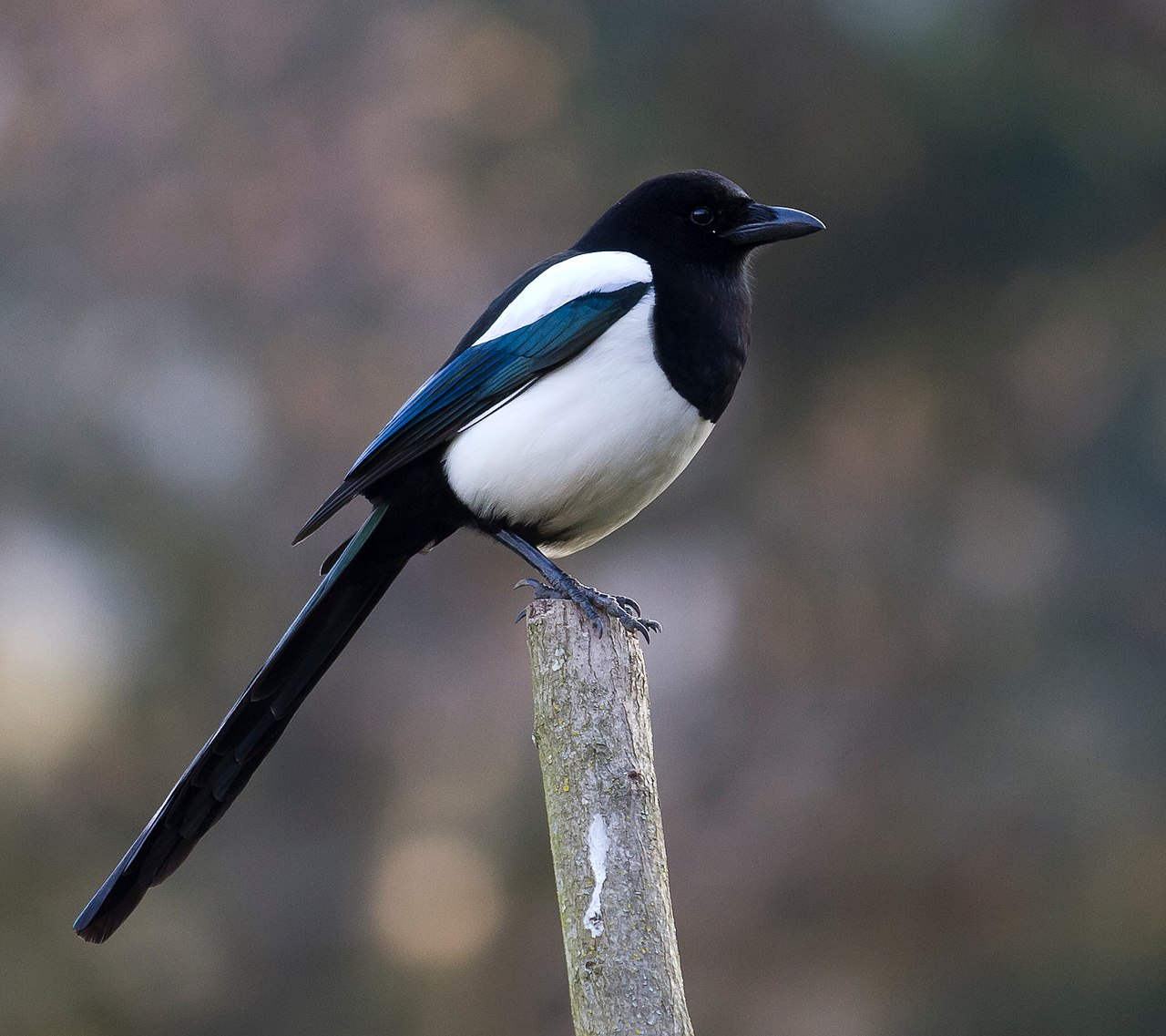
Most familiar magpies have a long, graduated tail, a stout bill and a compact body. Many species show strong contrasts of black plumage with white markings, and feathers may show iridescent blues or greens in good light. Plumage, size and tail length vary among species; juveniles are often duller than adults. Field identification relies on pattern, voice and behaviour as well as range.
Taxonomy and species
Several species are placed in the genus Pica, which includes the well-known European and North American forms. Magpies belong to the family Corvidae, a diverse group that also includes crows, jays and nutcrackers. Regional classifications differ and common names can overlap with other corvids.
Distribution and habitat
Magpies occupy a wide range of habitats including open woodlands, farmland edges, scrub and urban parks. Some species have adapted very successfully to towns and suburbs where food and nesting opportunities are abundant. Distribution is species-dependent; certain forms are widespread while others have more restricted ranges.
Behaviour, diet and reproduction
- Diet: insects, small vertebrates, carrion, seeds, and eggs of other birds; they scavenge frequently.
- Social behaviour: often seen in pairs or small groups; many species defend territories in breeding season.
- Breeding: nests are generally bulky and placed in trees or dense shrubs; clutch size and parental care vary by species.
Intelligence and human interactions
Magpies are noted for advanced problem solving, complex social learning and varied vocalisations. Some research has suggested mirror self-recognition in certain magpies, a capacity rarely documented in birds. Their habit of taking eggs or nestlings can bring them into conflict with people managing game or poultry, yet they also help control pests and remove carrion.
Cultural significance and conservation
Magpies figure widely in folklore and symbolism, associated variously with luck, mischief or watchfulness. Conservation status differs by species: while many are common and adaptable, others are affected by habitat loss, persecution or competition. For further general information on corvids see Pica and related resources and consult regional species accounts and field guides for local details.
Because magpies are conspicuous, intelligent and often tolerant of people, they remain prominent subjects of ecological study and cultural attention across much of their range.
Questions and answers
Q: What family do magpies belong to?
A: Magpies belong to the crow family, Corvidae.
Q: What do magpies eat?
A: Magpies are general scavengers and predators of insects, small mammals, and other birds' eggs and young.
Q: What is the European magpie?
A: The European magpie (Pica pica) is a very common bird found all over Europe.
Q: Are there other species of magpie?
A: Yes, elsewhere, there are other species of magpie.
Q: What is the genus of most black and white magpies?
A: Most black and white magpies are in the genus Pica.
Q: Are magpies selective about what they eat?
A: No, magpies are general scavengers and predators, so they are not very selective about what they eat.
Q: Where can magpies be found?
A: Magpies can be found all over Europe and in other locations where other species of magpie are present.
Related articles
Author
AlegsaOnline.com Magpie (Pica and related corvids) Leandro Alegsa
URL: https://en.alegsaonline.com/art/60690