
Lung transplant
Surgical replacement of one or both diseased lungs with healthy donor lungs to treat end-stage respiratory disease; includes types, indications, risks, and outcomes.
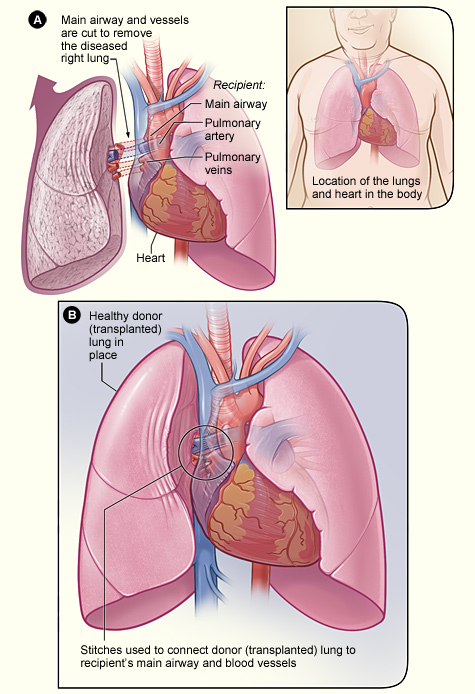
A lung transplant is a major surgical treatment in which one or both diseased lungs are replaced with healthy donor lung tissue. Donor lungs may come from a deceased donor or, in special cases, from a living donor who gives a lobe. The operation is considered for people with advanced, progressive lung disease who cannot maintain adequate oxygenation or quality of life with medical therapy alone. For a concise overview of the operation and patient pathway see surgical overview.
Image gallery
4 Images


When is it used and who qualifies?
Transplantation is reserved for end-stage lung disorders when other treatments are no longer effective. Typical indications include chronic obstructive pulmonary disease (COPD), idiopathic pulmonary fibrosis, cystic fibrosis, and some forms of pulmonary hypertension. Candidate evaluation assesses overall health, infection status, other organ function, and ability to adhere to lifelong follow-up and medication. Patients who require continuous supplemental oxygen or cannot carry out daily activities despite therapy are often considered; further guidance is available at patient resources.
Types and surgical approaches
- Single-lung transplant — one lung replaced.
- Bilateral (double) lung transplant — both lungs replaced, often preferred for certain diseases.
- Lobar transplant — a lobe or partial lung from a living donor or deceased donor allocated to the recipient.
- Combined heart-lung transplant — performed when both organs are irreversibly damaged.
More about donor options and organ matching can be found at donor information.
Procedure, risks and aftercare
The transplant operation involves removing the diseased lung(s), implanting the donor tissue, and restoring circulation and airway connections. After surgery patients require intensive care, prolonged hospital recovery, and lifelong immunosuppressive therapy to prevent rejection. Common complications include infection, acute and chronic rejection (chronic lung allograft dysfunction), airway problems, and side effects from immunosuppression.
Outcomes have improved with better surgical techniques and medications, leading to meaningful extensions of life and improvements in symptoms for many recipients. However, organ scarcity, the complexity of matching, and risks of long-term complications remain important challenges. Research continues into improving graft survival, donor lung preservation, and alternatives such as regenerative medicine and mechanical support devices.
Related articles
Author
AlegsaOnline.com Lung transplant Leandro Alegsa
URL: https://en.alegsaonline.com/art/59943