
Ludwig Erhard — West German Chancellor and Architect of the Social Market Economy
German politician and economist Ludwig Erhard (1897–1977) guided West Germany's postwar recovery as long-serving Economics Minister and as Chancellor (1963–1966), promoting the social market economy.
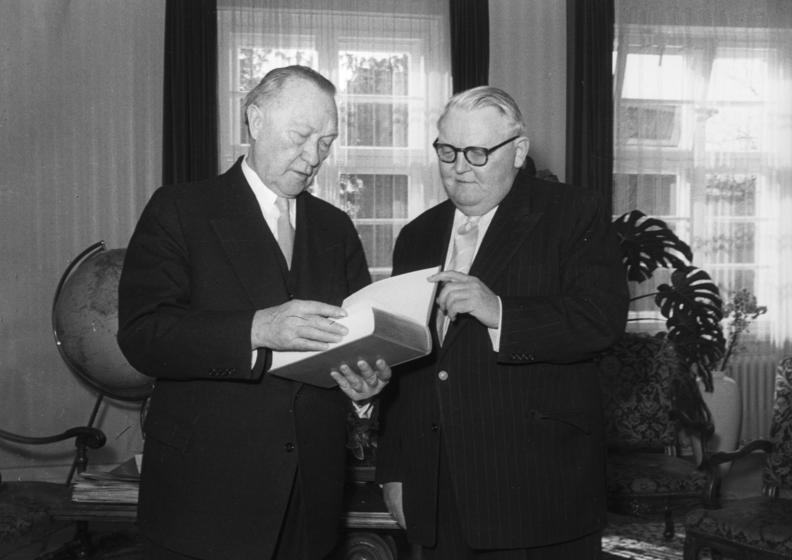
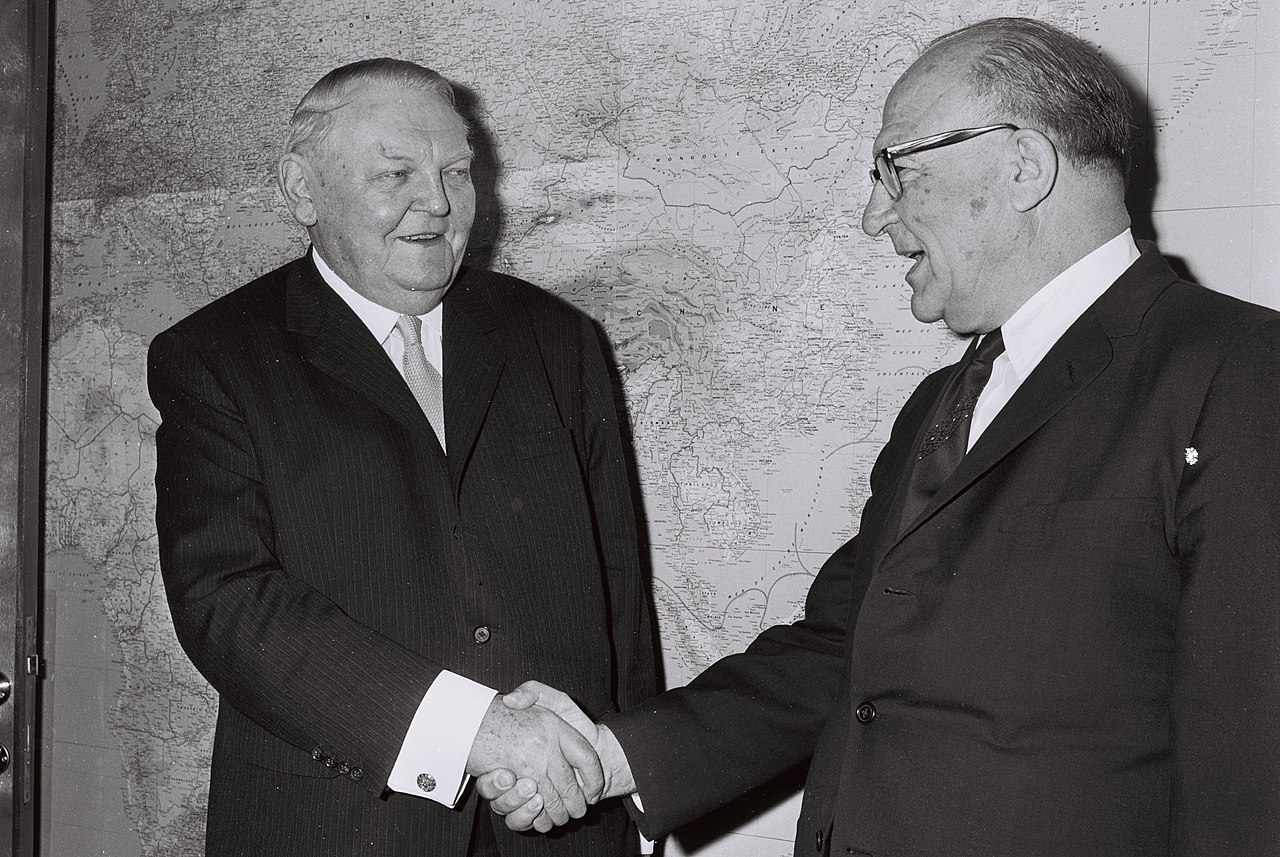
Ludwig Wilhelm Erhard (4 February 1897 – 5 May 1977) was a German politician and economist who played a central role in West Germany's post‑World War II recovery. He was born in Fürth and died in Bonn. Best known for advocating the "social market economy," Erhard shaped policies that combined free markets with social safeguards and became a leading figure of the Christian Democratic political tradition.
Image gallery
9 Images



Early life and career
Trained in economics and commercial practice, Erhard worked in industry and economic administration before and after the Second World War. In the immediate postwar years he served in economic bodies in the western occupation zones, where he gained influence as a pragmatic administrator who favored market‑oriented reforms over prolonged controls.
Economic policies and achievements
As the minister responsible for economic policy in the 1950s and early 1960s, Erhard is often credited with measures that helped stabilize the currency, liberalize prices, and stimulate production and trade — steps that contributed to rapid growth known in German as the Wirtschaftswunder (economic miracle). Intellectually, his approach drew on ordoliberal ideas: supporting competition and rule‑based markets while retaining welfare provisions to protect social cohesion.
- Major offices and roles: Minister of Economic Affairs (longstanding), Chancellor of the Federal Republic (1963–1966), leading figure in the Christian Democratic Union political movement.
- Public impact: Promoted policies summarized in his writings and speeches, which popularized the notion that prosperity could be broadly shared within a market framework.
Erhard's tenure as Chancellor was shorter and more politically difficult than his years as economics minister. Economic slowdown and coalition tensions in the mid‑1960s eroded political support, and he left the chancellorship amid a changing political landscape.
Legacy and assessment
Scholars and public commentators continue to regard Erhard as a key architect of West Germany's postwar economic recovery. Supporters praise his faith in market mechanisms tempered by social responsibility; critics argue that subsequent economic challenges revealed limits to his policies. Regardless, his influence on German economic policy and postwar European reconstruction remains a major aspect of 20th‑century economic and political history.
Related articles
Author
AlegsaOnline.com Ludwig Erhard — West German Chancellor and Architect of the Social Market Economy Leandro Alegsa
URL: https://en.alegsaonline.com/art/59783