
Living Shangri‑La (Vancouver) — mixed‑use skyscraper and city landmark
Living Shangri‑La is a mixed‑use skyscraper in downtown Vancouver housing a five‑star hotel, offices and private residences; it is the tallest building in Metro Vancouver and British Columbia.
The Living Shangri‑La is a prominent mixed‑use tower in the heart of Downtown Vancouver. Completed in the late 2000s, it combines hospitality, commercial and residential functions within a single high‑rise structure. The tower is the tallest building in both Metro Vancouver and British Columbia, and is widely regarded as a defining element of Vancouver’s skyline.
Image gallery
4 Images


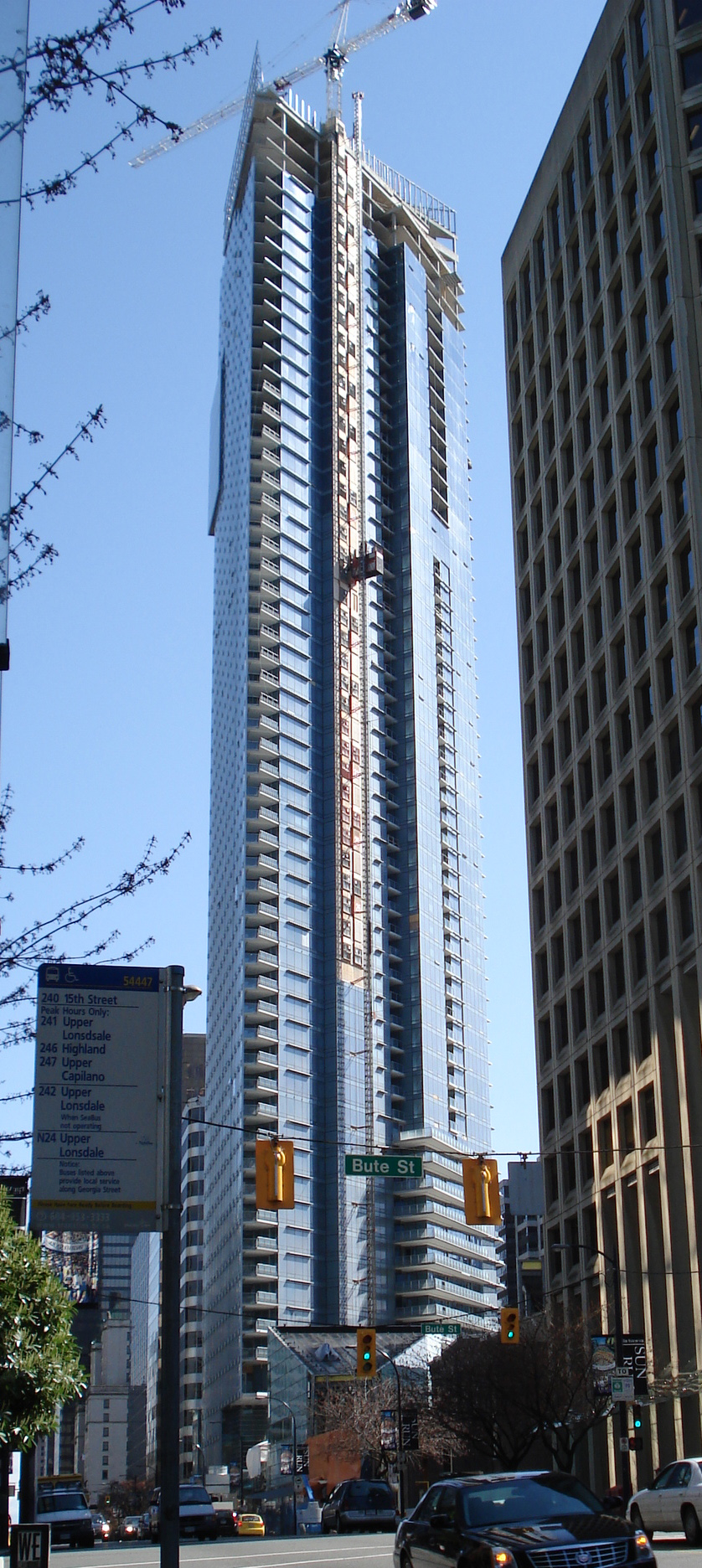
Design and layout
Conceived as a vertical neighbourhood, the building presents a glass‑clad silhouette with a mix of public and private spaces. The lower portion contains a five‑star hotel and public amenities; a series of floors near the base are devoted to offices and services; and the upper stories are occupied by private condominium residences. A podium integrates retail and building services, creating street‑level activity while the tower rises above.
History and development
Built during a period of rapid growth in Vancouver, Living Shangri‑La was developed as a high‑end, mixed‑use project to address demand for luxury hotel rooms, modern office space and downtown residences. The overall project cost was approximately $350 million. Construction included notable moments that drew local attention, such as the seasonal illumination of the tower crane during the 2007 holiday season, which was widely reported as one of the city’s most visible crane displays at the time.
Uses, amenities and public role
The building is organized to serve several user groups. The hotel operates as a full‑service, five‑star venue with a lobby, dining and wellness facilities; office tenants occupy the lower commercial floors; and condominium residents benefit from in‑building amenities such as concierge services, fitness areas and private lounge space. Its location in the central business district provides easy access to transit, cultural venues and waterfront promenades.
Notable facts and cultural presence
- As a regional landmark, the tower is frequently used in views and photographs of Vancouver’s downtown skyline.
- It ranks among the tallest buildings in Canada and served as a filming location: the tower was portrayed as the headquarters of the fictional ENCOM International in the 2010 film "Tron: Legacy."
- The project exemplifies the multi‑use tower model that became more common in North American downtowns in the 21st century, combining hospitality, corporate and residential components in a single structure.
For further information on the building type and mixed‑use developments, see resources on contemporary urban towers and local planning documents. The Living Shangri‑La remains a frequently cited example when discussing vertical, mixed‑use urban projects and their impact on downtown form and function; it is at once a luxury address, a commercial property and a visible part of Vancouver’s urban identity. More technical descriptions and data can be found through municipal records and architectural reports that catalogue recent high‑rise construction in the region. For a general listing and classification, see the entry for this mixed‑use skyscraper.
Additional context about the building’s place in the metropolitan area is available in regional overviews of Metro Vancouver and provincial summaries for British Columbia. Historical notes and media mentions include the 2007 crane illumination and the appearance in contemporary cinema; these items illustrate the tower’s role beyond pure function, as an element of civic imagery and popular culture.
Related articles
Author
AlegsaOnline.com Living Shangri‑La (Vancouver) — mixed‑use skyscraper and city landmark Leandro Alegsa
URL: https://en.alegsaonline.com/art/58621
Sources
- emporis.com : "Living Shangri-La"
- skyscraperpage.com : "Living Shangri-La"
- emporis.com : "Living Shangri-La"
- vancitybuzz.com : "10 Inspiring Structures Built by British Columbians"
- imdb.com : "TRON: Legacy Filming Locations"