
Los Angeles Memorial Coliseum
Historic multi-purpose stadium in Los Angeles, opened in 1923; longtime home of USC football, site of multiple Olympics, major professional sports teams, and numerous historic events.
Overview
The Los Angeles Memorial Coliseum is an outdoor multi-purpose sports stadium in Los Angeles, California, built and opened in the early 1920s as a public memorial to American veterans of World War I. The facility has been used for intercollegiate athletics, professional football and baseball, large civic ceremonies and cultural events. It is widely known for hosting the Olympic Games on more than one occasion: it staged the track and opening ceremonies for the 1932 Games 1932 Olympics and again for 1984 1984 Olympics, and it is planned as a venue for the 2028 Games Olympic Games, a sequence that would make it unique among Olympic stadiums.
Image gallery
10 Images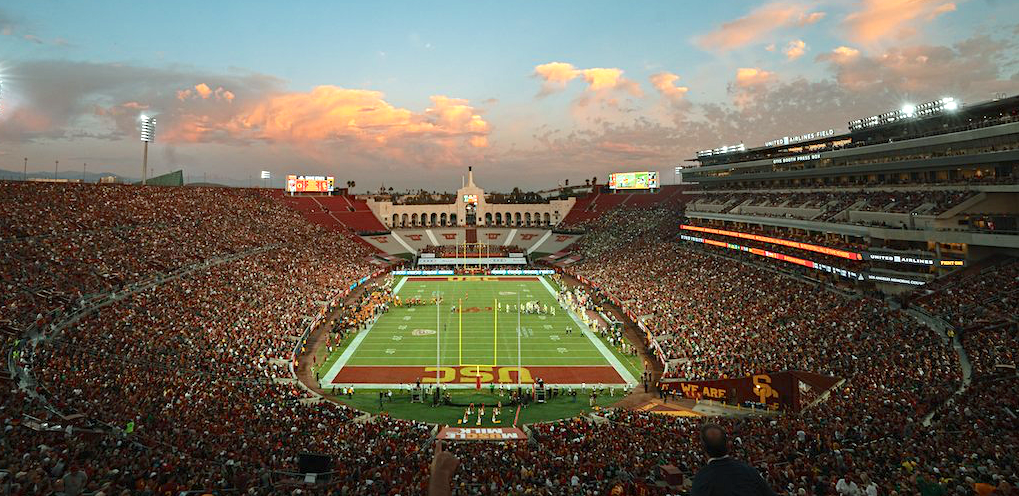


Design and characteristics
The Coliseum is notable for its large oval bowl, its classic peristyle facade and the tall peristyle columns that frame the stadium's east end, which historically supported an Olympic cauldron. Over its long life the venue has gone through several renovations to update seating, accessibility and media facilities. It has a reputation as one of the older but iconic American stadiums with a flexible playing surface that has accommodated track and field, baseball diamonds and American football layouts.
History and major events
Since its opening, the stadium has hosted a wide variety of high-profile events. In addition to Olympic ceremonies and athletics, it has been the site of professional football championship games and NFL all-star contests, including multiple Super Bowls Super Bowls and numerous Pro Bowls Pro Bowls. It has also held college football rivalry games, major concerts, and civic gatherings. The Coliseum's long calendar of events helped shape Los Angeles's identity as a national sports and entertainment center.
Tenants and sporting use
The University of Southern California has used the Coliseum as its primary football venue for many decades USC, and the stadium briefly served as a home for other collegiate programs at various times. Several professional teams have played home games at the Coliseum over the years, including franchises that moved or returned to Los Angeles such as the Rams, the Raiders and the Chargers NFL teams. Major League Baseball's Los Angeles Dodgers also occupied the Coliseum for several seasons after their move west Dodgers, before moving into their purpose-built ballpark Dodger Stadium. While a baseball tenant, the club staged World Series contests and set attendance records for games at that venue World Series.
Significance and legacy
Beyond its function as a sports arena, the Coliseum is a civic landmark and a memorial space, recognized for both architectural and cultural importance. It has welcomed generations of athletes, fans and visitors and has been associated with memorable athletic performances and large-scale public spectacles. The venue's layered history — collegiate traditions, professional franchises, Olympic pageantry and civic ceremonies — makes it a living record of Los Angeles's 20th- and 21st-century growth.
Notable facts and references
- The Coliseum began life as a memorial to veterans and remains a symbol of civic remembrance.
- It has been upgraded multiple times to meet modern broadcasting and safety standards.
- Its role as a recurring Olympic venue is rare among global stadiums and underscores Los Angeles's long ties to the Games.
- For more detailed historical timelines, architectural descriptions or event lists consult institutional and archival sources stadium resources and university archives.
For those interested in the Coliseum's full event history and current use schedules, official and archival materials provide chronological records, photographs and program information; local universities and sports organizations also maintain extensive documentation of the stadium's role in collegiate and professional athletics stadium resources and team histories team histories.
Additional reading and multimedia guides are available through municipal archives and sports museums, while broader discussions of its Olympic legacy can be found at general Olympic references Olympic Games and dedicated retrospectives on the 1932 1932 Olympics and 1984 1984 Olympics.
Further resources: professional game archives Super Bowls, all-star game records Pro Bowls, franchise pages for historical tenants Dodgers, Dodger Stadium and college program records USC. For popular and scholarly perspectives on the stadium's cultural role consult urban history collections and sports studies repositories stadium resources.
Questions and answers
Q: What is the Los Angeles Memorial Coliseum?
A: The Los Angeles Memorial Coliseum is a sports stadium in Los Angeles, California.
Q: When was the Coliseum built?
A: The Coliseum was built in 1923.
Q: What events has the Coliseum hosted?
A: The Coliseum has hosted many different sporting events, including track events and ceremonies of the Olympic Games, Super Bowls, and NFL All-Star Games.
Q: Which football teams used to play at the Coliseum before they moved to other cities?
A: The Chargers, Raiders, and Rams used to play at the Coliseum before they moved to other cities.
Q: Which universities have played at the Coliseum for many years?
A: The University of Southern California has played at the Coliseum for many years, and UCLA played there for several years as well.
Q: When did the Rams relocate back to Los Angeles and where will they play until their new stadium is built?
A: The Rams relocated back to Los Angeles on January 13, 2016. They will play at the Coliseum until their new stadium is built for the 2020 season.
Q: Did the Los Angeles Dodgers ever play at the Coliseum and what happened while they were there?
A: Yes, the Los Angeles Dodgers played at the Coliseum for four years before Dodger Stadium was built. While there, they won a World Series and set records for most people at a baseball game.
Related articles
Author
AlegsaOnline.com Los Angeles Memorial Coliseum Leandro Alegsa
URL: https://en.alegsaonline.com/art/59301