
Little cormorant (Microcarbo niger)
A small, widespread cormorant of South and Southeast Asia. Dark-plumaged, fish-eating, and often seen drying its wings; common in freshwater wetlands and coastal shallows.
The little cormorant (Microcarbo niger) is a small waterbird in the cormorant family. It is a widely distributed and adaptable species found across parts of South and Southeast Asia. As a member of the cormorant family, it shares many behaviors and anatomical features with other members of the group; it is also one of many aquatic birds commonly categorized among seabirds and wetland species.
Image gallery
6 Images



Identification
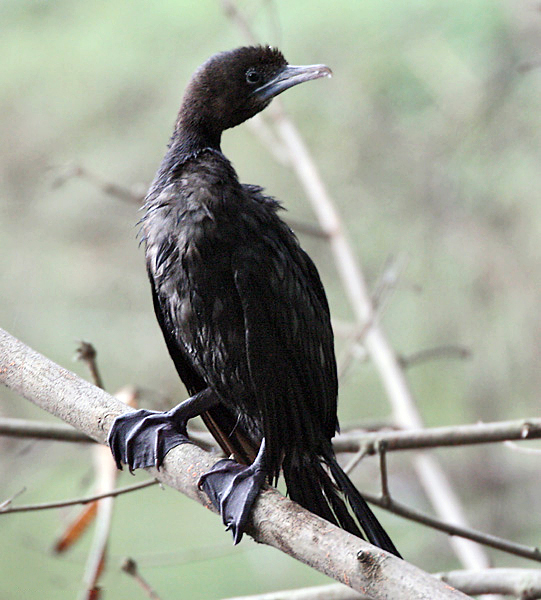
The little cormorant is compact and dark-plumaged. Adults are largely black with a glossy sheen and show a pale or yellowish patch of bare skin at the throat in breeding condition. The bill is relatively short and hooked at the tip, suitable for catching fish. Juveniles are browner and often appear streaked or duller than adults, making age distinction useful when observing flocks.
Key field marks
- Small, short-necked silhouette compared with larger cormorants.
- Dark overall plumage with a slender, hooked bill.
- Frequent wing-spreading posture to dry feathers after diving.
- Often seen in groups perched on low trees, posts, or rocks near water.
Behaviour and ecology
Little cormorants are primarily fish-eaters and pursue prey by diving from the surface. They can forage alone or in loose groups and are capable of sustained underwater swimming. A characteristic behaviour of cormorants — including this species — is to perch with wings outstretched to dry and warm their plumage after diving. Breeding is usually colonial; nests are built in trees, reed beds or shrubs over or near water and both parents take part in incubating eggs and feeding chicks.
Habitat and distribution
This species is typically associated with freshwater habitats such as lakes, reservoirs, rivers, marshes and flooded fields, but it may also use brackish or sheltered coastal areas. It is common across a broad region of South Asia and extends into parts of Southeast Asia. Local movements may follow seasonal changes in water availability rather than long-distance migration.
Conservation and relationships with people
The little cormorant is generally considered common where suitable habitat exists and faces fewer conservation pressures than many specialized species. Local threats include wetland drainage, pollution, and disturbance at breeding sites. Because it feeds on fish, it sometimes comes into conflict with fisheries, but it also plays a role in wetland food webs and can be an indicator of freshwater ecosystem health.
Taxonomy and similar species
Taxonomically it belongs to the smaller-cormorant group and is sometimes compared with related species such as other small Microcarbo or Phalacrocorax cormorants. Careful attention to size, bill shape, throat patch and habitat helps separate it from similar regional species.
Related articles
Author
AlegsaOnline.com Little cormorant (Microcarbo niger) Leandro Alegsa
URL: https://en.alegsaonline.com/art/58483
Sources
- iucnredlist.org : "Microcarbo niger"
- doi.org : 10.2305/IUCN.UK.2016-3.RLTS.T22696740A93583483.en