
Little Grebe (Tachybaptus ruficollis)
Concise encyclopedia entry on the Little Grebe (dabchick), a small diving waterbird: identification, behaviour, breeding, habitat, distribution and conservation notes.
Overview
The Little Grebe, commonly called the dabchick, is a small, compact waterbird in the grebe family (Podicipedidae). Adults measure about 23–29 cm in length. The species is widespread, occurring across parts of Europe, Asia and Africa where it favours calm, well‑vegetated freshwater bodies such as ponds, lakes, marshes and slow streams.
Image gallery
10 Images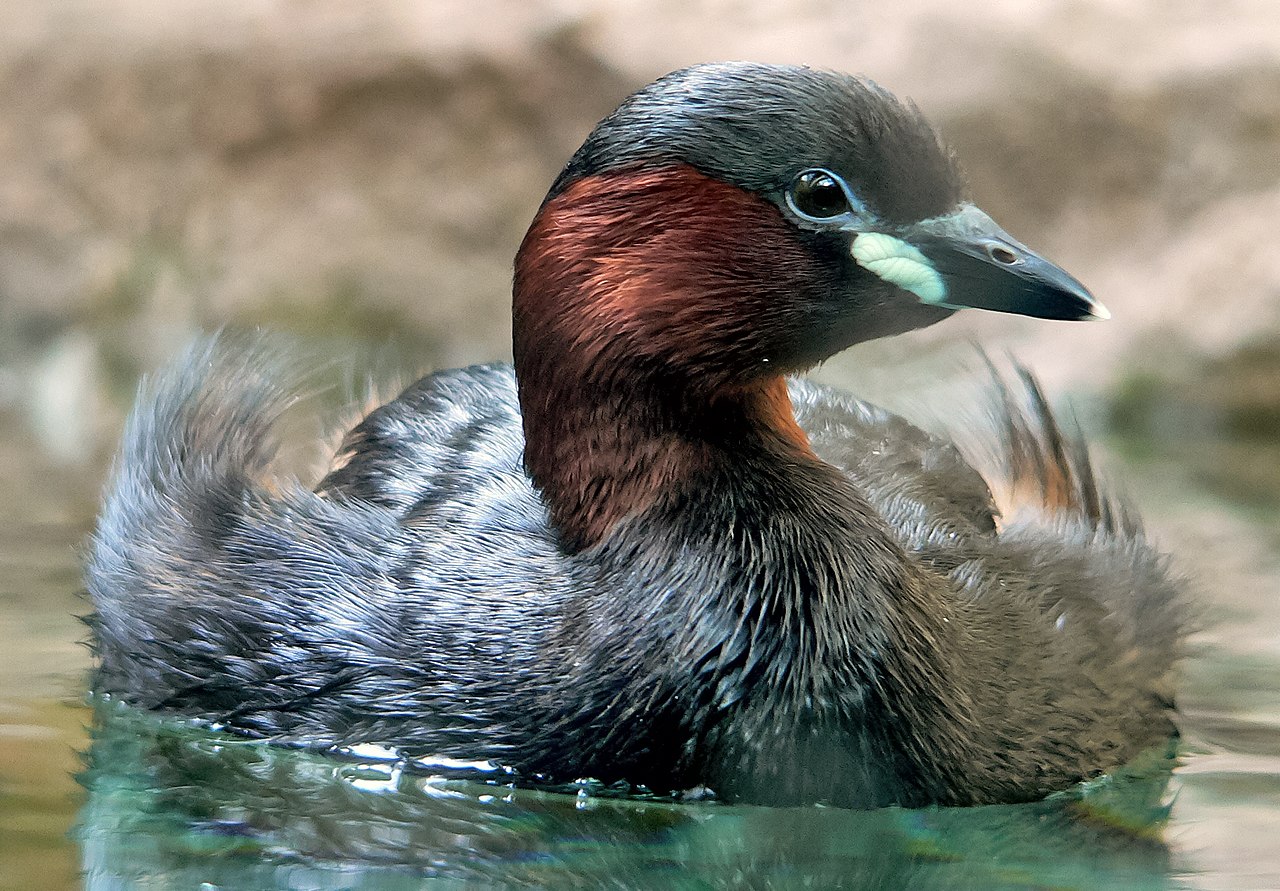


Identification and anatomy
Little Grebes have a rounded profile, short neck and a fine, pointed bill. The legs are set far back on the body and have lobed toes, adaptations that make them powerful swimmers and adept divers but awkward on land. In breeding plumage adults often show warmer, chestnut tones on the throat and flanks and a darker head, while non‑breeding plumage is duller and greyer. Juveniles are more streaked and paler.
Vocalizations
Calls are varied and include sharp trills and high, thin notes used in contact between mates and parents and chicks. Vocal behaviour is often most conspicuous during the breeding season when pairs advertise territory and coordinate nesting.
Behaviour and diet
Little Grebes are expert divers that forage by pursuing prey underwater or picking at the surface among emergent vegetation. Their diet consists mainly of aquatic invertebrates, small fish, tadpoles and crustaceans. They are secretive in dense reedbeds but can be seen making rapid dives and reappearing some distance away.
Reproduction and life cycle
Nests are usually floating platforms built among emergent plants and anchored to vegetation. Pairs lay clutches of several eggs, and both parents share incubation and care. Chicks are semi‑precocial and can swim soon after hatching; they are often carried on a parent’s back while still small as they learn to dive and feed. Pairs may maintain territories through the breeding season and sometimes raise more than one brood where conditions permit.
Habitat, distribution and movements
The species occupies a wide range of inland wetlands with ample cover. Some populations are resident year‑round, while birds from colder parts of the range may move seasonally to milder areas. Local abundance depends strongly on water quality and the availability of dense aquatic vegetation.
Conservation and threats
At a global level the Little Grebe is not considered highly threatened, but local populations can decline where wetlands are drained, degraded by pollution, disturbed by human activity or affected by invasive plants and fisheries. Conservation measures that protect and restore wetlands, maintain water quality and reduce disturbance benefit this species and many other wetland-dependent organisms.
Significance
As both predator and prey within freshwater ecosystems, Little Grebes contribute to aquatic food webs. Their presence commonly indicates relatively healthy, vegetated still-water habitats that support diverse aquatic life.
- Common names: Little Grebe, dabchick.
- Family: Podicipedidae.
- Key features: small size, lobed toes, diving behaviour, floating nests, young often carried on parents.
Related articles
Author
AlegsaOnline.com Little Grebe (Tachybaptus ruficollis) Leandro Alegsa
URL: https://en.alegsaonline.com/art/58491