
Little penguin (Eudyptula minor)
A small coastal penguin found in southern Australia and New Zealand, known for blue-gray plumage, nocturnal colony behavior, and conservation concerns from introduced predators and human activity.
Overview
The little penguin, Eudyptula minor, is the smallest living penguin and is commonly called the fairy penguin, little blue penguin, or blue penguin. It is recognized as a distinct species within the penguin family; more generally these birds belong to the group of flightless seabirds referred to as penguins. Their compact size and blue‑gray upperparts make them easily distinguishable from larger, black‑and‑white species.
Image gallery
10 Images




Appearance and characteristics
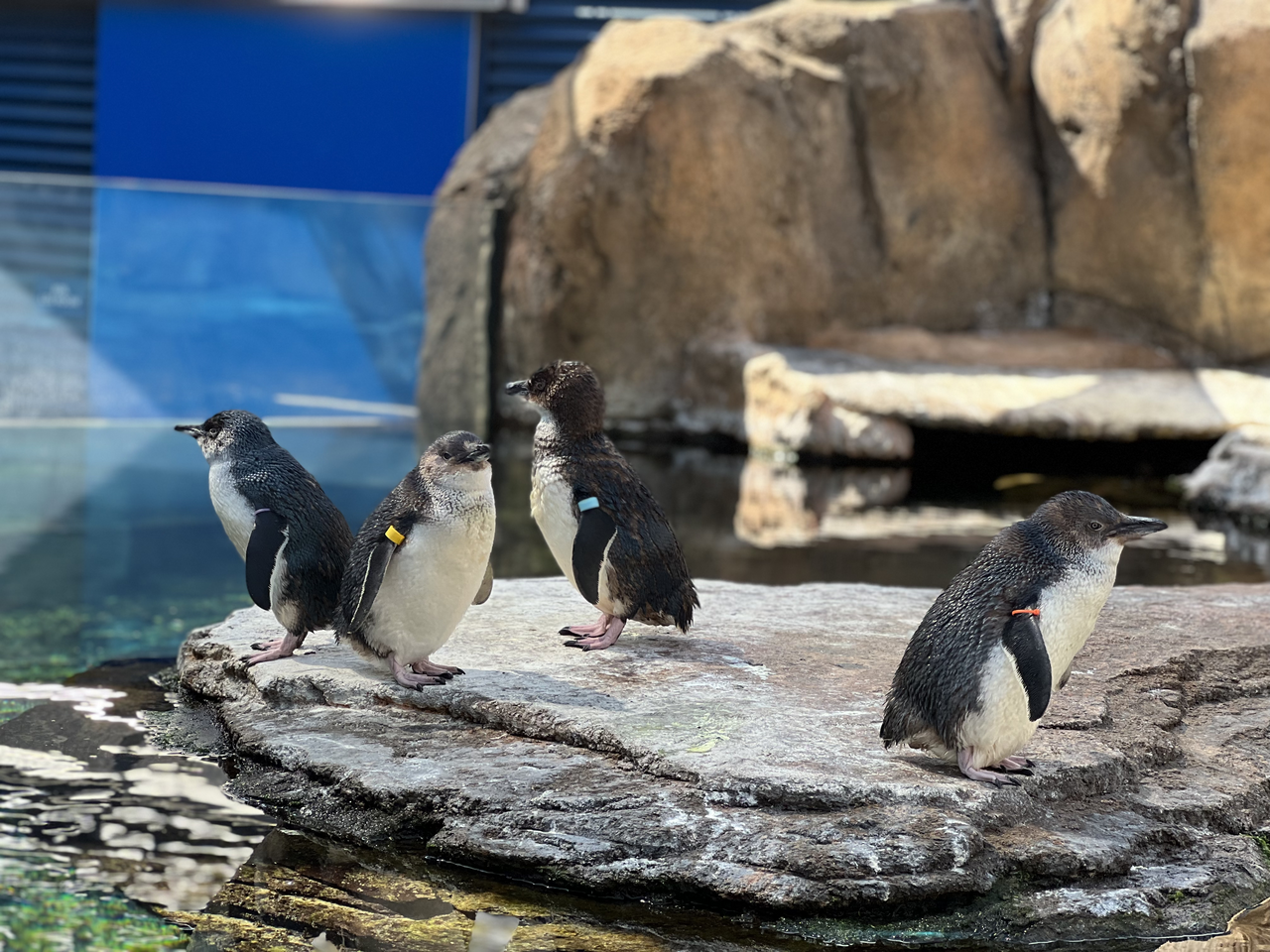
Little penguins have slate to blue‑gray feathers on their backs and pale undersides. Their bills are relatively short, and legs are set far back on the body to aid swimming. Juveniles may appear duller than adults. Despite their small stature, they are efficient swimmers and use a combination of wing‑propelled diving and rapid surface swimming to pursue prey.
Distribution and habitat
These penguins occur along coastal areas and offshore islands of southern Australia and around New Zealand. They occupy a range of shorelines, from sandy beaches and rocky reefs to coastal farmland, often nesting in burrows, rock crevices or under vegetation close to the sea. Colonies are typically coastal and concentrated where food is accessible.
Behavior and diet
Little penguins forage at sea, feeding mainly on small fish, squid and crustaceans. Foraging trips are generally short and occur nearshore. They commonly commute between feeding areas and nests at dusk or dawn, which reduces exposure to diurnal predators. Vocalizations and specific colony behaviors help mates and chicks locate one another at night.
Reproduction and lifespan
Breeding pairs usually establish nests and share responsibilities for incubating eggs and feeding chicks. Clutch sizes are modest and parental care is intensive until fledging. Pairs may exhibit seasonal or longer‑lasting bonds. Lifespan varies with pressures such as predation and food supply, and many individuals face mortality from introduced predators and human impacts.
Conservation and human interactions
Threats include habitat disturbance, introduced mammals, oil pollution and fishing interactions. Conservation efforts often focus on habitat protection, predator control, creation of artificial nest sites, and community‑based monitoring. Responsible wildlife tourism provides economic incentives for local protection and raises public awareness of their ecological role.
Notable facts
- Smallest of all penguin species, adapted for nearshore life.
- Active mainly at dawn and dusk when they return to colonies.
- Conservation status varies regionally; local actions can make substantial difference.
Questions and answers
Q: What is a Little penguin?
A: The Little penguin (Eudyptula minor), also known as the fairy penguin, little blue penguin, and blue penguin, is a type of penguin that lives near the coasts of Australia and New Zealand.
Q: Where do Little penguins live?
A: Little penguins live near the coasts of Australia and New Zealand.
Q: What are some other names for the Little penguin?
A: The Little penguin is also called the fairy penguin, little blue penguin, and blue penguin.
Q: How big is the Little penguin?
A: The Little penguin is the smallest of all penguins.
Q: Is the Little penguin a common species?
A: Yes, the Little penguin is a relatively common species of penguin in the area it inhabits.
Q: What does the Little penguin eat?
A: Little penguins feed mostly on small fish, squid, and krill.
Q: Are Little penguins endangered?
A: Little penguins are classified as "Least Concern" by the International Union for the Conservation of Nature (IUCN), meaning that they are not currently considered to be endangered. However, they are still vulnerable to threats such as habitat loss and predation.
Related articles
Author
AlegsaOnline.com Little penguin (Eudyptula minor) Leandro Alegsa
URL: https://en.alegsaonline.com/art/58512
Sources
- iucnredlist.org : "Eudyptula minor"
- bbc.co.uk : "Wildfacts - Little Penguin"
- seaworld.org : "Animal bytes - fairy penguin"
- mesh.biology.washington.edu : "Little Penguin"
- environment.nsw.gov.au : "Endangered population of little penguins (Eudyptula minor) at Manly"
- notornis.osnz.org.nz : "An unexpected pattern of molecular divergence within the blue penguin (Eudyptula minor) complex"
- zoo.utas.edu.au : "Range-wide Phylogeography of the Little Penguin (Eudyptula Minor): Evidence of Long-distance Dispersal"
- photovolcanica.com : "Little (Blue) Penguins"
- environment.nsw.gov.au : "Little penguin"
- scholarworks.sjsu.edu : "Vocal Recognition by Little Penguins (Eudyptula minor) on Philip Island, Victoria, Australia"
- gen.lib.rus.ec : "Vocally Recognizing Kin in a Crowd: The Penguin Model"
- visitvictoria.com : "Penguins, Phillip Island, Victoria, Australia"