
Literacy: reading, writing, and broader communication skills
Literacy is the ability to read and write and to use printed, visual, and digital information. This article explains definitions, types, history, importance, global patterns, and efforts to improve literacy.
Overview
Literacy commonly refers to the ability to read and write in at least one language. Beyond basic decoding and handwriting, contemporary definitions often include the capacity to understand, evaluate and use written, visual and digital information. Being literate affects employment opportunities, civic participation, health decisions and everyday problem solving. Many children acquire basic literacy skills in formal education, though learning can also occur at home or through community programs. For more on general uses of literacy, see literacy in everyday life and how it relates to modern society contexts.
Image gallery
10 Images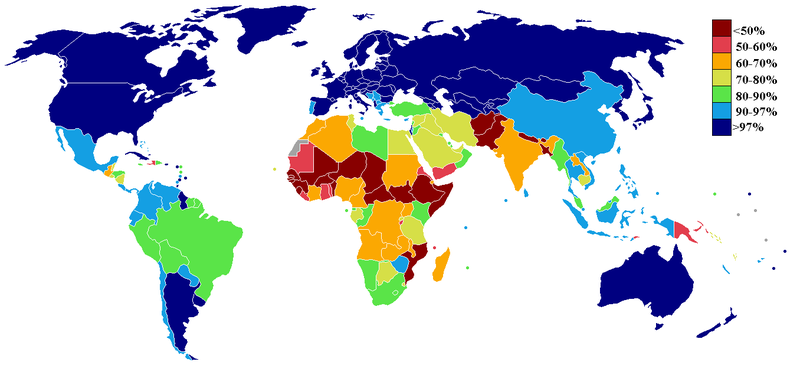



Definitions and types
Organizations and researchers distinguish several forms of literacy. The United Nations Educational, Scientific and Cultural Organization (UNESCO) has used concise definitions to track progress: for example, by one standard a person is considered illiterate if they cannot read and write a simple sentence in any language (basic literacy definition). Two widely used categories are:
- Primary or absolute illiteracy: people who have never learned to read or write.
- Functional illiteracy: individuals who have some basic skills but cannot apply them effectively in work, education or daily tasks — for instance, difficulty filling out forms or following written instructions (functional literacy).
History and development
The notion of literacy has evolved over centuries. In older usage, especially in English, "literacy" could imply general education or familiarity with literature and books (traditional meaning). During the 19th century (period of change) mass schooling, printing advances and social reforms expanded access to basic reading and writing. Literacy programs and libraries helped broaden participation in many countries. Over time the concept widened to include not only printed text but also the ability to interpret images, symbols and audio-visual messages, reflecting changing technologies and media forms (literary culture).
Importance, uses and examples
Literacy underpins many personal and social functions: it enables learning across subjects, supports workplace competence, improves health literacy and empowers citizens to engage with public information. For example, literate individuals are more likely to access written instructions, read medical guidance, manage household finances and use digital services. Modern curricula and adult education increasingly emphasize multiliteracies — the ability to work with text, images and sound together — to prepare learners for contemporary information environments (print literacy) (audio-visual literacy) and continuing education (lifelong learning).
Global patterns and notable facts
Worldwide literacy rates have risen markedly over the last century, but substantial regional disparities remain. Certain regions have historically recorded higher illiteracy rates; for example, parts of the Arabian Peninsula and areas of sub-Saharan Africa have faced persistent challenges in access and gender gaps (Arabian Peninsula) (Africa). In some countries around the Sahara region (Sahel). Socioeconomic factors, cultural traditions such as strong oral transmission of knowledge, and livelihoods that do not require written communication — for instance, some pastoral or nomadic communities (livestock herding) — can reduce incentives or opportunities to learn to read and write. Historical estimates, cited by international agencies, indicated that a significant share of the global population lacked literacy as recently as the late 20th century, demonstrating the scale of the challenge (UNESCO overview).
Challenges and approaches to improvement
Efforts to increase literacy combine formal schooling, adult education, community projects and media-based initiatives. Common approaches include teacher training, curriculum development that reflects local languages and cultures, mother-tongue instruction in early grades, mobile and digital learning, and literacy campaigns targeted at women and marginalized groups. Successful programs often integrate literacy with vocational or health information so learners see immediate benefits. Persistent obstacles include poverty, conflict, inadequate school infrastructure and sociocultural barriers that limit access for some populations.
Practical distinctions and current emphasis
Modern policy and research increasingly treat literacy as a suite of interrelated competencies rather than a single skill. Terms such as "functional literacy," "digital literacy," and "media literacy" highlight different abilities needed in today's world. Measuring literacy can be complex: basic reading ability differs from the capacity to interpret dense technical material or to evaluate online sources. For policymakers and educators, the goal is often to move learners from basic decoding to confident, flexible use of information across formats and contexts.
Further reading and resources
Readers interested in programs, statistics and instructional methods can consult international agency reports and educational research collections for up-to-date data and practical guidance. A range of organizations maintain resources and toolkits to support literacy efforts worldwide; check institutional portals and local education authorities for region-specific initiatives.
Related articles
Author
AlegsaOnline.com Literacy: reading, writing, and broader communication skills Leandro Alegsa
URL: https://en.alegsaonline.com/art/58428
Sources
- weforum.org : "The Arab Population"
- unesco.org : "Understandings of Literacy"
- literacyinlearningexchange.org : "Reflections about the Meaning of Literacy"