
Lipase: enzymes that break down and remodel fats
Lipases are enzymes that hydrolyze fats and other lipids. They play key roles in digestion, metabolism, industrial applications, and disease diagnostics across many organisms.
A lipase is a type of enzyme that catalyzes the formation and cleavage of ester bonds in lipids, most commonly the hydrolysis of triglycerides into glycerol and free fatty acids. The chemical breakdown proceeds by hydrolysis, with water molecules helping to sever fatty acid chains from glycerol backbones. Lipases act on a wide variety of substrates within the broader class of lipids, including triglycerides, phospholipids and cholesterol esters.
Image gallery
2 Images
Characteristics and catalytic mechanism
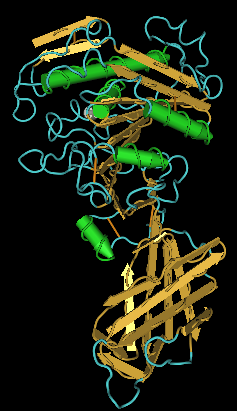
Structurally, many lipases share an alpha/beta hydrolase fold and a catalytic triad usually composed of serine, histidine and aspartate or glutamate. They often display interfacial activation: activity increases when the enzyme encounters a lipid-water surface. Lipases differ from esterases in substrate preference and kinetics; lipases prefer insoluble substrates and often require a lipid interface to achieve full activity.
Biological roles and distribution
In animals, lipases are essential for digestion and absorption of dietary fats and for mobilizing stored fat during fasting. Common examples include pancreatic lipase, which acts in the small intestine, and hormone-sensitive lipase, which releases fatty acids from adipose tissue. Microbial and plant lipases contribute to lipid remodeling, membrane maintenance and energy storage across many organisms. Genes encoding lipase-like proteins have even been identified in some viruses, reflecting diverse evolutionary uses.
Common types and examples
- Pancreatic lipase: major digestive enzyme for dietary triglycerides.
- Lipoprotein lipase: hydrolyzes triglycerides in circulating lipoproteins.
- Hepatic lipase: involved in lipoprotein metabolism in the liver.
- Microbial lipases: widely used in biotechnology for their substrate range and stability.
Applications and clinical importance
Lipases are clinically relevant as diagnostic markers (for example, serum lipase increases in pancreatitis) and as targets in metabolic disease research. Industrially, lipases are used in food processing, detergent formulations, pharmaceuticals, and biodiesel production because they catalyze transesterification and selective ester hydrolysis under mild conditions. Their stereoselectivity and ability to work in nonaqueous media make them valuable biocatalysts.
Notable distinctions and considerations
When studying or using lipases, it is important to note substrate specificity, optimum pH and temperature, and whether interfacial activation is required. Assays for lipase activity may use natural lipid emulsions or synthetic chromogenic substrates depending on sensitivity needs. Research continues into engineered lipases with improved stability, altered specificity, and novel industrial or therapeutic applications.
For general reviews of enzyme function and lipid chemistry see enzyme resources, methods describing hydrolysis, surveys of lipids, clinical information on digestion, and background on dietary fats and processing of oils. Broader biological distribution is covered in organismal surveys (organisms) and molecular studies that include viral records (viruses).
Related articles
Author
AlegsaOnline.com Lipase: enzymes that break down and remodel fats Leandro Alegsa
URL: https://en.alegsaonline.com/art/58355
Sources
- pubmed.ncbi.nlm.nih.gov : 11150608
- ncbi.nlm.nih.gov : "The genome of Melanoplus sanguinipes entomopoxvirus"
- pubmed.ncbi.nlm.nih.gov : 9847359
- pubmed.ncbi.nlm.nih.gov : 11961250