
Living fossil: species showing long-term morphological continuity
A living fossil is a modern species that closely resembles its distant fossil relatives. This article explains the concept, causes of morphological stasis, prominent examples, scientific debate, and conservation implications.
Overview
The phrase "living fossil" refers to an extant organism whose modern form closely resembles specimens known from the geological past. It is a descriptive term rather than a precise scientific rank: it highlights unusually slow or conservative change in external form over long spans of geological time. Use of the expression often emphasizes continuity in body plan, ecology, or life-style, not absolute absence of evolutionary change.
Image gallery
10 Images




Characteristics and causes
Species labeled as living fossils commonly show several features: morphological similarity to ancient relatives in the fossil record; long stratigraphic ranges for the group; and persistence in similar habitats. Explanations proposed by biologists include stabilizing selection (where existing forms remain well adapted), ecological niche stability, developmental or genetic constraints that limit morphological change, and low rates of extinction for particular lineages. The fossil record and modern genetic data can sometimes tell different stories: organisms with little external change may nonetheless have accumulated hidden genetic, physiological, or behavioral differences.
Notable examples
- Horseshoe crabs — often cited because their carapace and basic anatomy resemble Ordovician relatives; fossils from the Ordovician and later show similar overall form.
- Crocodilians — a group with deep Mesozoic origins; modern lineages continue traits shared with their ancient kin, though the crown groups recognizable today date from the Upper Cretaceous and later.
- Turtles — a clade with very early representatives and a shell plan that has persisted for hundreds of millions of years; they are less often labeled "living fossils" but fit many related criteria.
- Tuatara — the single surviving reptile of an entire order, the Sphenodontia, and a distinctive element of New Zealand fauna.
- Coelacanth — a lobe-finned fish thought extinct until modern specimens were found; its rediscovery made it a classic example and a Lazarus taxon.
- Ginkgo (Ginkgo biloba) — a living representative of an ancient lineage of gymnosperm trees, long known in the fossil record and still cultivated and surviving in the wild in parts of China; related fossils appear as far back as the Permian.
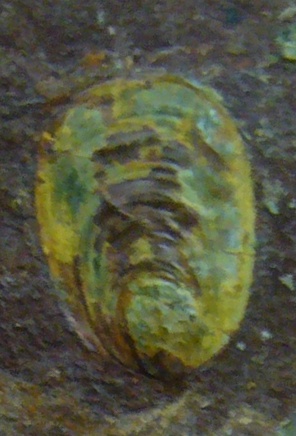
- Lingula — a marine brachiopod genus (genus level continuity) whose modern species resemble Ordovician specimens.
- Other groups often discussed in this context include lizards and snakes in comparative studies of reptile evolution.
History of the term and scientific issues
"Living fossil" originated in early paleontology and was popularized in 19th-century discussions of continuity between fossil and modern life. Modern scientists use it cautiously because it can obscure important evolutionary change: molecular evolution, life-history shifts, or ecological diversification that leave little trace in gross morphology. The term also risks implying that a taxon has stopped evolving; in reality, many so-called living fossils have continued to adapt, sometimes in subtle ways.
Importance, conservation and notable distinctions
Organisms described as living fossils are culturally and scientifically prominent because they connect living biodiversity to deep time and help explain long-term patterns of evolution. They can also be conservation priorities: rarity, restricted ranges, or specialized habitats make some of these taxa vulnerable. When assessing such species, researchers balance fossil evidence with modern genetic, developmental and ecological studies to understand how their adaptations have contributed to persistence. The label remains useful as a shorthand, but careful qualification is necessary in scientific and conservation contexts.
Questions and answers
Q: What is a living fossil?
A: A living fossil is a life form that has survived with little change for a long period of time and still exists today.
Q: What are some examples of living fossils?
A: Horseshoe crabs, crocodilians, turtles, the Tuatara from New Zealand, the Coelacanth fish, the Ginkgo tree, and Lingula (a brachiopod).
Q: How long have horseshoe crabs been around?
A: Horseshoe crabs have changed little in appearance since the Ordovician period which was about 450 million years ago.
Q: How old are crocodilians?
A: Crocodilians first appeared 220 million years ago and modern crocodiles date back to the Upper Cretaceous which was 84 million years ago.
Q: When did turtles first appear?
A: Turtles are first known from 215 million years ago.
Q: What is special about the Tuatara?
A: The Tuatara is unique because it is the sole survivor of an entire order of reptiles called Sphenodontia which were quite common 200 million years ago.
Q: How old are Coelacanths?
A: The Coelacanth dates back to 408-362 million years ago when it was believed to be extinct until one was caught alive off the east African coast in 1938.
Q
Related articles
Author
AlegsaOnline.com Living fossil: species showing long-term morphological continuity Leandro Alegsa
URL: https://en.alegsaonline.com/art/58618