
Limonite
Limonite is a general name for hydrated iron oxide materials—an earthy, yellow-brown to black mixture often formed by weathering and used historically as an iron ore and pigment.
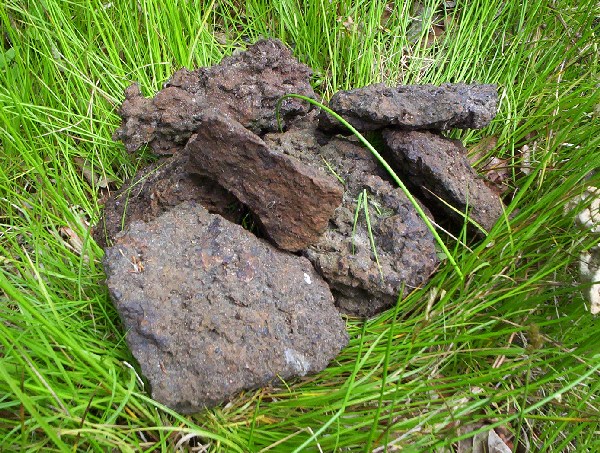
Overview: Limonite is not a single mineral species but a descriptive term for a variable, hydrated iron oxide material. It typically appears as an earthy, yellow-brown to dark brown or black substance and is common in soils, bogs, gossans and weathered rock surfaces. Because it is a mixture of poorly crystalline iron oxides and hydroxides, limonite is often written informally as FeO(OH)·nH2O or described as hydrated iron(III) oxide.
Image gallery
6 Images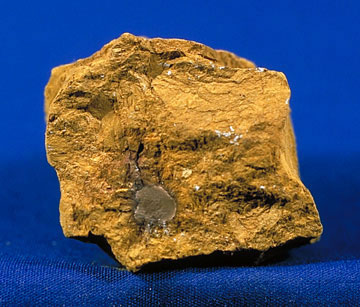


Characteristics
Limonite usually has an earthy or dull luster, a soft and crumbly texture, and a streak that is yellow-brown. Microscopically it may consist of fine-grained aggregates of minerals such as goethite, lepidocrocite and ferrihydrite. The material lacks a fixed chemical formula and crystal structure, which is why geologists treat it as a mineraloid or mixture rather than a distinct mineral species.
Formation and Occurrence
Limonite commonly forms by the chemical weathering and oxidation of iron-bearing minerals and ores, including magnetite, pyrite and siderite. It is abundant in the weathering profiles of many rock types, in bog iron deposits produced by groundwater and marsh processes, and as surface coatings or cements in lateritic soils. These environments favor the precipitation of hydrated iron oxides when iron-bearing fluids interact with oxygenated water.
Uses and Historical Importance
Historically limonite served as a local iron ore and has been exploited in small-scale metalworking where richer ores were absent. It is also an important natural pigment: yellow to brown ochres used in paints and pottery are commonly derived from limonitic materials. Modern industrial iron production prefers higher-grade ores, but limonite remains significant in archaeology, conservation, and the study of weathering processes.
Common uses and notes:
- Natural earth pigments (yellow/brown ochres).
- Traditional, local iron extraction in historical contexts.
- Indicator of oxidation and past groundwater conditions in geology and archaeology.
Identification and distinctions: Limonite can be confused with other iron oxides such as hematite, but it is distinguished by its softer, earthy habit and yellow-brown streak. Because it is a mixture, material labeled "limonite" may vary widely in appearance and composition. For authoritative mineralogical descriptions and specimen records consult specialized resources such as mineral databases. For information on iron extraction and processing from iron-bearing materials see technical summaries at iron industry references.
Related articles
Author
AlegsaOnline.com Limonite Leandro Alegsa
URL: https://en.alegsaonline.com/art/58104