
Little Ice Age: cooler climate and its impacts from late medieval to 19th century
A sustained period of cooler climate affecting parts of the Northern Hemisphere between roughly the 14th–19th centuries, marked by glacier advance, colder winters and regional variability in causes and timing.
Overview
The Little Ice Age (LIA) refers to a phase of cooler temperatures that affected parts of the world after the Medieval Warm Period. It is not a single, globally synchronous event but a multi-century interval during which many regions—especially in the Northern Hemisphere—experienced colder winters, expanded mountain glaciers, and shorter growing seasons. Scholars disagree on precise start and end dates; some trace cooler conditions back to the 14th century while others emphasize stronger cooling from the 16th to the mid-19th century.
Image gallery
10 Images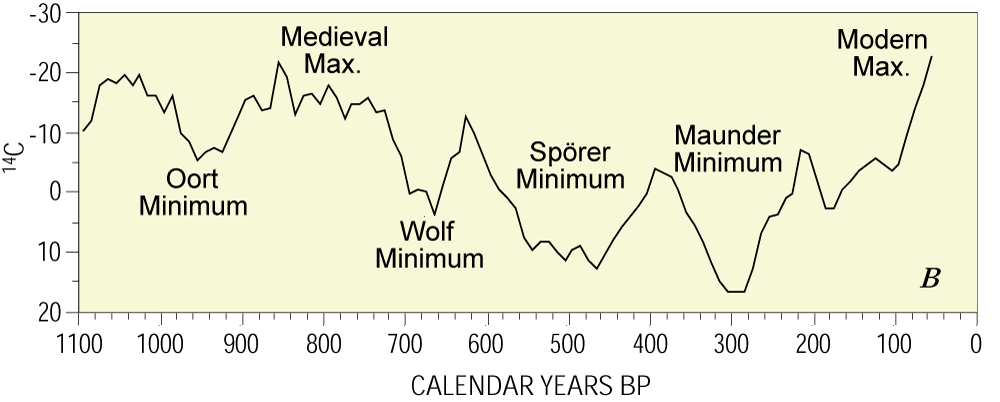


Evidence and characteristics
Evidence for the LIA is assembled from several types of records. Instrumental temperature data are scarce for early centuries, so researchers rely on natural and documentary proxies: tree-ring chronologies, ice cores, lake sediments, peat records, historical documents, and the documented advance of glaciers. Typical characteristics include prolonged cold spells, increased frequency of severe winters in Europe and North America, and periodic minima separated by brief warmer intervals.
Causes and mechanisms
Multiple factors likely contributed, often interacting with natural climate variability rather than one single cause. Important influences considered by scientists include:
- Reduced solar activity during intervals such as the Maunder Minimum, which coincided with pronounced cold in the 17th century.
- Large volcanic eruptions that injected aerosols into the stratosphere and temporarily cooled climate; a well-known example is the eruption that contributed to the "Year Without a Summer" in 1816.
- Changes in ocean circulation and internal climate variability that redistributed heat regionally.
Impacts and historical significance
The LIA influenced human societies in many ways. In affected regions, colder seasons and crop failures increased the risk of famine and economic stress, contributed to shifts in settlement and agricultural practices, and appear in contemporary chronicles and art. Glacial advances reshaped mountain landscapes and left geological records that help date cooler intervals.
Chronology and regional differences
Many studies identify several cooler minima during the LIA, notably in the mid-17th century, the late 18th to early 19th century, and around the 1850s, though timing varies by location. Because its expression differed across continents and oceans, modern researchers often treat the Little Ice Age as a pattern of regional cooling episodes rather than a single, uniform global event. The LIA followed the earlier Medieval Warm Period, but the magnitude and geographic extent of both intervals remain active subjects of research.
Today the Little Ice Age is studied to understand natural climate variability and to place recent, human-driven warming into a longer context. It provides a useful historical benchmark for how climate shifts can affect environments and societies.
Questions and answers
Q: What was the Little Ice Age?
A: The Little Ice Age was a period of cooling that occurred after the Medieval Warm Period.
Q: When did the Little Ice Age start and end?
A: Climatologists and historians find it difficult to agree on the start and end dates of the Little Ice Age. Some say it started in the 16th century and continued until the mid 19th century.
Q: How many minima did the Little Ice Age have, and when did they occur?
A: There were three minima during the Little Ice Age. One started about 1650, another about 1770, and the last one about 1850. Each time was separated by slight warming intervals.
Q: Was the Little Ice Age present all over the world?
A: At first, it was believed that the Little Ice Age was present all over the world. However, now it is not clear if this is true.
Q: Who studies climate, and why do they find it difficult to agree on the start and end dates of the Little Ice Age?
A: Climatologists study climate, and they find it difficult to agree on the start and end dates of the Little Ice Age because different records have different start and end dates, and the extent and intensity of the cooling varied in different regions.
Q: Was the Little Ice Age continuous, or was it interrupted by warming periods?
A: The Little Ice Age was interrupted by slight warming periods between each of the three minima.
Q: What was the Medieval Warm Period, and how was it related to the Little Ice Age?
A: The Medieval Warm Period was a period of warming that preceded the Little Ice Age. The Little Ice Age was a period of cooling that followed the Medieval Warm Period.
Related articles
Author
AlegsaOnline.com Little Ice Age: cooler climate and its impacts from late medieval to 19th century Leandro Alegsa
URL: https://en.alegsaonline.com/art/58497
Sources
- eobglossary.gsfc.nasa.gov : "Little Ice Age definition"
- aip.org : Changing Sun, Changing Climate
- sciencemag.org : "Causes of Climate Change Over the Past 1000 Years"
- doi.org : 10.1126/science.206.4425.1402
- science.nasa.gov : A Chilling Possibility
- pittsburghlive.com : "The politics of global warming"
- canada.com : "Little Ice Age is still with us"