
Leopoldo Alas (Clarín): life, major works and literary significance
Spanish novelist and critic Leopoldo Alas (Clarín, 1851–1901), author of La Regenta, influential realist writer known for psychological insight, free indirect style and social critique.
Overview
Leopoldo Alas y Ureña (25 April 1851 – 13 May 1901), better known by his pen name Clarín, is one of Spain’s most prominent realist writers of the late 19th century. He combined legal training and teaching with a long career as a critic, journalist and novelist. Clarín is chiefly remembered for his novel La Regenta, a complex portrait of provincial life that remains central to the study of Spanish realism and narrative technique.
Image gallery
2 Images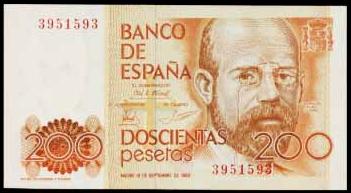

Life and career
Born in Zamora, Clarín spent his childhood in León and Guadalajara before his family settled in Oviedo, where he completed secondary education and began studying law. He lived in Madrid during the 1870s, working as a journalist and completing a doctoral thesis on law and morality. After a brief professorship in Zaragoza, he returned to Oviedo to teach Roman law and continued writing essays and fiction. He died in Oviedo in May 1901. Throughout his life he moved between roles as teacher, critic and man of letters, and his professional formation in law and philosophy shaped the moral and social concerns of his fiction.
Major works and genres
Clarín wrote in several genres: the novel, the short story, literary criticism and journalistic essays. His best-known long work is La Regenta, published in the mid-1880s, admired for its panoramic depiction of a provincial city and the inner life of its protagonist. Other important publications include the novel Su único hijo (1890), a range of short stories — among them the widely anthologized "¡Adiós, Cordera!" — and collections of essays on literature and cultural topics. He also collaborated with contemporary writers and participated in literary debates of his era.
Style, technique and influences
Clarín’s style reflects the European realist and naturalist currents of his time while retaining a distinct moral and psychological depth. He made extensive use of free indirect discourse and the internal monologue to render characters’ thoughts and to integrate narrator and viewpoint without overt commentary. Influences frequently noted by scholars include French realism (notably Flaubert), naturalism, and the positivist and Krausist intellectual climate that affected Spanish education and cultural reform in the late 19th century. His prose alternates detailed social observation with ironic and often compassionate moral interrogation of his characters.
Themes and critical reception
Recurring themes in Clarín’s work include the conflicts of provincial society, the role of religion and secular authority, the constraints imposed on women, and the tension between private desire and public reputation. La Regenta provoked varied responses upon publication: it has been read as a social satire, a psychological tragedy, and a realist panorama; its ambivalent portrayal of clergy and civic elites continues to stimulate diverse interpretations. While some later critics questioned his conservatism or moral outlook, many recognize his narrative innovation and capacity to depict communal life as central to Spanish literary modernity.
Legacy and further reading
Clarín’s influence extends through Spanish narrative, critical writing and teaching. His experiments with point of view and his fusion of social chronicle with interiority helped shape modern Spanish fiction. Readers today encounter his work in university courses, critical editions and translations, and his major novel in particular remains a touchstone for discussions of realism and narrative voice.
Selected links and references
- Biographical overview and basic facts
- Oviedo: Clarín’s final years and death
- Early life in León
- Childhood in Guadalajara and family background
- Move to Oviedo in adolescence
- Legal studies and academic formation
- Time in Madrid as journalist and student
- Years 1871 and onward: Madrid period
- Later Madrid connections and networks
- Doctoral thesis: 'El Derecho y la Moralidad'
- Teaching appointment in Zaragoza
- Dates and academic chronology
- Return to Oviedo and professorial career
- Comparisons with Flaubert and European realism
- Naturalism and literary context
- Narrative techniques: internal monologue and free indirect style
- Publication of 'Su único hijo' (1890)
- Krausism, moral debate and intellectual milieu
Questions and answers
Q: Who was Leopoldo Alas y Ureña?
A: Leopoldo Alas y Ureña, also known as Clarín, was a Spanish realist writer born in Zamora who died in Oviedo on 13 May 1901.
Q: Where did Clarin live during his childhood?
A: During his childhood, Clarin lived in León and Guadalajara before moving to Oviedo in 1865.
Q: What books did he write?
A: Clarin wrote books including La Regenta, Nuevo viaje al Parnaso and La Literatura en 1881 (1882). He also wrote some stories and some journalistic articles.
Q: What is special about La Regenta?
A: La Regenta is special for its great number of characters and other stories around the main story of the novel. It also uses styles such as the internal monologue or the free indirect style which makes the story be told by the characters, not the narrator.
Q: What philosophical trend influenced him?
A: Naturalism and Kraussism were two philosophical trends that influenced him.
Q: What was Clarín's last long book? A: Su único hijo was Clarín's last long book, although it wasn't as well-received as La Regenta.
Q: How is he viewed in the Spanish literary world? A: Clarin remains a rather unknown figure in the Spanish literary world due to his strange mix of searching for God while being Humanist at the same time which has led to there being different views on what his writings could mean.
Related articles
Author
AlegsaOnline.com Leopoldo Alas (Clarín): life, major works and literary significance Leandro Alegsa
URL: https://en.alegsaonline.com/art/57255