
Legally Blonde (2001 film)
2001 American comedy film starring Reese Witherspoon as Elle Woods; a legal-comedy that spawned a sequel, a stage musical and enduring cultural influence.
Overview
Legally Blonde is a 2001 American comedy film adapted from a novel by Amanda Brown. The story follows Elle Woods, a fashion-focused sorority president who enrolls at law school to win back an ex-boyfriend and discovers her own intelligence and determination in the process. The movie is widely regarded as a light-hearted courtroom comedy with a feminist undercurrent and introduced Reese Witherspoon in the lead role to broad popular acclaim. For more context on the film's genre and promotion, see contemporary notices and summaries here and the original source novel here.
Image gallery
4 Images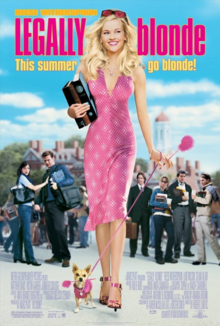


Principal cast and characters
The film features a recognizable ensemble that contributed to its comic tone and character dynamics. The central performance is by Reese Witherspoon as Elle Woods (Witherspoon), supported by:
- Selma Blair as Elle's friend and rival
- Luke Wilson as the romantic interest
- Matthew Davis as a key supporting character
- Victor Garber as a law professor and mentor figure
- Jennifer Coolidge in a memorable comic turn
- Holland Taylor as an austere academic
Production, release and locations
The film was released in July 2001 and benefited from bright production design and a sharp script that balanced satire with sincere moments of character growth. Principal photography and location work reflected the contrast between West Coast lifestyle and East Coast legal rigor, with scenes set in Los Angeles and Southern California as home background and sequences staged to evoke Harvard Law School in Cambridge. Production and setting references are discussed in industry accounts and location guides (Los Angeles, Southern California, Harvard University, Cambridge, Massachusetts).
Box office, reception and awards
Critics and audiences responded positively to the film's blend of humor and heart. It earned several award nominations and became a commercial success: contemporary reports tracked its box-office performance and audience reception here. The worldwide gross is commonly cited at about $142 million worldwide, on a production budget reported at $18 million. Reese Witherspoon received individual nominations for her lead performance, including major comedy-category recognition and popular-vote awards such as those noted at the time here. The film also earned placement on lists celebrating comedic films and has been discussed in cultural roundups and retrospectives.
Legacy, adaptations and franchise
Legally Blonde became the basis for further works and a small franchise. It was followed by a cinematic sequel and by a stage musical adaptation that opened internationally; subsequent projects and continuing interest in the characters have kept the title in public conversation. Details on sequels and related productions are catalogued in studio and press materials here. The film's influence is often cited in discussions about representation of women in comedy, workplace narratives in popular media, and the subversion of stereotypes.
Notable themes and distinctions
At its core, Legally Blonde juxtaposes image and competence: a protagonist stereotyped for her appearance proves capable in a demanding professional field. The film mixes courtroom drama tropes with romantic-comedy beats and employs satirical elements to critique social assumptions. Its accessible tone and memorable lines have made it a touchstone for popular-culture references and campus-stage productions, and it remains part of conversations about light-hearted films that offer uplift alongside laughs.
For additional background, production notes and cast interviews, see studio press kits and archived coverage collected by specialty outlets and entertainment references.
Related articles
Author
AlegsaOnline.com Legally Blonde (2001 film) Leandro Alegsa
URL: https://en.alegsaonline.com/art/56986