
Leo the Last (1970 film)
John Boorman's 1970 drama starring Marcello Mastroianni, a social satire about an exiled prince in London based on George Tabori's play, exploring class, race and urban change.
Leo the Last is a 1970 British drama directed by John Boorman and adapted from George Tabori's play The Prince. The film stars Marcello Mastroianni with supporting performances by Billie Whitelaw, Calvin Lockhart, Brinsley Forde and Graham Crowden. It was distributed by United Artists. Often described as a blend of political satire and social realism, the picture examines life in a declining London neighborhood through the eyes of an outsider.
Image gallery
1 Image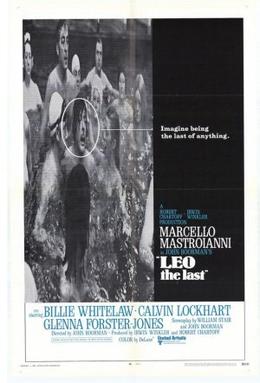
Synopsis
The story follows Leo, a European aristocrat living in exile, who inherits family property situated next to a dilapidated, ethnically diverse community in London. Initially aloof, he becomes increasingly aware of the poverty, tensions and injustices endured by his neighbors. Leo’s slow transformation into an activist figure—organizing, observing and ultimately intervening—drives the narrative toward ambiguous, morally charged outcomes.
Themes and style
Boorman mixes elements of dark comedy, allegory and social critique. The film confronts themes such as class disparity, racial tensions, urban decay and the responsibilities of privilege. Its tone alternates between observational scenes of community life and surreal or symbolic moments that underline Leo’s inner change. The uneven blend of realism and stylization has been noted by critics as deliberate, aiming to unsettle viewers rather than offer tidy resolutions.
Cast and performances
- Marcello Mastroianni — as the titular Leo, bringing a restrained, reflective presence.
- Billie Whitelaw — in a supporting role that emphasizes the film’s psychological depth.
- Calvin Lockhart and Brinsley Forde — among the performers who represent the local community and its vitality.
- Graham Crowden — providing character work that offsets the central figure.
Production and release
Adapted from a stage play, the screenplay and Boorman’s direction refocus the action in a specific London setting, using on-location shooting to convey social detail. The film emerged at a time when British cinema frequently explored class and race; its ambiguous moral stance and experimental touches set it apart from straightforward social dramas. Upon release it provoked varied reactions, with some praising its ambition and others questioning its mixture of tone and political message.
Legacy and notable facts
While not universally embraced, Leo the Last remains an example of John Boorman’s willingness to tackle politically charged material and to experiment with form. The movie is often discussed in studies of late 1960s–early 1970s British film for its engagement with urban change and multicultural tensions. For readers seeking further details on the director, principal cast or distribution, follow the linked names above for more information.
Questions and answers
Q: Who directed Leo the Last?
A: John Boorman directed Leo the Last.
Q: When was Leo the Last released?
A: Leo the Last was released in 1970.
Q: What was the basis for the movie Leo the Last?
A: Leo the Last was based on the play The Prince by George Tabori.
Q: Who were some of the actors in Leo the Last?
A: Marcello Mastroianni, Billie Whitelaw, Calvin Lockhart, Brinsley Forde, and Graham Crowden were some of the actors in Leo the Last.
Q: What was the genre of the movie Leo the Last?
A: Leo the Last was a British drama movie.
Q: How was Leo the Last distributed?
A: Leo the Last was distributed by United Artists.
Q: What is the plot of Leo the Last?
A: The given text does not provide information about the plot of Leo the Last.
Related articles
Author
AlegsaOnline.com Leo the Last (1970 film) Leandro Alegsa
URL: https://en.alegsaonline.com/art/57195