
Lebanese Civil War (1975–1990): causes, course and consequences
A multi-sided conflict in Lebanon from 1975 to 1990 involving sectarian militias, Palestinian groups and regional powers; it reshaped Lebanon's politics, society and regional alignments.
Overview
The Lebanese Civil War (1975–1990) was a complex, multi-party conflict that transformed Lebanon's political order and inflicted long-lasting social and economic damage. What began as intercommunal violence escalated into a broader struggle involving domestic militias, Palestinian organizations, and several regional and international powers. For a concise reference to the war's general outline see 1975–1990 conflict.
Image gallery
10 Images






Root causes and context
Several structural factors set the stage for the fighting. Lebanon's confessional political system, established in the mid-20th century to allocate public offices among religious communities, came under strain from demographic changes and political mobilization. The presence of Palestinian refugees and armed Palestinian factions after 1948 and especially after 1967 added new military and social dynamics. Economic inequality, urbanization, and competing visions of state identity—secular nationalist, Islamist, and sectarian—heightened tensions. Regional diplomacy and demographic change are discussed in more depth at demographic and political shifts.
Principal actors and alliances
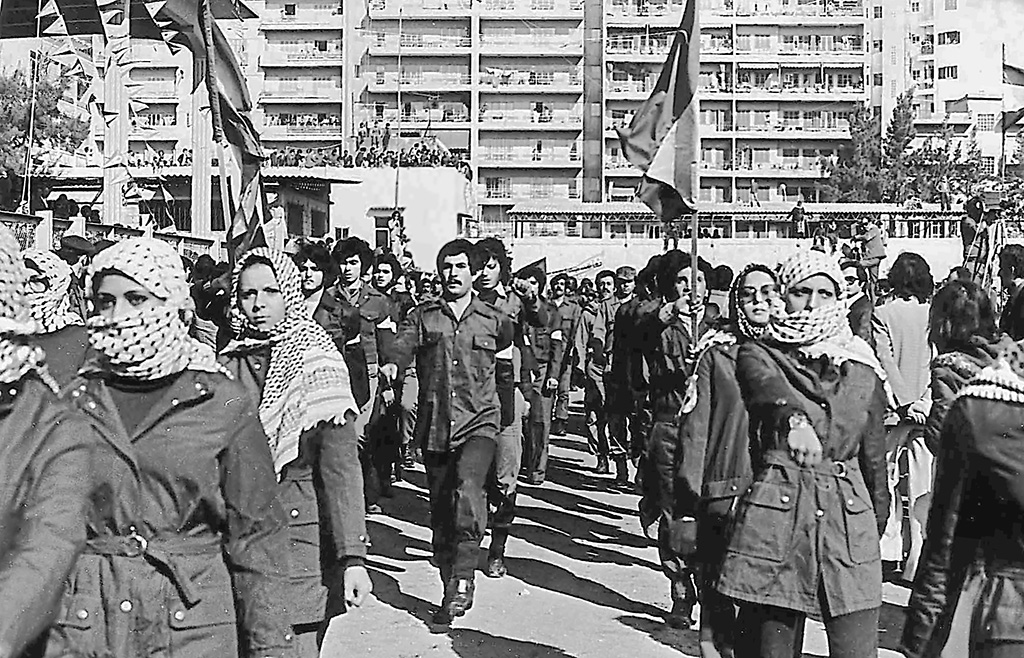
Domestic participants included Christian parties and militias such as the Phalange and allied Lebanese Forces, a constellation of Muslim, leftist and pan-Arab groups often grouped as the National Movement, various Druze forces, and Shia movements that later evolved into organizations such as Amal and Hezbollah. Armed Palestinian groups, most prominently the Palestine Liberation Organization, were militarily active and politically influential inside Lebanon. External states—most notably Syria and Israel—intervened directly, while other foreign powers engaged diplomatically or through limited military presence. The sectarian dimension between Christians and Muslims is central to understanding alliances and rivalries: Christian–Muslim tensions and the role of Palestinian formations are described at the PLO connection.
Course of the war and foreign interventions
Fighting began in 1975 and went through multiple phases, including attempts at ceasefires and negotiated settlements. Syria entered Lebanon militarily in 1976 claiming a stabilizing role; its presence remained a decisive factor throughout the conflict and afterward. Israel launched a major invasion in 1982 aimed at expelling armed Palestinian groups and reshaping Lebanon's security environment; Israel later maintained forces in parts of southern Lebanon. Diplomatic initiatives such as Arab League mediation and bilateral accords attempted to bring peace; one prominent U.S.-backed measure was the 1983 accord between Lebanon and Israel, which faltered amid Syrian opposition and continuing factional resistance. For further context on external involvement see Syrian intervention, Israeli actions, and the 1976 mediation by the Arab League. Much of the fighting concentrated in and around southern Lebanon, a region repeatedly occupied and contested: south Lebanon.
Major phases, settlements, and resolution
- Early sectarian clashes (mid-1970s) and the rise of militias
- Syria's intervention and shifting alliances (late 1970s–early 1980s)
- The 1982 Israeli invasion and subsequent occupations
- International interventions and failed accords, including the 1983 agreement
- Negotiation, the Taif Agreement (1989) and the formal end of large-scale hostilities
The Taif Agreement, endorsed by Lebanon's political leaders and regional actors, rebalanced some elements of power-sharing and provided a framework for ending overt hostilities. Syrian forces remained in Lebanon for years after the war, affecting reconstruction and politics.
Consequences and legacy
The war left deep humanitarian and institutional scars: widespread displacement, destruction of infrastructure, and an economy burdened by reconstruction costs. Politically, the conflict weakened central authority, entrenched sectarian patronage networks, and produced armed actors that continued to influence security and diplomacy. Many Lebanese debates about sovereignty, memory, and justice stem from the war's unresolved grievances. Efforts at reconciliation and reconstruction have been intermittent, and reform of the political system remains a recurring issue in Lebanese public life. For historical summaries and further reading consult overviews and specialist studies linked at demographic analyses and community studies.
Key parties, events, and external actors are summarized here as an entry point for deeper research: Syrian role, Israeli interventions, Palestinian presence, and the diplomatic settings provided by organizations referenced at regional forums and local developments in south Lebanon.
Related articles
Author
AlegsaOnline.com Lebanese Civil War (1975–1990): causes, course and consequences Leandro Alegsa
URL: https://en.alegsaonline.com/art/56827
Sources
- news.bbc.co.uk : "World: Middle East History of Israel's in Lebanon"