
Lamborghini Diablo — V12 Grand Touring and Supercar (1990–2001)
The Lamborghini Diablo is a mid-engined V12 sports car produced 1990–2001 in Sant'Agata Bolognese. It succeeded the Countach, spawned multiple variants, and was followed by the Murciélago.
Overview
The Lamborghini Diablo is a two-door, mid-engined sports car introduced by Lamborghini in 1990. Built as the marque's flagship V12 model, the Diablo combined extreme proportions and performance with the dramatic styling cues long associated with the company. It was produced in Sant'Agata Bolognese and sold throughout the 1990s before production ended in 2001. The Diablo is widely remembered as a defining supercar of its era and a direct successor to the earlier Countach.
Image gallery
10 Images



Design and engineering
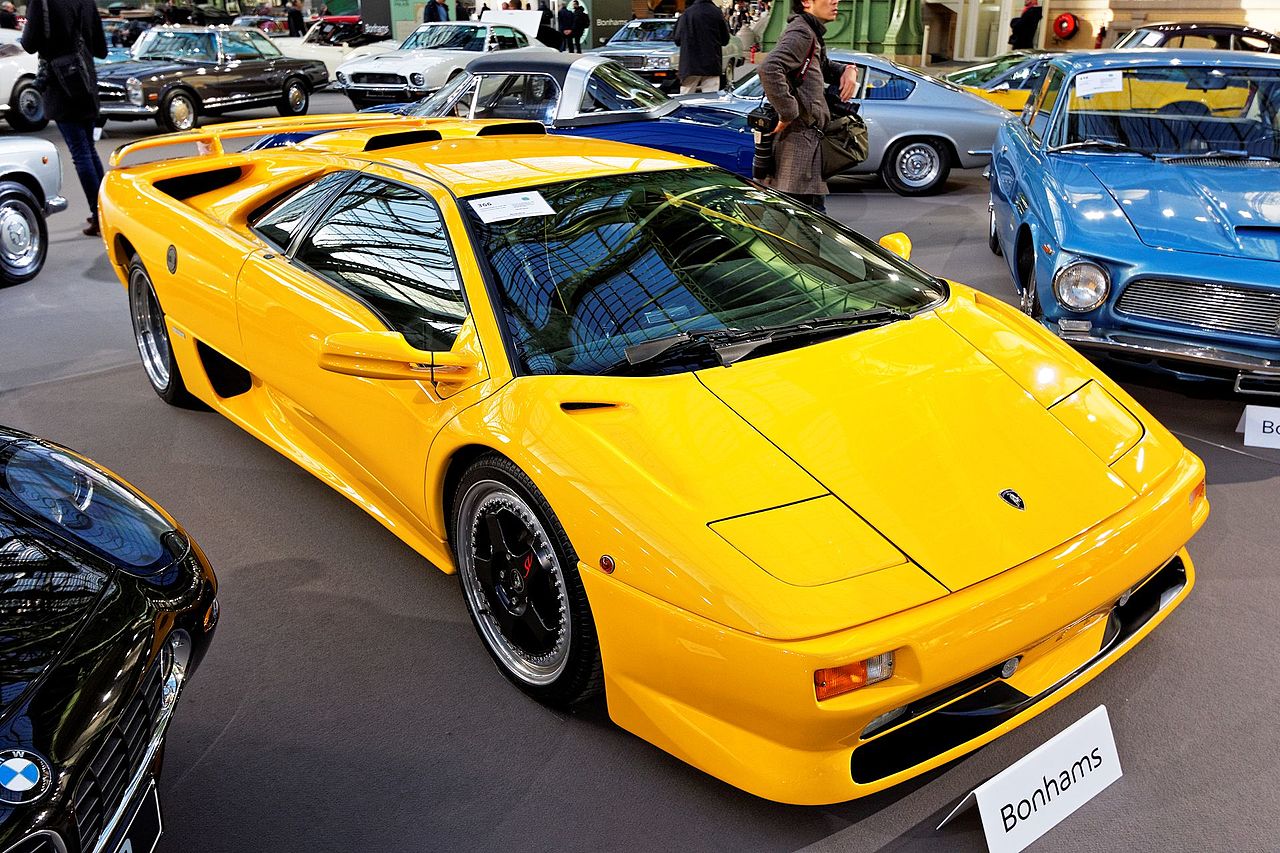
Conceived to offer blistering straight-line speed and handling on demanding roads, the Diablo used a front-mid mounted V12 engine paired with a transaxle gearbox. Early models were rear-wheel drive, while later all-wheel-drive variants improved traction and everyday drivability. The car retained Lamborghini's signature low, wedge-like silhouette and scissor doors, and was revised through its life with aerodynamic and interior refinements.
Variants and notable specifications
Over its production life the Diablo appeared in numerous factory versions, tailored to different buyers and uses. Key variants include:
- Base Diablo — the original road car with a V12 and manual transmission.
- Diablo VT — an all-wheel-drive model providing improved stability in varied conditions.
- Diablo SV and SE30 — lighter, more focused editions aimed at increased performance.
- Diablo Roadster and VT Roadster — open-top conversions offered in limited numbers.
- Diablo GTR — a track-only race version built for competition and collectors.
Power outputs, displacement, and exact performance figures varied by year and model; several versions were capable of top speeds in excess of 320 km/h (about 200 mph), making the Diablo a contender among the fastest production cars of its time.
History and production
The Diablo was produced from 1990 until 2001 in Sant'Agata Bolognese at Lamborghini's factory. It was introduced as the natural successor to the long-running Countach and remained the company's halo model through the 1990s. About 2,884 Diablos were built in total. The model's development and life coincided with changes in Lamborghini's ownership and management, which influenced upgrades, special editions, and the pace of technical improvements.
Legacy and importance
Today the Diablo is notable both as a 1990s performance icon and as a collectible classic. Its combination of visceral driving character, V12 soundtrack, bold styling, and low production numbers make well-preserved examples sought after by enthusiasts and collectors. The Diablo's place in the Lamborghini lineup was followed by the Murciélago, which inherited the role of flagship V12 model.
Notable facts and context
The model name Diablo translates to "devil" in Spanish, a reflection of Lamborghini's tradition of using evocative, often bullfighting-related names. The car was built in Lamborghini's home town of Sant'Agata Bolognese and is commonly referenced in discussions of 1990s supercar design and engineering. For general reference and model histories see manufacturer resources and model guides: overview, maker, name origin, factory location, and successor information at Murciélago.
Related articles
Author
AlegsaOnline.com Lamborghini Diablo — V12 Grand Touring and Supercar (1990–2001) Leandro Alegsa
URL: https://en.alegsaonline.com/art/55682