
Aristolochiaceae (Birthwort or Pipevine Family)
Aristolochiaceae is a small family of flowering plants (about seven genera, ~400 species) in the order Piperales, known for pipe-shaped flowers, specialized pollination, and toxic aristolochic acids.
The Aristolochiaceae, commonly called the birthwort, pipevine, or Dutchman's-pipe family, are a group of flowering plants (overview) placed in the order Piperales (Piperales). The family contains about seven genera and roughly 400 species (genera and species count), with the genus Aristolochia serving as the type genus. Linnaean authorship is traditionally cited for the genus (authority).
Image gallery
2 Images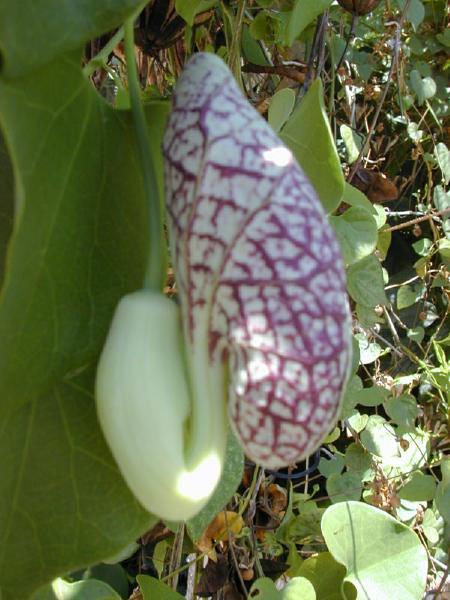

Characteristics
Members of the family range from perennial herbs to shrubs and lianas. Leaves are typically simple and alternate, and the plants often produce conspicuous, tubular or trap-like flowers formed mainly from fused sepals rather than distinct petals. Fruits are variable but commonly dehiscent and contain numerous seeds. Many species emit odors that attract flies or beetles; several employ temporary trap mechanisms that ensure pollination.
Distribution and ecology
Aristolochiaceae occur in temperate and tropical regions worldwide, with centers of diversity in East Asia and the Americas. They occupy woodland, understory, and riparian habitats. Ecologically notable are specialized interactions: some swallowtail butterflies and other insects feed on Aristolochia and sequester defensive compounds, while flies act as the primary pollinators of many species.
Uses and risks
Historically, certain species were used in folk medicine—hence the common name birthwort—applied to childbirth-related treatments. Modern pharmacology has shown that many species contain aristolochic acids, compounds associated with kidney damage and increased cancer risk. Because of these health concerns, extracts containing these chemicals are restricted or discouraged in many countries.
History and classification
The family has long been recognized by botanists and its taxonomy has been refined with molecular studies. While some genera have been reclassified over time, modern treatments based on DNA data place Aristolochiaceae firmly in Piperales. Taxonomic discussions continue about boundaries and relationships among a few genera.
Notable facts
- Common names reflect floral shape and historical uses.
- Trap pollination and strong floral scents are characteristic strategies.
- Conservation issues affect several species due to habitat loss and overcollection.
Questions and answers
Q: What is the Aristolochiaceae family?
A: The Aristolochiaceae family is a family of flowering plants with around 400 species, belonging to the order Piperales.
Q: How many genera does the Aristolochiaceae family have?
A: The Aristolochiaceae family has seven genera.
Q: What is the type genus of the Aristolochiaceae family?
A: The type genus of the Aristolochiaceae family is Aristolochia L.
Q: Are all Aristolochiaceae plants flowering plants?
A: Yes, all Aristolochiaceae plants are flowering plants.
Q: How many species are believed to be in the Aristolochiaceae family?
A: The Aristolochiaceae family has around 400 known species.
Q: What order do plants in the Aristolochiaceae family belong to?
A: Plants in the Aristolochiaceae family belong to the order Piperales.
Q: What is a common name for the Aristolochiaceae family?
A: A common name for the Aristolochiaceae family is the Birthwort family.
Tags
Related articles
Author
AlegsaOnline.com Aristolochiaceae (Birthwort or Pipevine Family) Leandro Alegsa
URL: https://en.alegsaonline.com/art/5565
Sources
- ars-grin.gov : "Family: Aristolochiaceae Juss., nom. cons"