
Lake Tahoe — Alpine freshwater lake on the California–Nevada border
Lake Tahoe is a large, deep alpine freshwater lake in the Sierra Nevada on the California–Nevada border, noted for its elevation, clarity, recreation, and conservation challenges.
Overview
Lake Tahoe is a large alpine freshwater lake located in the Sierra Nevada mountains on the border between California and Nevada in the United States. It is renowned for its deep blue color, clear water, and scenic mountain setting. The lake lies at high altitude, which influences its climate, ecology, and visitor experience.
Image gallery
10 Images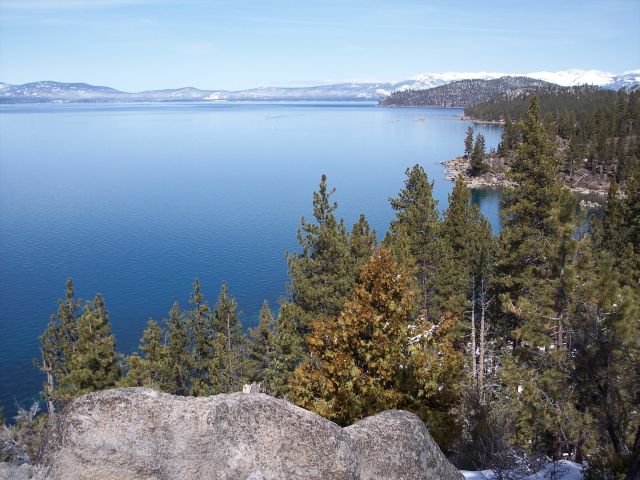


Physical characteristics
Lake Tahoe is one of the largest and deepest lakes in the United States. Key physical features include:
- Depth: maximum depth of roughly 1,645 feet (about 501 m), making it one of the deepest natural lakes in the country and second only to Crater Lake in some comparisons; see Crater Lake for context.
- Area: nearly 192 square miles (around 497 km²).
- Elevation: the surface sits at about 6,229 feet (1,898 m), a characteristic of its high‑mountain environment and high elevation setting.
- Outflow: the lake drains to the Truckee River, which flows northeast toward Pyramid Lake in Nevada.
Origin and geologic history
The basin that holds Lake Tahoe formed through a combination of tectonic uplift and faulting, with later modification by glaciers during the Pleistocene. These processes produced the deep, steep-sided basin and the surrounding alpine ridges. The lake is a natural body of water rather than a man-made reservoir; its geology and clear waters have made it a subject of scientific interest for studies of alpine limnology and basin evolution.
Ecology, conservation and threats
Lake Tahoe supports a variety of cold-water aquatic life and shoreline ecosystems. Historically noted for exceptional water clarity, the lake has experienced gradual changes in transparency and nutrient levels over decades. Urban development, stormwater runoff, and the risk of non-native invasive species have prompted cooperative conservation efforts by federal, state and local agencies and nonprofit organizations. Management priorities include protecting water quality, controlling erosion, and preventing the introduction of aquatic invaders.
Recreation and human use
Lake Tahoe is a major recreation destination year‑round. Popular activities include boating, fishing, hiking, mountain biking, and beach use in summer, and skiing, snowboarding, and other winter sports at nearby mountain resorts. Towns and communities around the lake, such as South Lake Tahoe and Tahoe City, provide services and access points for visitors. Because the lake sits at altitude, many visitors notice physiological effects; reduced atmospheric oxygen can affect breathing and endurance. To reduce discomfort, medical and travel resources commonly suggest avoiding heavy exertion and limiting alcohol consumption until one acclimates to the altitude (oxygen considerations and alcohol precautions).
Notable facts and distinctions
Lake Tahoe's combination of depth, size, and elevation makes it distinctive among North American lakes. Beyond recreation and scenery, it functions as an important natural laboratory for researchers studying mountain hydrology and aquatic ecosystems. Longstanding efforts to balance tourism, development, and environmental protection illustrate the lake's value to both local communities and the wider public.
Related articles
Author
AlegsaOnline.com Lake Tahoe — Alpine freshwater lake on the California–Nevada border Leandro Alegsa
URL: https://en.alegsaonline.com/art/55566