
Lake Turkana: geology, ecology, archaeology and conservation
Lake Turkana is a large, alkaline desert lake in northwest Kenya and southern Ethiopia, notable for its unique ecology, volcanic islands and world-class hominid fossil sites protected as UNESCO World Heritage parks.
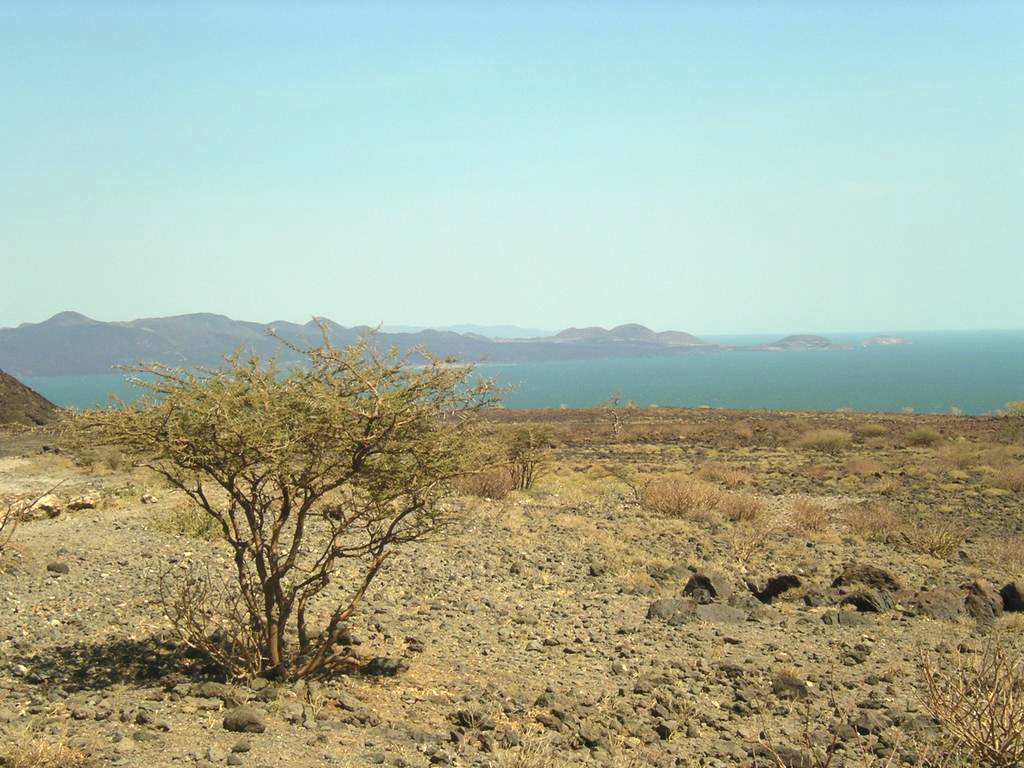
Lake Turkana lies in the northern sector of the Great Rift Valley and occupies an arid corridor of northwestern Kenya, with its far northern margin extending into Ethiopia. Formerly called Lake Rudolf, it is the world's largest permanent desert lake and the largest alkaline lake on Earth. By volume it ranks among the planet's largest saline lakes — a comparison often made with the Caspian Sea and the Aral Sea — while its surface area places it well down the list of the world's sizable inland waters. The lake's hot, dry climate, remote location and distinctive chemistry combine to create a strikingly wild landscape.
Image gallery
10 Images


Physical characteristics and hydrology
Turkana is an endorheic basin: three principal rivers supply its water but no river drains it to the sea. The most important tributaries are the Omo (from Ethiopia), the Turkwel and the Kerio. Because evaporation is the only significant outflow, lake level and volume fluctuate with rainfall and upstream river flow. The shorelines vary from rocky escarpments to sandy spits and extensive flats at lower elevations. Volcanic formations dominate the basin: the surrounding rocks are largely igneous, and Central Island remains volcanically active, with fumaroles and thermal features on some of the islands.
Ecology and wildlife
Despite its alkaline water and harsh climate, the lake supports rich lacustrine communities and important bird colonies. Fish and bird populations sustain local fishing communities and attract researchers. Large reptiles are conspicuous: numerous Nile crocodiles inhabit the flats and sheltered bays, and the rocky shores are home to arachnids and venomous snakes, including scorpions and carpet vipers. Strong diurnal winds and sudden storms are common because the lake surface changes temperature more slowly than the surrounding land; these conditions influence navigation, fishing and shoreline ecology.
Islands, parks and protection
Several islands and shores have protected status. Sibiloi National Park lies along the eastern margin, while Central Island National Park and South Island National Park are located within the lake and are noted for their volcanic features and wildlife. The ensemble of protected areas around the lake has been recognized by UNESCO and inscribed as a World Heritage Site, acknowledging both natural values and the outstanding fossil record found there. Visitors must take precautions because remote roads, extreme heat and sudden storms make the region hazardous for the unprepared.
Archaeology and human significance
Lake Turkana's basin is celebrated among paleoanthropologists as one of the most productive sources of early human and pre-human remains. Layers of sediment exposed around the lake have yielded numerous fossils attributed to a range of ancient species and are central to debates on hominid evolution. Collections and sites in the area document long sequences of occupation and climate change, and discoveries such as the nearly complete skeleton known as Turkana boy contribute to the region's reputation as a cradle of early humanity and a key focus for ongoing research into our origins and prehistoric environments (hominid studies).
Human use, hazards and contemporary issues
Local communities rely on fishing, pastoralism and small-scale agriculture in seasonal riverine strips. The lake's fishery and shoreline wetlands are important for livelihoods but face pressures from variable water levels, sedimentation and changing climate patterns. Conservation and research efforts aim to balance protection of wildlife and paleontological resources with the needs of pastoral and fishing populations. Travelers and researchers are routinely advised to plan carefully, use experienced guides and respect protected zones where crocodiles and other hazards occur.
- Major inflows: Omo, Turkwel, Kerio.
- Protected areas: World Heritage parks including Sibiloi and the lake islands.
- Notable features: alkaline waters, volcanic islands, prolific fossil beds.
Lake Turkana remains a landscape of contrasts: a harsh, sunbaked basin that nonetheless supports distinct ecosystems and preserves an exceptional record of human prehistory. Scientific interest, cultural value and conservation concerns continue to make it a focus for researchers, park managers and the communities who live along its shores.
Questions and answers
Q: What is the former name of Lake Turkana?
A: The former name of Lake Turkana was Lake Rudolf.
Q: What type of lake is it?
A: Lake Turkana is a desert lake and the world's largest alkaline lake.
Q: How does it rank in terms of size among all lakes?
A: By area, Lake Turkana ranks 24th among all lakes.
Q: Is the water drinkable?
A: The water from Lake Turkana is drinkable, but not palatable.
Q: Are there any national parks located near the lake?
A: Yes, there are several national parks located near the lake including Sibiloi National Park, Central Island National Park and South Island National Park.
Q: What wildlife can be found in and around the lake?
A: Wildlife that can be found in and around the lake include Nile crocodiles, scorpions, carpet vipers and other animals.
Q: Why is this area considered to be important by anthropologists?
A: This area is considered to be important by anthropologists because many hominid fossils have been found here, including the skeleton of "Turkana Boy" which was discovered in 1984.
Related articles
Author
AlegsaOnline.com Lake Turkana: geology, ecology, archaeology and conservation Leandro Alegsa
URL: https://en.alegsaonline.com/art/55576
Sources
- law.fsu.edu : Ethiopia - Kenya Boundary
- ilec.or.jp : World Lakes Database