
Crater Lake (Oregon) — caldera lake, geology, history, and features
Crater Lake is a deep, clear caldera lake in Oregon formed by the collapse of Mount Mazama. Noted for its intense blue water, geological origin, unique ecology and status as the centerpiece of Crater Lake National Park.
Overview
Crater Lake is a renowned caldera formation filled by freshwater, located in the lake-rich region of the U.S. state Oregon. It occupies most of the basin protected by Crater Lake National Park and is widely admired for its deep blue color and notable water clarity. The basin is the result of a large volcanic collapse and today the lake is one of the deepest in North America.
Image gallery
10 Images




Formation and geology
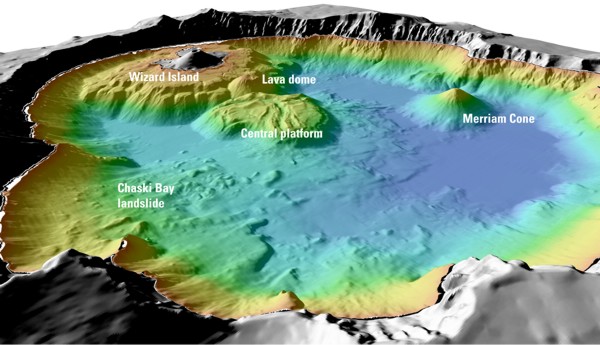
The modern lake largely fills a caldera that is nearly 2,148 feet (655 meters) deep in places. The caldera formed when the volcano or crater summit of Mount Mazama collapsed following a massive eruption around seven to eight thousand years ago. Over centuries, precipitation gradually filled the basin. Because there are no permanent inflowing or outflowing rivers, the lake is a closed hydrologic system; loss from evaporation is roughly balanced by direct rainfall and heavy snowfall in the surrounding high country.
Physical characteristics
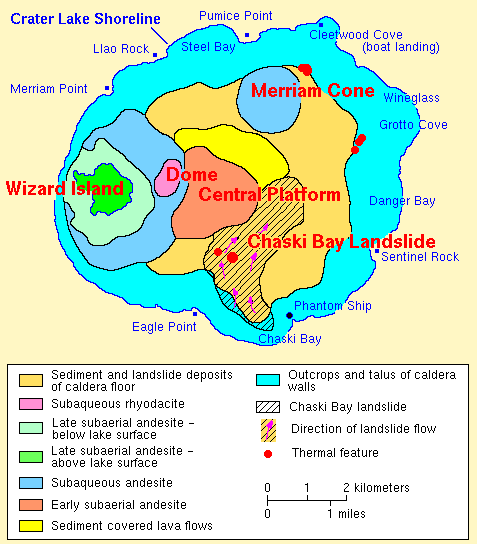
Crater Lake's combination of depth, lack of streams, low nutrient input and cold temperatures gives it exceptional optical clarity and the vivid blue hue that makes it famous. The lake's maximum measured depth places it among the deepest lakes in the United States. Islands and prominent rock formations rise from the water—most notably Wizard Island, a volcanic cinder cone, and Phantom Ship, a small rocky islet—adding to the scenic and geological variety.
Human history and cultural significance
Indigenous peoples of the region, including the Klamath, have oral traditions that recall the volcanic events that created the lake and treat the site as culturally significant. The first recorded non-indigenous sighting was by miner John Wesley Hillman in the mid-19th century, who gave it the name "Deep Blue Lake". Later names included Blue Lake and Lake Majesty before the present name took hold. In 1902 the area was designated a national park to protect both its scenic and geological values.
Ecology and notable features
Originally fishless because of its isolation, Crater Lake was stocked with fish by humans between the late 19th and early 20th centuries; several species introduced during that period persist today. A frequently mentioned curiosity is the "Old Man of the Lake", a tree trunk that has floated vertically and remained remarkably preserved for over a century. The lake's low biological productivity and cold temperatures slow decay and limit algal growth.
Recreation, management and conservation
Crater Lake and its park are managed for both public enjoyment and scientific study. Popular activities include scenic drives around the rim, hiking, seasonal boat tours to Wizard Island, photography and winter recreation where permitted. Heavy winter snowfall restricts access for much of the year, helping preserve the area's natural character. Park managers continue to monitor water quality, aquatic life and invasive species threats while balancing visitor use with conservation goals.
Quick facts
- Type: volcanic caldera lake (caldera).
- Location: Oregon, United States (state).
- Protected area: Crater Lake National Park.
- Notable features: Wizard Island, Phantom Ship, the Old Man of the Lake.
- Hydrology: no permanent surface rivers, balance of precipitation and evaporation.
- First recorded non-indigenous visitor: John Wesley Hillman.
For further reading on the lake's geology, ecology and visitor information see park resources and geological surveys (lake information and crater studies are commonly available through official sources).
Questions and answers
Q: What is Crater Lake?
A: Crater Lake is a caldera lake in the U.S. state of Oregon, and it is the main attraction of Crater Lake National Park.
Q: What is unique about the lake?
A: The lake is famous for its blue color, clear water, and the fact that it partly fills a nearly 2,148-foot (655-meter) deep caldera.
Q: How was the volcanic crater formed?
A: The volcanic crater was formed by the collapse of the volcano, Mount Mazama, about 7,500 years ago.
Q: Are there any rivers flowing into or out of the lake?
A: No, there are no rivers flowing into or out of the lake.
Q: How is the evaporation compensated for?
A: The evaporation is compensated for by rain and snowfall at a rate such that the total amount of water is replaced every 250 years.
Q: What is the Old Man of the Lake?
A: The Old Man of the Lake is a famous piece of driftwood that has been moving up and down in the water for more than 100 years.
Q: Was the lake originally inhabited by fish?
A: No, originally fish did not live in the lake, but people stocked the lake with different kinds of fish between 1888 and 1941, and several species of fish still live in the lake.
Related articles
Author
AlegsaOnline.com Crater Lake (Oregon) — caldera lake, geology, history, and features Leandro Alegsa
URL: https://en.alegsaonline.com/art/23999
Sources
- oe.oregonexplorer.info : "Facts about Crater Lake"
- volcano.si.edu : "Global Volcanism Program | Crater Lake | Summary"
- craterlakeinstitute.com : "John Wesley Hillman – Discovery of Crater Lake"
- hillmanc.fsnet.co.uk : "John Wesley Hillman's dictated autobiographical memoir"
- nps.gov : "Crater Lake National Park – Frequently Asked Questions (U.S. National Park Service)"
- nps.gov : "Crater Lake National Park – Directions"
- lakelubbers.com : "Search Results – Lakelubbers"
- soundwaves.usgs.gov : "CMG Maps Bottom of Crater Lake, Oregon"
- geology.com : "Deepest Lake in the World - Deepest in the United States - GEOLOGY.COM"
- craterlakeinstitute.com : "Crater Lake National Park Air Quality Information Overview"
- craterlakeinstitute.com : "Into the Deep: Crater Lake's ranking as one of the world's deepest lakes varies by how list is determined"
- doi.org : 10.1130/0016-7606(2002)114<0675:MVAMWI>2.0.CO;2
- doi.org : 10.1007/s10750-006-0343-5
- oe.oregonexplorer.info : "Geologic History of Crater Lake"
- lakescientist.com : "Extreme Lakes | Lake Scientist"