
Kouilou Department (Republic of the Congo)
Kouilou is a coastal department in southwestern Republic of the Congo. It includes the historic Loango area, coastal ecosystems, and is administratively divided into six districts with Loango as its capital.
Kouilou is a coastal department of the Republic of the Congo located on the country's southwestern seaboard. The department faces the Atlantic Ocean and lies adjacent to the economic hub of Pointe-Noire. Its administrative capital is Loango, a town that gives its name to the historic Loango cultural and political sphere in the region.
Image gallery
2 Images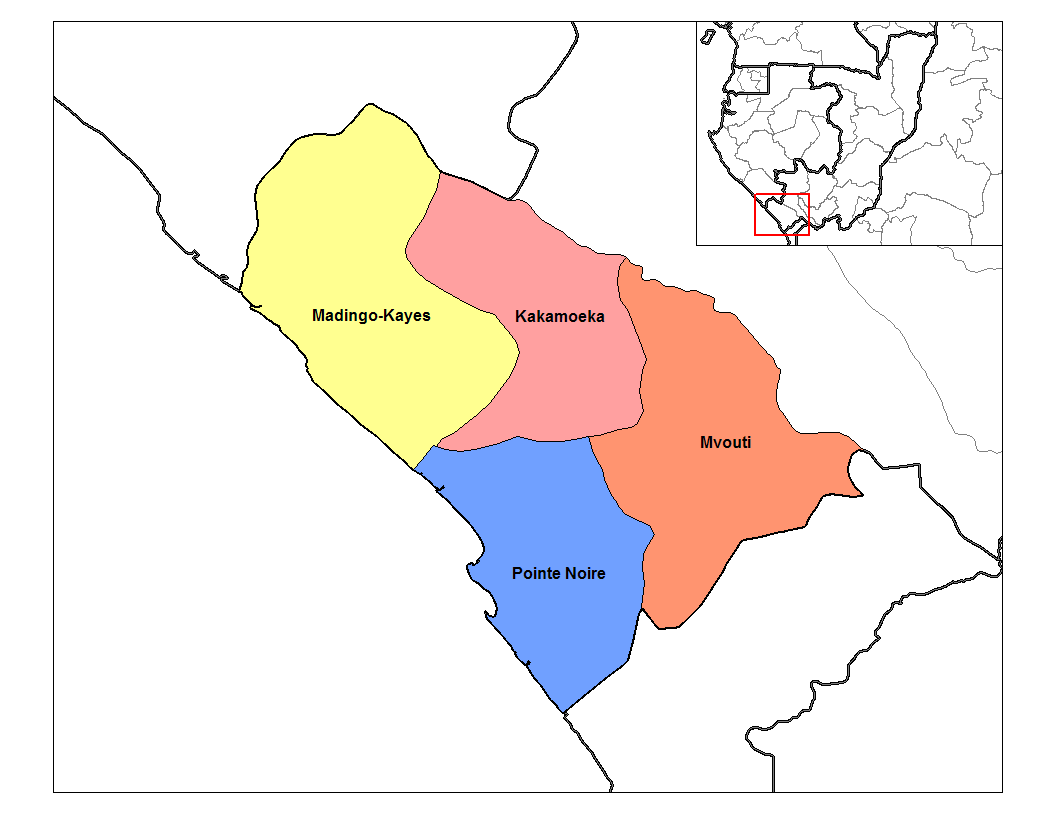

Geography and environment
The landscape of Kouilou includes low coastal plains, mangrove-lined estuaries and patches of tropical forest inland. These ecosystems support fisheries, coastal agriculture and a range of wildlife. The coast and nearby offshore waters are also important for local livelihoods and for national resource development.
Administration and subdivisions
Administratively, Kouilou is organized into six districts. These local divisions manage rural and urban communities, coordinate public services and connect village-level administration to the departmental authorities in Loango. District boundaries and names have evolved over time with national reforms.
History and cultural notes
The department occupies part of the historic Loango region, once the centre of the pre-colonial Kingdom of Loango, known from early European contact. During the colonial period and into the modern state, coastal towns in Kouilou served as points of trade and cultural exchange. Traditional languages, customs and maritime activities remain part of local identity.
Economy and importance
Kouilou's economy combines fishing, small-scale agriculture, forestry and services linked to nearby urban centres. Proximity to Pointe-Noire, a major port and oil industry base, means Kouilou is affected by regional infrastructure, transport corridors and resource development. Conservation of mangroves and coastal habitats is also a local concern as development and climate-related sea-level changes create pressures.
Notable facts and distinctions
- Kouilou forms a coastal strip with ecological significance for fisheries and mangroves.
- Its name and the town of Loango recall the historic Loango cultural region and former kingdom.
- Administrative organization into six districts links rural communities to departmental governance.
For a general overview of the country's administrative divisions and local governance, see resources on the Republic's departments and regional planning. Further local detail, such as district names and current demographic statistics, is maintained by national statistical and administrative authorities.
Related articles
Author
AlegsaOnline.com Kouilou Department (Republic of the Congo) Leandro Alegsa
URL: https://en.alegsaonline.com/art/54367
Sources
- cia.gov : "World Factbook"
- cnsee.org : "Annuaire Statistique du Congo 2009"
- tools.wmflabs.org : 0°52′00″S 14°49′00″E / 0.866667°S 14.8167°E / -0.866667; 14.8167