
Krakatoa (Krakatau): the volcanic island of the Sunda Strait
Krakatoa (Krakatau) is a volcanic island in the Sunda Strait, Indonesia, known for the cataclysmic 1883 eruption, later emergence of Anak Krakatau, and ongoing hazards including tsunamis and ash.
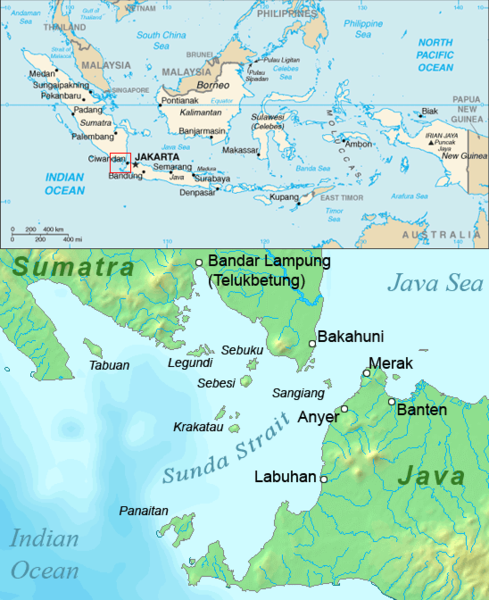
Krakatoa — locally called Krakatau — is a volcanic complex in the Sunda Strait between the islands of Java and Sumatra in Indonesia. It is part of the Sunda volcanic arc formed where the Indo‑Australian plate subducts beneath the Eurasian plate. The site has produced multiple notable explosions through historic time and remains an important case study in volcanology, tsunami generation and volcanic hazard management.
Image gallery
10 Images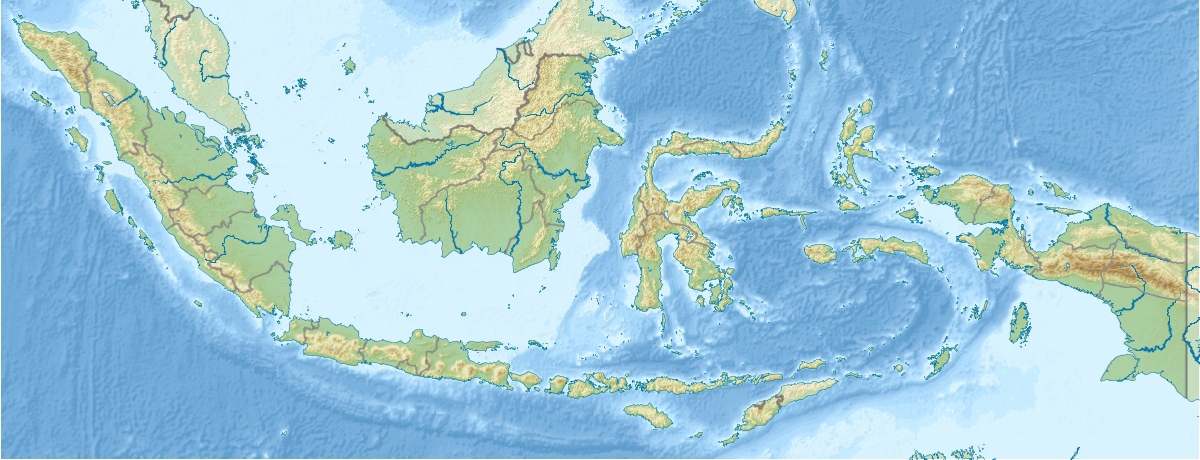





Geology and structure
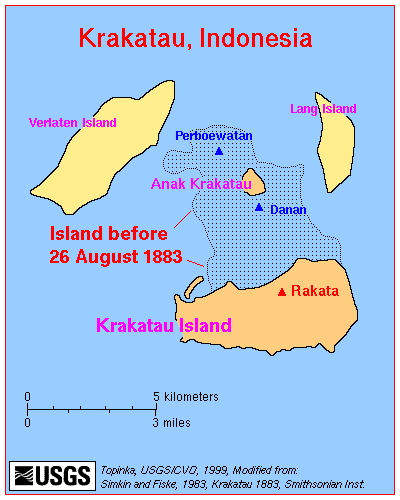
The island group is the surface expression of a series of volcanic cones and a caldera. The 1883 cataclysm substantially altered the topography: a large portion of the volcanic island collapsed and a caldera opened. New volcanic activity in the 20th century produced a new cone inside that caldera, commonly called Anak Krakatau ("Child of Krakatoa"). The complex behaves as a volcano with explosive eruptions, pyroclastic flows, and rapid flank failures.
Major eruptions and impacts
Krakatoa has erupted repeatedly in recorded history, but the most famous event began in August 1883. The series of explosions culminated in one of the largest volcanic explosions in human history: shock waves were recorded around the globe, vast quantities of ash and gas were ejected into the atmosphere, and powerful tsunamis devastated nearby coastlines. Estimates of fatalities vary; contemporary and later sources attribute tens of thousands of deaths to the 1883 eruption and its aftereffects.
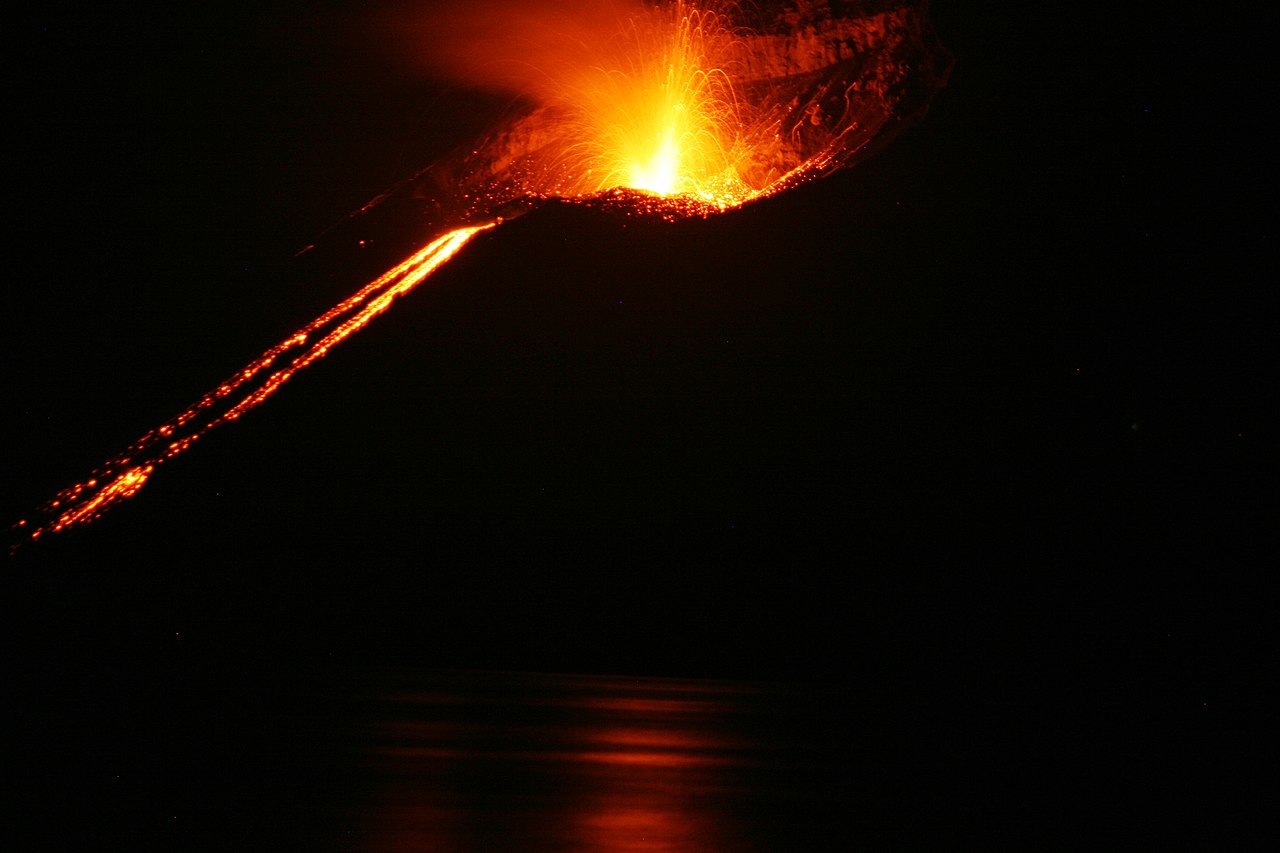
In modern times, activity resumed with the growth of Anak Krakatau, which emerged above sea level in 1927 and has been intermittently active since. On 22 December 2018 a partial collapse of Anak Krakatau's central cone triggered a deadly tsunami in the Sunda Strait that killed more than 400 people and highlighted the continuing hazard posed by volcanic flank collapse and submarine landslides.
Hazards, monitoring and legacy
Krakatoa's history illustrates several volcanic hazards: explosive ashfall and pyroclastic flows, atmospheric effects that can alter climate and produce vivid sunsets, tsunamis generated by explosive blasts or flank collapses, and ongoing eruptions from newly formed cones. Authorities and scientists monitor seismicity, deformation, gas emissions and sea level changes around the island to provide early warnings.
- Notable facts: 1883 explosion was among the loudest recorded; global atmospheric effects were observed for months.
- Anak Krakatau remains the active remnant and is a focal point for research on island‑building and collapse processes.
- Lessons from Krakatoa inform coastal planning, tsunami warning systems and volcanic risk communication.
For further technical details and updates, readers may consult volcanological reports and government hazard bulletins that track the complex's ongoing activity and research findings (more on the volcano). Historical summaries, scientific analyses and hazard maps continue to refine understanding of Krakatoa's behavior and regional implications (eruption records, local name and accounts, geographic context, national monitoring, tsunami case studies).
Questions and answers
Q: What is Krakatoa?
A: Krakatoa is an active volcano located in the Sunda Strait, Indonesia.
Q: Has Krakatoa erupted before?
A: Yes, Krakatoa has erupted repeatedly in known history.
Q: When did the most significant eruption occur?
A: The best known of the Krakatoa eruptions occurred in late August 1883.
Q: What happened on December 22, 2018, due to Krakatoa?
A: On December 22, 2018, the central cone of Krakatoa collapsed and caused a tsunami in the Sunda Strait.
Q: How many people were killed due to the tsunami caused by Krakatoa on December 22, 2018?
A: More than 400 people were killed due to the tsunami caused by Krakatoa on December 22, 2018.
Q: What are some different ways the name Krakatoa has been spelled?
A: The name Krakatoa has been spelled in many different ways.
Q: Where is the Sunda Strait located?
A: The Sunda Strait is located in Indonesia.
Related articles
Author
AlegsaOnline.com Krakatoa (Krakatau): the volcanic island of the Sunda Strait Leandro Alegsa
URL: https://en.alegsaonline.com/art/54404
Sources
- dailymail.co.uk : "Will Krakatoa rock the world again?"
- bbc.co.uk : bbc.co.uk/news/science-environment-46707731
- teacher.scholastic.com : "Scholastic.com - Online Activities: Weather Watch"
- news.independent.co.uk : "How Krakatoa made the biggest bang"
- books.google.com : 'The eruption of Krakatoa and subsequent phenomena' (Report of the Krakatoa Committee of the Royal Society). London, 1888