
Kreuzberg: Berlin's multicultural, countercultural district and its history
Kreuzberg, a central Berlin district south of Mitte, is known for its alternative culture, immigrant communities, nightlife, historical divisions (SO 36 / SW 61) and its 2001 merger with Friedrichshain.
Overview
Kreuzberg is a well‑known quarter of Berlin located immediately south of the central Mitte district. Long associated with countercultural movements, an active nightlife and a diverse population, it became emblematic of postwar West Berlin's alternative scene. The name evokes a mix of vibrant street life, social activism and a complex urban history shaped by division, migration and cultural renewal.
Image gallery
10 Images


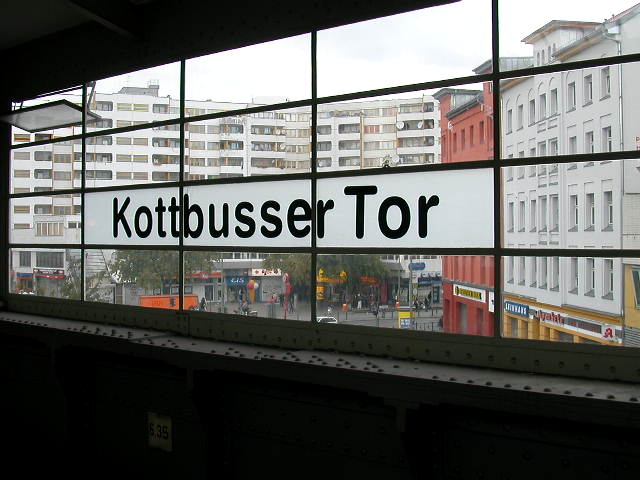


Layout and local character
The area historically comprised two distinct sectors commonly referred to by their postal code remnants: the northeastern area called SO 36 (often shortened to "36") and the southwestern area known as SW 61 ("61"). These internal differences were reflected in neighbourhood identity, nightlife patterns and local politics. In the decades after World War II Kreuzberg attracted artists, students and immigrants, creating a dense patchwork of small businesses, cafés, clubs and community centres alongside parks and former industrial sites.
History and political geography
Kreuzberg became part of Greater Berlin in 1920 and developed through the 20th century under shifting political conditions. After the construction of the Berlin Wall, the district lay at the western edge of divided Berlin, which affected its economy and urban fabric. The fall of the Wall in 1989 transformed the area again, opening new connections across the Spree. In a municipal reform of 2001 Kreuzberg was administratively merged with the adjacent Friedrichshain district to form Friedrichshain‑Kreuzberg — a union that many residents at the time regarded as awkward because the two localities were linked by only a single major crossing, the Oberbaumbrücke.
Culture, social life and notable features
Kreuzberg has long been celebrated for its cultural diversity and grassroots initiatives. The neighbourhood supports a variety of music venues, independent galleries, theatre collectives and cultural festivals. Green spaces and meeting places such as urban parks and repurposed industrial sites host events and daily social life. At the same time, Kreuzberg has faced challenges common to many central urban districts: waves of gentrification, disputes over housing and differing views about development and preservation. These tensions coexist with a strong local tradition of activism and community organisation.
Distinctions and notable facts
- Kreuzberg's two historic sub‑areas are often abbreviated as SO 36 and SW 61, echoes of older postal zoning that remain part of local identity.
- The administrative merger with Friedrichshain in 2001 produced the borough Friedrichshain‑Kreuzberg; the choice of town hall location was the subject of local dispute and has been told as having been decided by a coin toss with a five‑Mark coin.
- The Oberbaumbrücke functions as both a historic landmark and a symbol of the reconnected city, physically spanning the Spree between former East and West sectors.
Further reading and resources
For general context about the broader city, see Berlin overview. Postal history and the origins of the SO/SW labels are discussed in sources such as postal archives. The 1920 consolidation into Greater Berlin is treated in municipal histories at Groß‑Berlin background. Information on the 2001 borough reorganisation and the merger can be found via local government records. The Spree river and important crossings such as the Oberbaumbrücke are documented in geographic and transport references at Spree river entries. Anecdotes and cultural histories sometimes mention the coin‑toss decision using a five‑Mark coin; see cultural commentaries at local anecdotes.
Today Kreuzberg remains an important cultural and social hub within Berlin. Its history of division and reunification, immigrant settlement and creative reinvention continue to shape debates about urban life, heritage and the future direction of the city.
Questions and answers
Q: What was Kreuzberg famous for?
A: Kreuzberg was famous for its nightlife and its left-leaning electorate, as well as its problems with crime, the drug scene, and a very high number of immigrants.
Q: How is Kreuzberg divided?
A: Kreuzberg is divided into two different parts: the southeastern 'SO 36' (or simply '36') part and the southwest 'SW 61' (or simply '61').
Q: What do the two numbers in the names of the parts of Kreuzberg refer to?
A: The two numbers in the names of the parts of Kreuzberg refer to the last two numbers of the postal codes for the two areas.
Q: Was Kreuzberg always a part of Berlin?
A: Kreuzberg was a separate borough from 1920 when it became a part of Groß-Berlin until the boroughs were changed in 2001 when it was joined with Friedrichshain to form the new borough of Friedrichshain-Kreuzberg.
Q: How are Friedrichshain and Kreuzberg linked?
A: Friedrichshain and Kreuzberg are linked by a single bridge over the Spree river, the Oberbaumbrücke.
Q: Why was the joining of Friedrichshain and Kreuzberg awkward to many residents?
A: The joining of Friedrichshain and Kreuzberg seemed awkward to many residents because the two areas are linked only by a single bridge over the Spree river, the Oberbaumbrücke.
Q: How was it decided where the new borough's town hall should be located?
A: The new borough's town hall location was decided by tossing a five-Mark coin, and Friedrichshain was chosen.
Related articles
Author
AlegsaOnline.com Kreuzberg: Berlin's multicultural, countercultural district and its history Leandro Alegsa
URL: https://en.alegsaonline.com/art/54442