
Kintarō: The Golden Boy of Japanese Folklore
Kintarō, the "Golden Boy", is a popular figure in Japanese folklore: a supernaturally strong child raised on Mount Ashigara who later became Sakata no Kintoki, a retainer of Minamoto no Yorimitsu.
Overview
Kintarō (literally "Golden Boy") is a well-known folk hero from Japanese folklore. Stories portray him as a child of extraordinary strength who grew up outside ordinary society and performed feats that marked him as supernatural or heroic. His legend exists in many regional variants and has been adapted in woodblock prints, theater, toys and children's celebrations.
Image gallery
7 Images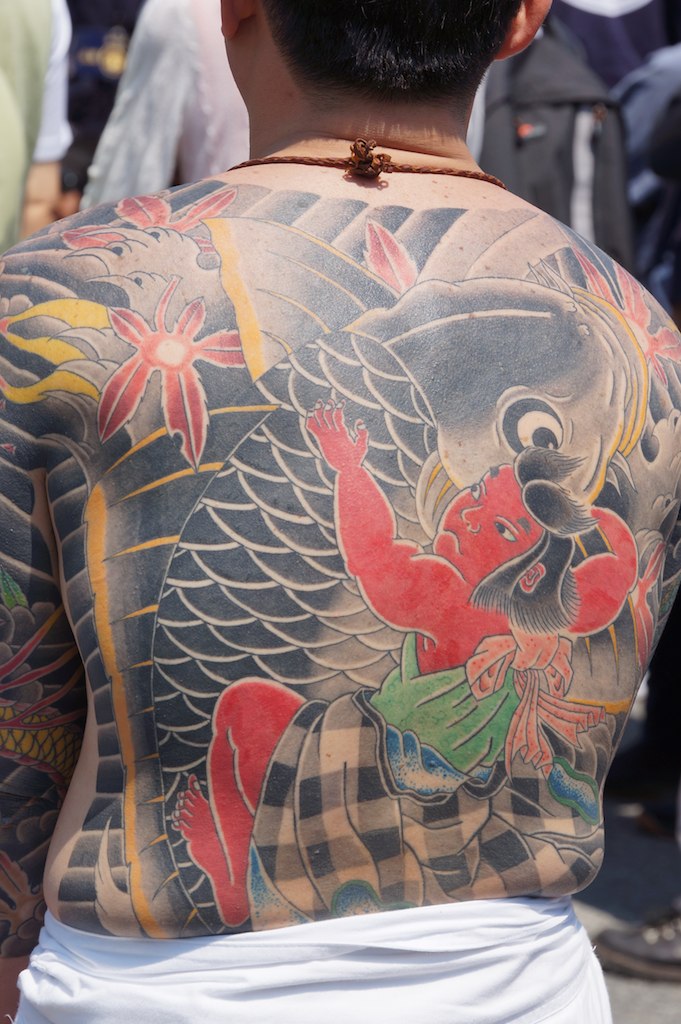


Origins and narrative
Traditional accounts place Kintarō on Mount Ashigara, where he was said to be raised by a mountain witch or ogress (often called a yama-uba). Living in the wild, he befriended the animals and sometimes fantastic creatures of the mountain and grew famous for his raw strength and fearless nature. In later episodes of the tale he leaves the mountain, takes the adult name Sakata no Kintoki, and becomes a trusted follower of the Heian-period warrior Minamoto no Yorimitsu (also called Raikō).
Key episodes and associations
Among the most famous exploits attributed to Kintarō in later stories is participation in the defeat of the bandit-oni leader Shutendōji, alongside Yorimitsu and other retainers. The tales mix folkloric motifs — child prodigy, mountain upbringing, animal companionship — with samurai-era themes of loyalty and combat. They also include encounters with supernatural beings and tests of strength that emphasize his extraordinary nature.
Cultural significance and symbolism
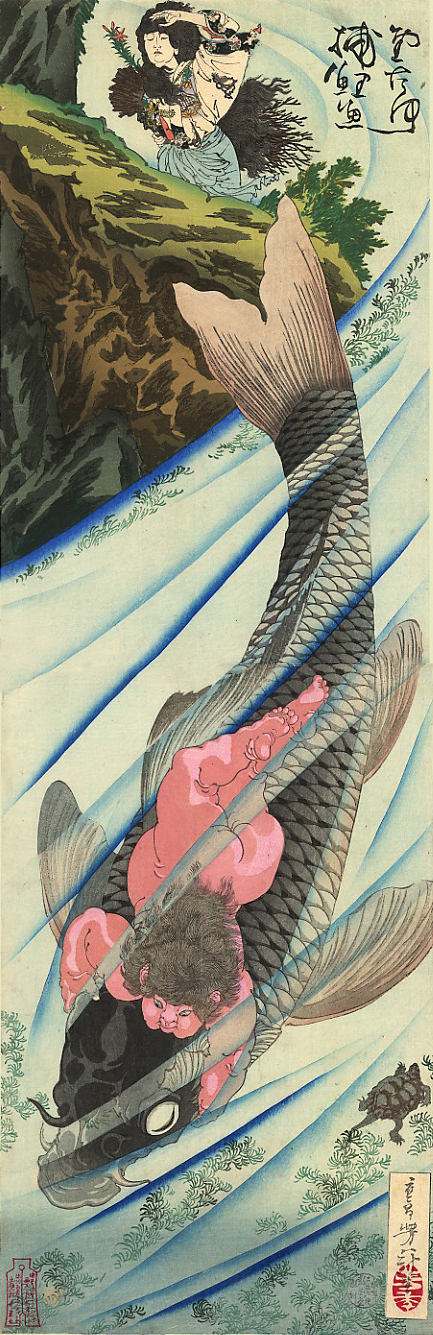
Kintarō appears widely in Japanese art and popular culture. He is commonly depicted as a stout, red-cheeked boy wearing a short bib, wielding a broad axe or mallet, and sometimes riding a carp or wrestling with animals. For Children's Day (Tango no sekku) families often display Kintarō dolls or banners as symbols of vigor and healthy growth. His image also figures in kabuki and other traditional performing arts, as well as modern media adaptations.
Notable features
- Raised on Mount Ashigara by a mountain woman, emphasizing a liminal, wild childhood.
- Portrayed with a large axe or masakari and a red bib as identifying attributes.
- Later historical/legendary identity as Sakata no Kintoki, a retainer of Minamoto no Yorimitsu.
- Enduring presence in toys, festivals and visual arts as a symbol of strength for children.
Kintarō's story blends mythic childhood motifs with samurai-era loyalty narratives, which explains both his appeal as a folk character and his persistence in Japanese cultural memory.
Related articles
Author
AlegsaOnline.com Kintarō: The Golden Boy of Japanese Folklore Leandro Alegsa
URL: https://en.alegsaonline.com/art/53709